

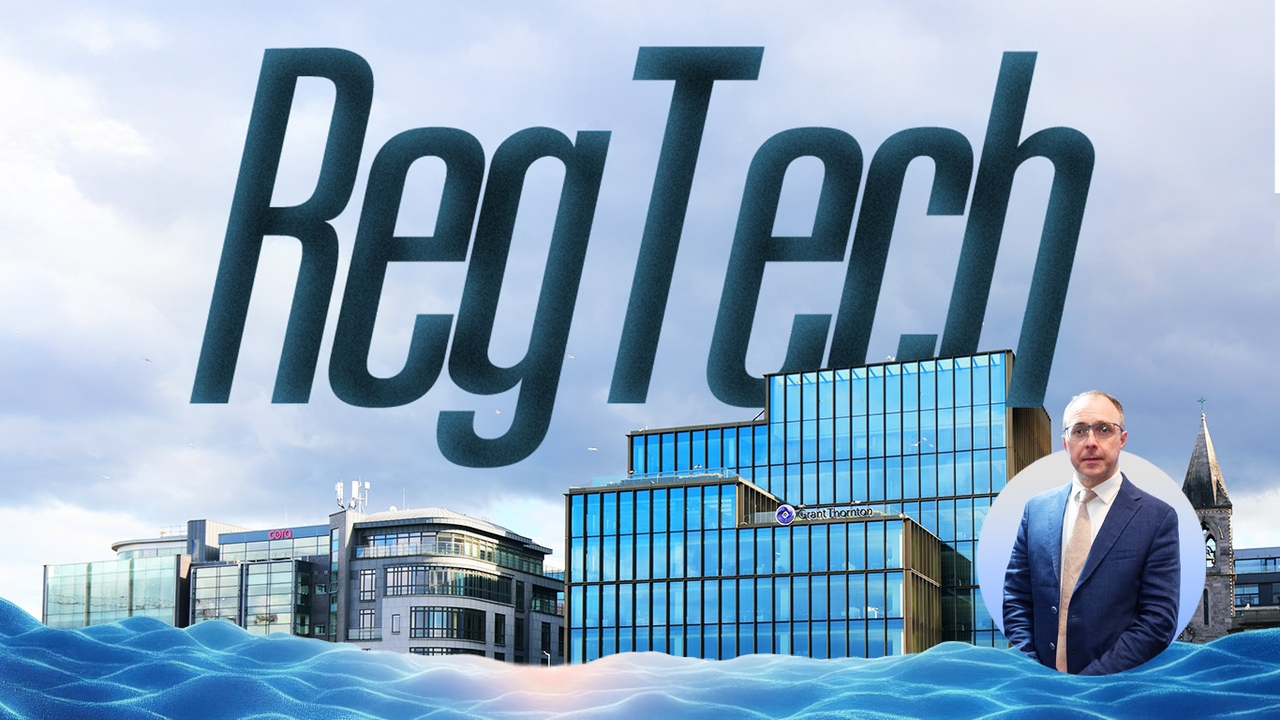
When the term “RegTech” or Regulatory Technology is mentioned, most Thais may have never heard this term before, yet many have likely experienced it unknowingly—such as facial recognition for opening online bank accounts, instant OTP messages from banking apps when suspicious transactions occur, or automatic freezing of fraudster accounts before funds are lost.
These are almost all examples of RegTech, and in a world where financial threats grow increasingly complex daily, these technologies are becoming the most vital defense of the global financial system. Within this context, RegTech has become the heart of the modern financial system, enabling real-time regulation, reducing costs, increasing transparency, and importantly, building “trust” for users and the system as a whole.
One country regarded as a key global case study is “Ireland”. As a Tech Hub driving businesses and startups across Europe, Ireland has been dubbed one of the “world’s leading RegTech centers”, playing a crucial role in turning “regulations” into an innovation accelerator powering the country’s digital economy.
This article by Thairath Money features a conversation with Robert Troy, Minister of State at the Department of Finance, Ireland, at Money20/20 Asia 2026 in Bangkok, extracting key lessons Thailand can apply.
“RegTech” stands for Regulatory Technology. Literally, it means using technology to help financial institutions and regulators comply with rules more efficiently, employing AI, big data processing, and automation to replace manual paperwork and human checks. Previously, transaction reviews or compliance checks required large teams and days to complete retrospective audits.
. Troy illustrates that RegTech’s importance arises from the integration of technology with financial regulations. Currently, widely accepted technologies applied by financial institutions include AI-driven fraud detection analyzing suspicious transaction patterns to identify mule accounts or freeze funds before victims are defrauded; identity verification (KYC/Digital Identity) such as facial scans for account opening, with systems able to confirm identity and cross-check population registry data within seconds; anti-money laundering (AML) alerting on suspicious transactions, tracking cross-border money flows; and systems enabling users to automatically report issues to authorities.
“RegTech transforms these systems into precise, real-time monitoring tools, making financial regulations smarter—not just controlling but enabling users to proactively manage risks. It also allows financial systems to be designed with safety from the outset.”

Data from RegTech Ireland and various market research firms estimate that the globalRegTechmarket is rapidly growing and could exceed 44 billion USD by the end of this decade, driven by financial sector demand to reduce regulatory costs, improve audit accuracy, and tackle increasingly complex digital financial crimes.
. Troy explains that Ireland stands out as an exemplary RegTech user and is considered Europe’s RegTech hub, housing over 68 RegTech companies—both local and foreign—that develop AI, AML, and compliance software solutions. Simultaneously, regulators are open to technology, especially with government policies encouraging collaboration with the private sector to co-design systems.
“Ireland’s unique strength arises from the convergence of two sectors: global tech giants like Google, Meta, and Apple have chosen Ireland as their European headquarters, while Ireland’s financial sector has been robust and growing steadily since 1987, especially in funds and asset management.
Combining these sectors has created a strong ecosystem fostering FinTech and RegTech development. Currently, Ireland has over 250 FinTech companies specializing in AI, digital identity, and RegTech, all developing practical solutions to financial sector challenges, led by ID-Pal and TransferMate, used by banks, governments, and telecom companies worldwide, particularly for AML and fraud detection.
A major area where RegTech closes gaps is combating scammers and financial fraud, which have become global problems and emerging challenges in the Asia-Pacific region, including Thailand, where financial crimes are increasingly cross-border and rapidly evolving.
. Troy shares his perspective that cross-border fraud in Asia is more complex than in Europe due to the wide regulatory differences across countries. Europe has a unified regulatory framework across 27 countries facilitating smooth cross-border payments, whereas Asia has diverse national rules. However, good technology can bridge these differences and create interoperable systems.
Examples of RegTech’s role include detecting abnormal transactions, digital identity verification, and secure cross-border data exchange, enabling prevention before damage occurs rather than after. . Troy states,
At this point, the minister highlights that although Asia’s FinTech landscape faces challenges due to diversity, Thailand’s market size, strong digital demand, and government readiness—such as the EEC strategy demonstrating clear long-term vision—are impressive. He sees significant opportunities for Thailand to invest in technology addressing real problems.
“Whether developing cross-border payment solutions, enhancing AML systems, cybersecurity, or applying RegTech for prevention and international data linkage, these advances can shift the financial system from reactive to truly proactive.” Furthermore, what Thailand still lacks, he believes, is “strong support.”
. Troy continues that in the past, governments acted mainly as regulators, but today their role is evolving into “co-designers” of financial systems alongside technology developers. The challenge is balancing proportionate regulation—protecting consumers without stifling innovation.
The best approach is creating channels for companies to engage regulators early, such as Innovation Sandboxes for developing key technologies or promising industries. Equally important is establishing agencies that "hold hands" with Thai companies from the start, rather than allowing large conglomerates to acquire startups before they mature, which risks stifling innovation.

. Troy cites Ireland’s solution: establishing an Innovation Hub supported by the Central Bank of Ireland since 2018, providing a platform for companies developing products to engage regulators early, receive guidance, and clarify applicable rules.
Since its launch, over 600 companies have participated. Recently, Innovation Sandboxes have been introduced in payments and fraud prevention sectors, allowing companies with innovative solutions to test under direct regulatory supervision.
Also, the establishment of the Enterprise Ireland agency is cited by Troy as a critical lesson in completing this ecosystem. The role ofEnterprise Irelandis to develop and promote Irish enterprises globally, assisting startups from inception, providing investment and funding, and supporting market expansion through offices in 50 countries.
Enterprise Ireland embodies a new government mindset and plays a vital role in Europe’s technology sector as an enabler, helping European tech companies scale from national to global levels. This approach turns European regulations from constraints into business opportunities. Currently, Enterprise Ireland ranks as Europe’s third-largest FinTech investor, a key reason why Ireland—with just 5 million people—hosts 250 FinTech startups.
“A clear takeaway for Thailand from Ireland’s model is that the core of RegTech development—and indeed any technology—is not just about technology itself but designing an ecosystem connecting government, regulators, startups, and global markets from the outset. In a world where financial risks are borderless, such ecosystems are keys enabling countries not only to respond but to lead change.”
. Troy reveals that economic ties between Thailand and Ireland are growing significantly, with bilateral trade exceeding 4.5 billion euros in 2025 and rising steadily in recent years. Many Thai companies have invested in Ireland,
while Irish firms are investing in multiple sectors in Thailand. Cooperation is expected to increase, especially if a free trade agreement between the EU and Thailand materializes, opening new opportunities in FinTech, clean energy, and cybersecurity.
Lessons from Ireland show that “regulations or restrictions” need not hinder innovation; when smartly designed, they become infrastructure making financial systems safer and more rapidly growing in unison.
The author believes RegTech will increasingly serve as the infrastructure of the digital financial system, akin to payment systems or the internet. In a world with real-time transactions and evolving financial crime, the ability to build “trust” will be decisive.
Countries that efficiently integrate technology, regulation, and collaboration will shape the future financial system. For Thailand,"seeing RegTech as an opportunity rather than a cost offers the potential to move from follower to a key regional player."
Read more articles from Money 20/20 Asia 2026
Source information KPMG , FinTechIreland
Follow Thairath Money on Facebook at the link -