

“Thailand became the second fastest AI adoption worldwide.”
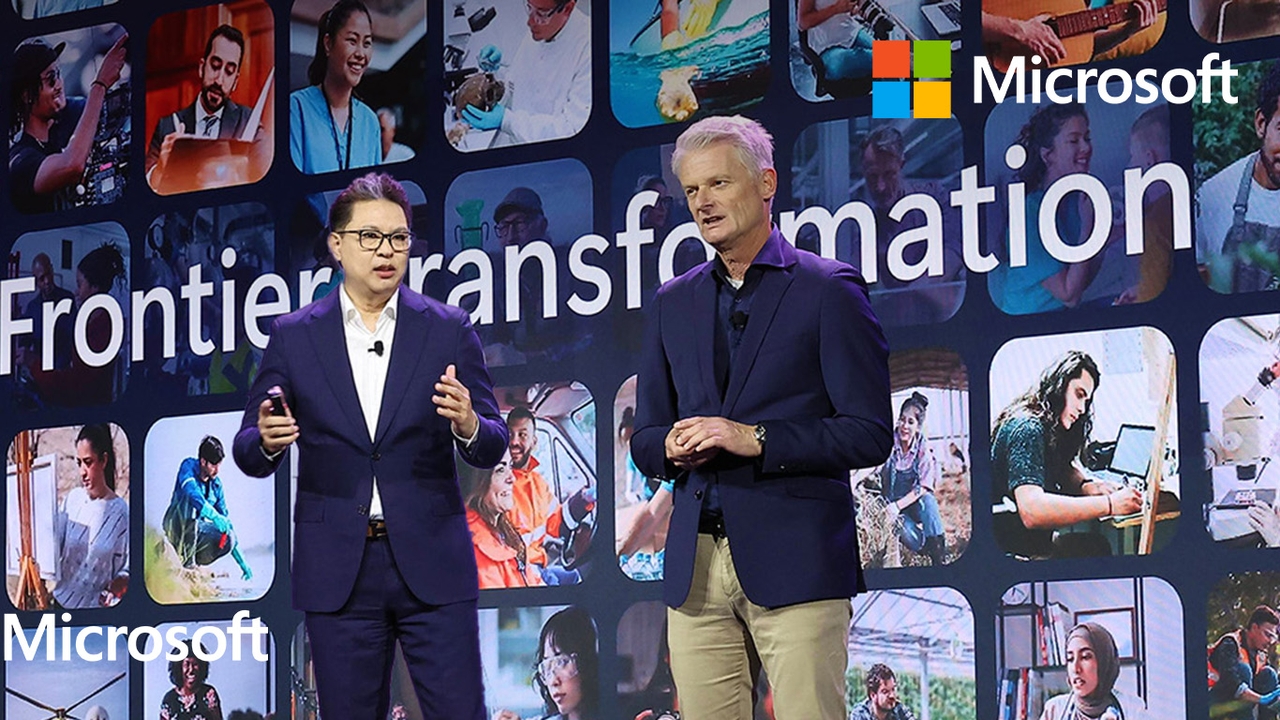
"Thailand ranks second in the world for the fastest growth rate in AI usage." . Thanawat Sutthumpun, Managing Director of Microsoft (Thailand) Limited, spoke at the keynote opening ofMicrosoft AI Tour Bangkok 2026,affirming Thailand's progress as it adapts in the AI era.
He also shared a vision for Thailand’s future in artificial intelligence and introduced the concept“Frontier Transformation,”which aims to make AI a key tool in elevating the economy, organizations, and the capabilities of Thai people broadly.
“We believe AI will be the key to unlocking new opportunities and solving societal challenges that have remained unresolved in the past,” Thanawat Sutthumpun said.
The Microsoft AI Tour Bangkok 2026 opened by highlighting the rapid AI development occurring globally, revealing data from Microsoft's survey inthe report“Global AI Diffusion Q1 2026 Trends and Insights,” covering AI usage in 147 countries where Microsoft operates.
It found that although Thailand’s current AI usage rate is 12.4%, below the global average of 17.8%, what is notable is Thailand's AI usage growth rate reached 36.4%, compared to the previous year, resulting in Thailand becoming the second fastest-growing AI country worldwide, second only to South Korea (43.2%).
Additionally, over 32% of Thai Information Workers have begun using AI in their work, which is double the global average of 16%.

Among organizational leaders, 51% in Thailand clearly understand and foresee AI adoption in their organizations, compared to a global average of just 26%.
However, Thanawat pointed out there remains huge potential ahead, as over 87.6% of Thai people have yet to use AI, including workers in industry, farmers, doctors, nurses, and students.
He views expanding AI technology to these large groups as a new frontier that can enhance work efficiency, creativity, and the country’s competitive potential over the long term.
Especially for SMEs, which make up a large proportion of Thailand’s approximately 3.2 million businesses—over 70% of the country's enterprises—greater AI adoption can help reduce the competitive gap between small businesses and large organizations.
It is undeniable that today many organizations adopt AI mainly to reduce business costs, but Ralph Haupter, Executive Vice President and Chief Revenue Officer of Microsoft, offers a different perspective, stating
“Becoming a Frontier Company in AI should not be viewed merely as improving efficiency, cutting costs, or automating processes.
It should be seen as an opportunity to drive growth, unleash creativity, and foster innovation at both organizational and national levels.”
He also presented a framework for transitioning to an AI-era organization or Frontier Transformation, consisting of four key pillars:

“Frontier Transformation is fundamentally different from traditional organizational transformation. This concept helps organizations understand how to use AI to create value—not just through efficiency or cost reduction but by enabling growth, creativity, and innovation in new dimensions,” Ralph Haupter said.
Beyond the framework, Ralph also identified three essential characteristics for becoming a Frontier Company:
Toward the end, Ralph linked these ideas and the framework with Intelligence and Trust, explaining that Intelligence refers not just to AI but also to the organization’s unique knowledge—internal data, emails, schedules, documents, and specialized industry experience.
Trust involves having security systems, access controls, and robust governance mechanisms to ensure AI can operate safely on critical organizational data. Successfully combining Intelligence and Trust enables confident and secure AI use on vital information.
“For me, the most important thing is creating broad positive impact by making AI technology and capabilities accessible to more people, or democratizing intelligence, so all sectors of Thai society can equally benefit from AI,” Ralph concluded.
Follow the Facebook page: Thairath Money at this link -https://www.facebook.com/ThairathMoney