

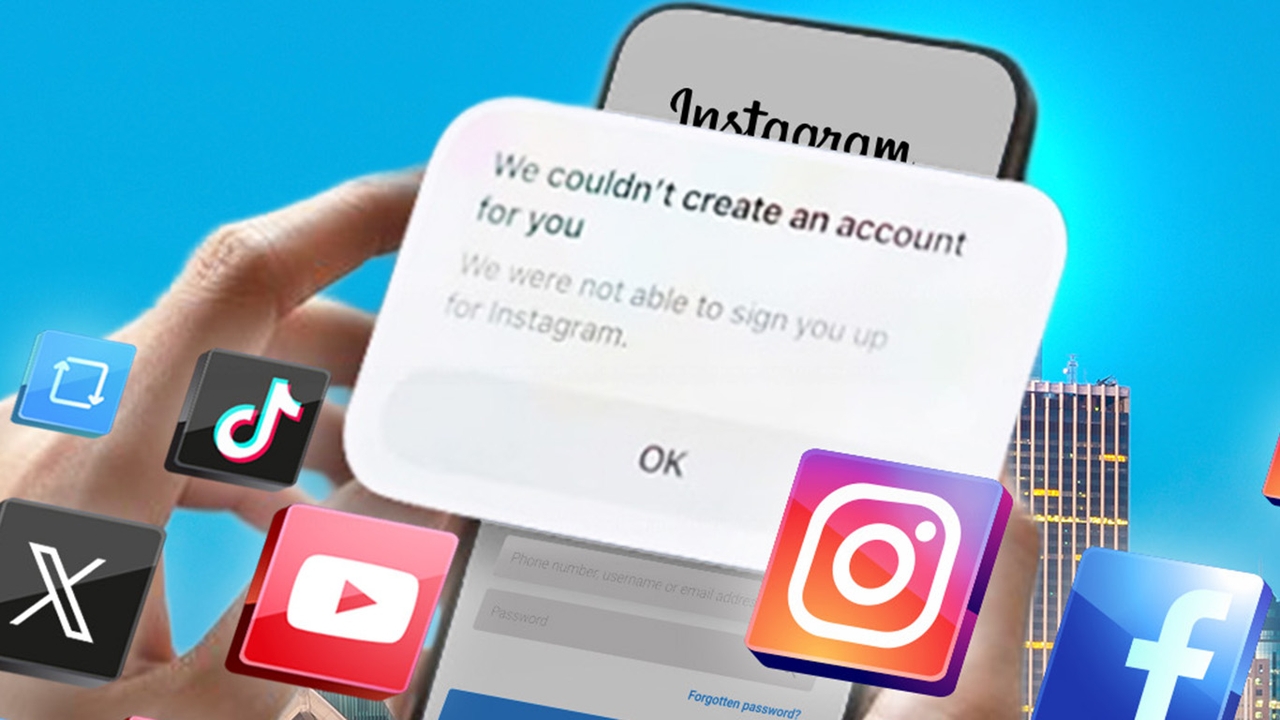
Australia has passed a law officially banning youths under 16 from accessing social media platforms. The banned platforms include Meta-owned apps such as Facebook, Instagram, Threads, as well as TikTok, X, YouTube, Snapchat, and others.
Australia is the first country in the world to enact a law banning social media for youth; children under 16 cannot register new accounts, and existing accounts will be immediately cancelled.
Since September 2024, Australia proposed the world's first bill requiring social media platforms to take direct responsibility for preventing children from accessing their services, shifting the duty away from parents or guardians as before.
The law has now passed and come into effect, imposing maximum fines of 49.5 million Australian dollars (about 1.04 billion baht) on technology companies providing social media platforms if they violate the regulations.
The Australian government stated that the measure aims to reduce the negative effects of social media, which is designed to keep youths engaged longer while delivering certain content that may harm children's physical health, mental health, and quality of life.
A study commissioned by the Australian government throughout 2025 found that 96% of youths aged 10-15 use social media, and among them, 7 in 10 have been exposed to harmful content, including misogynistic material, violent content, and content promoting eating disorders and suicide.
The study also found that 1 in 7 children had been subjected to grooming or enticement by adults or older youths. Moreover, over half of surveyed children reported being victims of cyberbullying, highlighting the increased risks associated with daily social media use among young people.
The 10 applications banned for children under 16 include: Facebook, Instagram, Snapchat, Threads, TikTok, X, YouTube, Reddit, and streaming platforms Kick and Twitch.
The Australian government stated that the determination of which platforms fall under the law is based on three main criteria:
Based on these criteria, some services are excluded from the law’s scope, such as YouTube Kids, Google Classroom, and WhatsApp, as they do not fully meet the requirements. However, children under 16 may still view content on platforms that do not require user account registration.
Under the law, social media platforms must take reasonable steps to prevent users under 16 from accessing their services. A key requirement is using multiple forms of age assurance technology, which may include government-issued ID verification, facial or voice recognition technology, and “Age Inference” techniques that analyze online behavior, usage patterns, and interactions to automatically estimate user age.
However, the law has faced criticism from experts and commentators who argue that its scope is still quite limited.
Critics point out that the law does not cover dating websites, online gaming platforms, or AI chatbots, some of which have recently been reported to potentially encourage children toward suicide or engage in sexually inappropriate conversations with minors.
They have called for the government to extend the ban to include online gaming platforms such as Roblox and Discord. Roblox stated in November that it plans to introduce age verification features on some platform functions to enhance youth safety.
Others argue that a more effective approach may not be banning but rather educating children and youth to use social media safely and with awareness.
According to reports fromBBC,some teenagers are preparing to create fake accounts before the law takes effect, prompting the government to urge social media platforms to seriously detect and delete such accounts. Meanwhile, some children have chosen to use accounts shared with parents to circumvent the legal restrictions.
Analysts also predict that after the law's enforcement, VPN usage may rise, as VPNs mask users' locations. A similar situation occurred in the United Kingdom after implementing comparable age-control regulations.
Europe is one region actively advancing such measures, with several countries taking firm stances, including:
Meanwhile, in the United States, some states have enacted social media restrictions, including:
Sources: Financial Times [1]2]3],BBC,The Guardian
Follow the Facebook page: Thairath Money at this link -https://www.facebook.com/ThairathMoney