

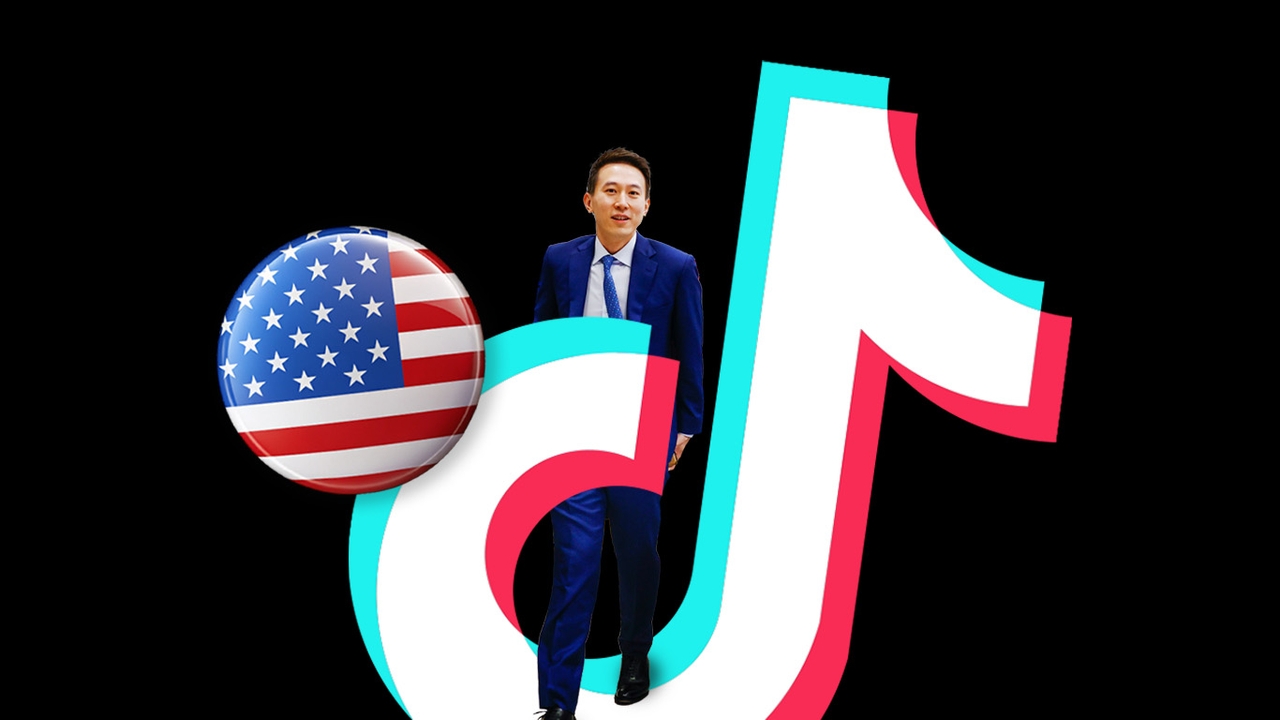
TikTok has signed a legally binding agreement with a group of investors including Oracle, Silver Lake, and MGX to sell its U.S. business and establish a new joint venture under an agreement primarily driven by former President Donald Trump.
After facing over a year of political pressure and national security allegations, TikTok's future in the U.S. is finally becoming clear. The company signed a binding agreement with U.S. and Middle Eastern investors to separate its operations from its Chinese parent company ByteDance and formally establish a new joint venture.
This deal concludes protracted negotiations that began when the U.S. Congress passed legislation in 2024 requiring ByteDance to sell or spin off TikTok's U.S. operations amid concerns over data privacy and national security, escalating into complex intergovernmental talks between Washington and Beijing, each facing internal resistance.
Shou Zi Chew, Chief Executive Officer of TikTok, revealed in an internal memo to employees that TikTok has signed an agreement with key investors including Oracle, private equity firm Silver Lake, and Abu Dhabi’s MGX fund to sell TikTok’s U.S. operations and establish a new joint venture. The deal is expected to close officially on 22 January 2026.
Under this structure,
TikTok’s uncertainty in the U.S. began last year when Congress passed a law forcing ByteDance to divest its U.S. operations. The app also faced temporary bans preventing U.S. users from accessing it, citing concerns over user data privacy and national security risks.
The deal was delayed for several months amid Chinese concerns, particularly over the video recommendation algorithm, considered highly sensitive intellectual property subject to Chinese export control laws.
A turning point came in September when the Trump administration announced progress in negotiations with Beijing and extended the app ban deadline to 23 January 2025 to allow the deal to complete.
Read more
Although the Chinese government signaled approval of a framework including licensing algorithms and intellectual property to the U.S., some members of the U.S. Congress opposed this approach, favoring either a complete separation of TikTok from ByteDance or a total ban in the U.S. Despite U.S. shareholders holding majority stakes, ByteDance is expected to receive up to 50% of TikTok’s U.S. profits, indicating the deal reduces but does not sever Chinese influence entirely.
From a business perspective, TikTok’s U.S. operations are a strategic asset for ByteDance, with foreign revenues in 2024 estimated around $40 billion from a total $155 billion, with the U.S. market as the largest source of overseas income.
. Shou Zi Chew stated that following the conclusion of negotiations, the U.S. joint venture—built on the existing TikTok US Data Security (USDS) framework—will operate as an independent organization with full regulatory authority. It will oversee U.S. user data protection, content moderation, algorithm security, and software safety certification. Meanwhile, TikTok’s global entity will continue managing product integration and some commercial activities such as e-commerce, advertising, and marketing.
In this deal, Oracle will play a crucial role overseeing the video recommendation algorithm, the core of TikTok, retraining it with U.S. user data to ensure content is free from external interference.
What began as a short-video entertainment app, TikTok has become a key battleground in U.S.-China power competition. The new joint venture may be a temporary resolution to an ongoing conflict, reflecting a political and business compromise the U.S. can accept in the short term, allowing TikTok to survive in the American market. For TikTok, the lesson is clear: being a global platform in a new geopolitical era requires not only technological and user competition but also navigating the intersection of state power, security, and data management.
Follow the Facebook page: Thairath Money at this link -