

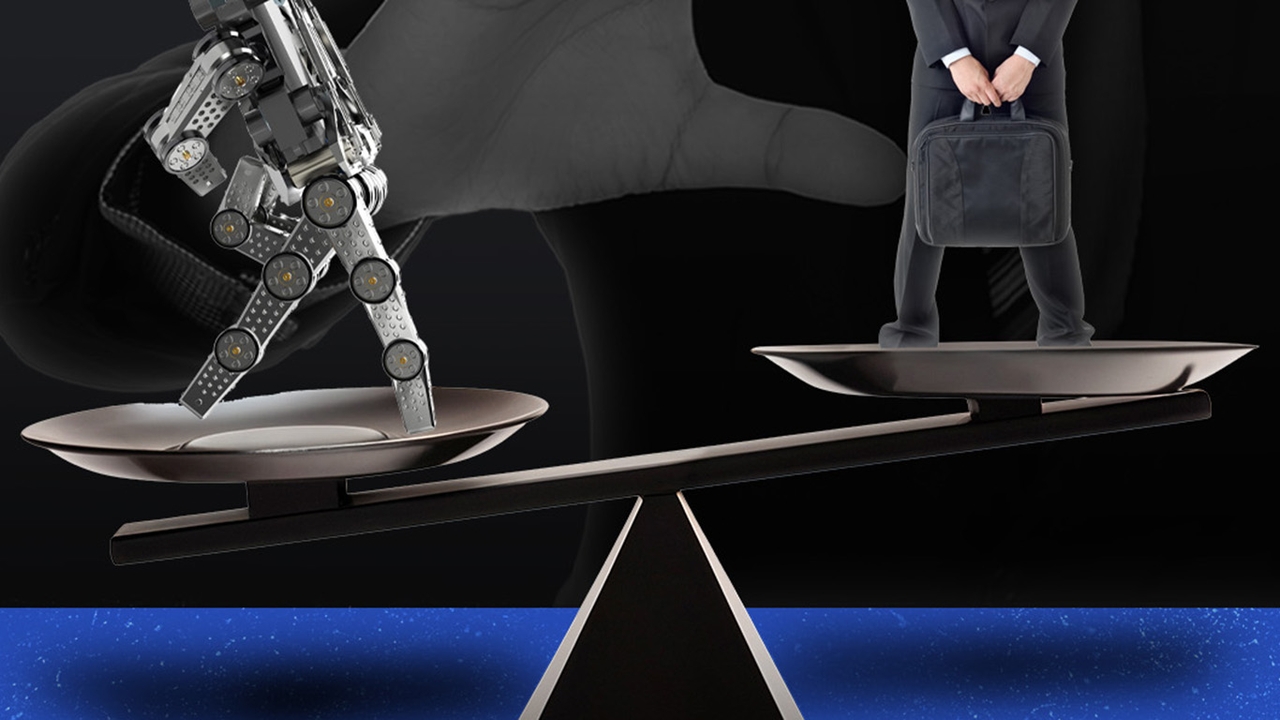
The U.S. labor market is facing a major change that may be a pivotal moment in the AI era, as large companies nationwide announce plans to cut more than 1.17 million jobs this year. This is the highest figure since the 2.2 million layoffs during the COVID-19 crisis in 2020.
What is equally interesting and concerning is that AI is cited as the cause of nearly 55,000 job losses, according to consultancy Challenger, Gray & Christmas. Many are beginning to question whether AI is truly responsible or just a more palatable excuse for companies wanting to reduce costs.
In October alone, more than 153,000 layoffs were announced, followed by another 71,000 in November. At least 6,000 of these positions were explicitly linked to AI replacing human labor.
A study from the Massachusetts Institute of Technology (MIT) published last November provides a clearer picture: AI can already replace 11.7% of the entire U.S. labor market and could help companies save up to $1.2 trillion in wages, especially in the finance, healthcare, and professional services sectors.
Amid the trend of blaming AI, some academics are beginning to question the true reasons behind this wave of layoffs.
Fabian Stephany, Assistant Professor of AI and Work at the Oxford Internet Institute, believes many companies significantly overhired during COVID-19 when the economy grew rapidly and capital was cheap. These layoffs may simply be correcting the labor market back to normal levels.
"Instead of admitting that companies miscalculated and overhired two to three years ago, blaming AI has become a more modern and believable excuse," Stephany commented.
This perspective suggests that AI may not be the primary cause but rather a tool companies use as a pretext for tough decisions amidst pressures from inflation, rising costs due to new tax policies, and the need to cut expenses to maintain profits.
Amazon shocked the labor market by announcing layoffs of 14,000 corporate employees in October, marking the biggest layoff in the company’s history.
The company clearly stated that it needs to shift resources toward a "big bet" on AI technology and openly acknowledged that AI will lead to using "fewer people in some jobs and more in new types of jobs."
Microsoft laid off about 15,000 employees in 2025, with 9,000 cuts in July alone, constituting one of the company’s largest restructurings.
The reason given was the need to "redefine its mission" in an era where AI is central to everything, shifting from being a traditional software maker to becoming an "intelligence machine" providing AI solutions worldwide.
Salesforce confirmed it has cut 4,000 customer service jobs with AI assistance, noting that AI can already perform up to 50% of the company’s internal tasks.
IBM revealed that AI chatbots have replaced hundreds of human resources jobs, handling employee inquiries, document management, and even recruitment processes.
However, IBM continues hiring in roles requiring high-level analytical skills such as software engineering, sales, and marketing, showing the company is selectively cutting only jobs AI can handle.
Recently, IBM announced a 1% global workforce reduction, approximately 3,000 employees, to restructure for a more AI-driven future.
Even cybersecurity firm CrowdStrike is not exempt, announcing a 5% workforce cut—about 500 employees—citing AI’s role in reducing hiring needs and boosting efficiency across all business areas.
Most notably, Workday, an HR platform that helps companies manage employees, became one of the first to announce layoffs this year, cutting 8.5% or about 1,750 jobs to reallocate resources toward AI investments.
Despite ongoing inflationary pressures, rising operational costs from new tax measures, and investor demands to maintain profits, AI is viewed as an appealing "short-term solution" by many organizations.
The big unanswered question remains: What will be the long-term impact of these changes on the labor market and society? Is AI truly creating new jobs, or simply destroying existing ones faster than new roles emerge?
For workers today, preparation means not fearing AI but learning to collaborate with it and developing skills AI cannot replace, such as creativity, complex problem-solving, interpersonal skills, and adaptability.
One thing is certain: the world of work is changing forever, and those who survive will be those who change along with it.
ReferencesCNBC