

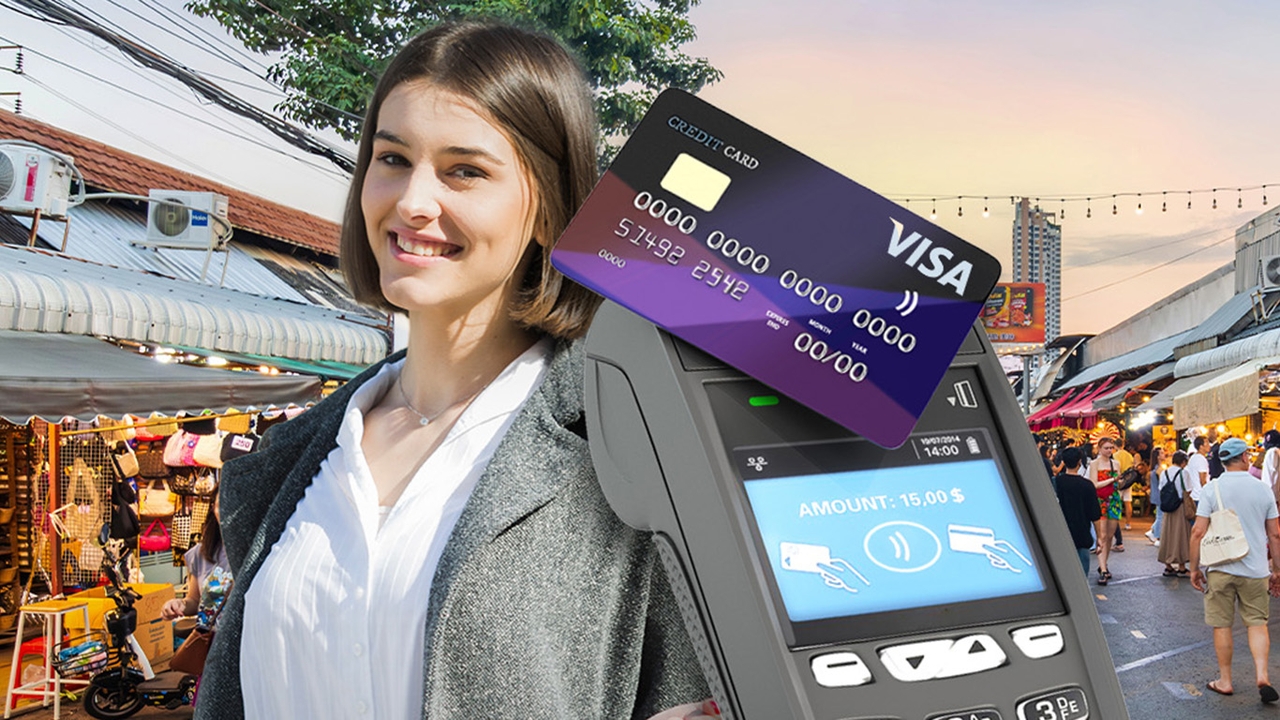
Amid the recovery of Thailand's tourism industry, the payment system is becoming a key infrastructure shaping the experience of travelers worldwide. Recently, the Bank of Thailand (BOT), in partnership with VISA Thailand, released a research report titled "Data-Driven Insights into Tourist Payment Behaviours" which clearly shows that Thailand's payment system is well-prepared and widely accepted by foreign tourists.
This report compiles spending data and highlights that the "Digital Payment" system serves as both a policy and business tool driving Thailand's tourism economy, from national level down to small enterprises.
According to the report, in 2024 international tourism will contribute about 9% of Thailand's GDP, approximately 1.7 trillion baht, with nearly half of all tourists coming from five major markets: China, Malaysia, India, South Korea, and Russia.
Tourist spending patterns clearly reflect Thailand's tourism economic structure, with expenditures concentrated in accommodation (35%) and food and beverage (23%), sectors that rely on fast, secure payment systems capable of handling many tourists simultaneously.
One key indicator highlighted in the report is the continuous growth of digital payments, especially foreign tourists' card payments, which in 2024 will reach 327 billion baht from over 100 million transactions—a historic high. This accounts for 20% of total transaction value and significantly exceeds pre-COVID-19 levels, reflecting tourists’ confidence in Thailand's payment system, particularly in medium and large retail stores.
The report states that Thailand's major strength lies in its comprehensive payment infrastructure equipped with current technology: over 900,000 electronic data capture (EDC) machines and more than one million QR code payment points nationwide.
Although tourists have digital tools ready, actual usage depends on local infrastructure. EDC machines are concentrated mainly in urban areas, especially Bangkok, which holds 37% of all machines, followed by Chonburi and Samut Prakan.
As a result, many tourists still face "payment friction" when traveling outside cities or dealing with small businesses and SMEs that face installation costs and transaction fees limitations.
Notable trends and behaviors in tourists’ digital payments Current trends in tourist payment behavior show a steady shift from cash to digital systems, with cross-border QR code payments and digital card payments as two main mechanisms for tourists in Thailand. Cash
remains the primary payment method, accounting for 78% of total transaction value. Another important trend is growing familiarity with "micro-payments," where tourists increasingly use cards for low-value daily expenses under 500 baht, especially in food, convenience stores, grocery shops, and fast-food outlets, reflecting confidence in digital payment convenience and security.
The report also reveals interesting behavioral insights from tourists of different countries, showing distinct payment patterns. This indicates that payment systems in tourist areas need to be "diverse and flexible" to meet expectations worldwide and reduce friction in spending experiences. For example,
Regarding "cross-border QR payments," usage is steadily increasing. Cross-border QR code payments are an emerging trend gaining popularity among partner countries.
In 2024, foreign tourists’ payments through this channel total 2.489 billion baht, with the largest shares from Malaysia (44%), Indonesia (15%), and Laos (11%). Although still in early adoption, this system offers convenient, familiar options for tourists from eight partner countries, representing only 29% of total tourists arriving in Thailand.
This research offers actionable insights for various sectors. Strategic recommendations focus on promoting SMEs' adoption of digital payments, expanding payment acceptance points in key tourist destinations, and accelerating advanced payment technology installation in hotels, retail, and service businesses.
The key is cooperation among government, financial institutions, and private sector to build a comprehensive, secure payment ecosystem ready to support tourists long term, since "payment systems" reflect national competitiveness, directly affecting Thailand's image, convenience, and global tourist confidence.
If Thailand continues to build on its digital infrastructure strengths, it could become not only a popular destination but also a leading model of a digital tourism country in the near future.
Follow the Facebook page: Thairath Money at this link -