

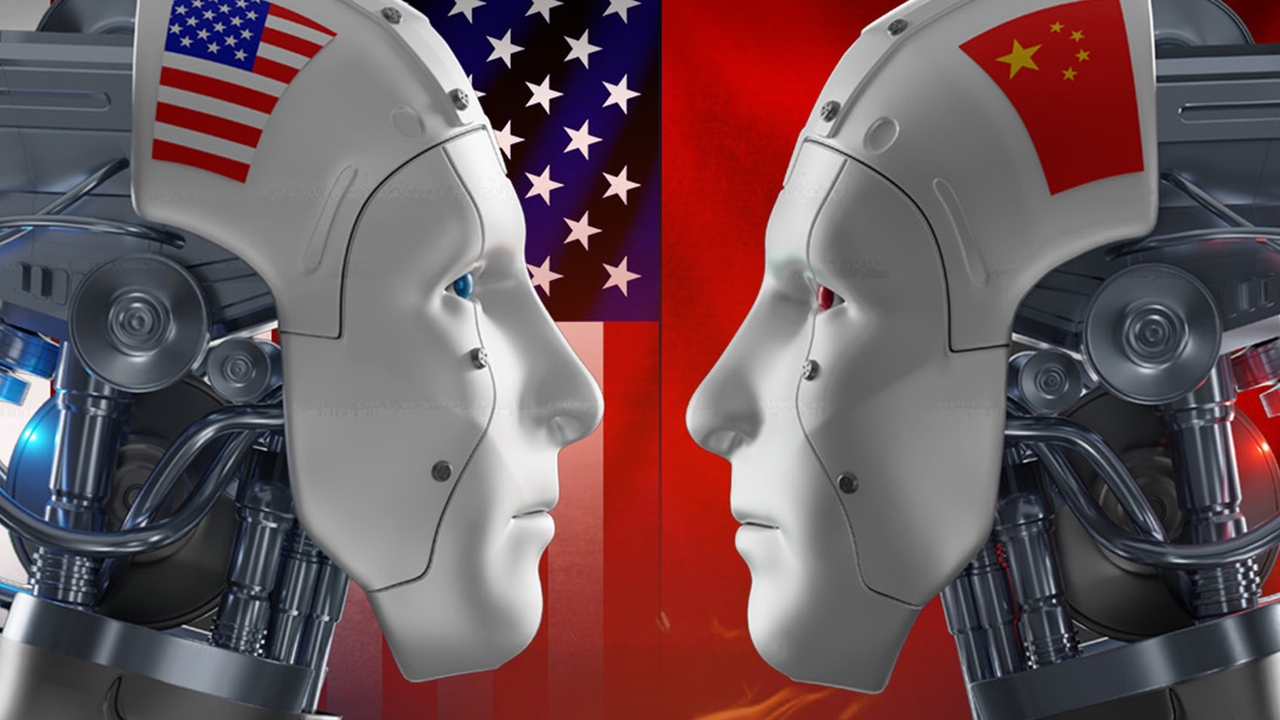
Back when President Donald Trump first took office in 2019, he announced a ban on Huawei, a major smartphone manufacturer and seller in the U.S., forbidding it from conducting business domestically. This ban was primarily enforced using the Foreign Direct Product Rule, or FDPR.
FDPR is one of the tools used by the United States to control trade, with the core of this rule being:If any product is manufactured using U.S. technology, regardless of where it is produced, the U.S. government has the authority to immediately prohibit its sale.This allows the U.S. to extend its regulatory power beyond its borders, covering foreign goods that rely on American technology.
Although this rule has existed since 1959, in 2022, under President Joe Biden, it was expanded to include supercomputers and processing products, which coversemiconductors,in order to block other major powers, especially China, from accessing advanced processing chips that are crucial for AI development and cutting-edge technology today.
FDPR is the reason China faces significant restrictions, making competition in the AI market much harder. Despite China's efforts to accelerate domestic chip development—such as Huawei's Ascend, considered a key player in the semiconductor field—
According to data from Kasikorn Research Center citing Bernstein, the processing performance of U.S. AI chips like Nvidia's B300, B200, B100, AMD MI300X, and H100/H800 clearly surpasses Chinese chips such as Ascend 910C, 910B, and BW1000 (DCU3). Although China is trying to develop its own chips, the performance gap in high-level AI applications remains unclosed in the short term.
Moreover, FDPR does not only restrict chips themselves but also the technology used to manufacture them. As a result, ASML, a major chip manufacturing equipment company, has seen continuous revenue declines in China since the third quarter of 2024. This indicates that China has been cut off at a structural level, not just from specific products.
Although the Chinese government is strongly pushing for self-reliance, 2024 market share data in China shows Nvidia still holds 70%, Huawei 24%, and other Chinese players like Baidu, Iluvatar, and Cambricon have only small shares. This reflects that Chinese industries and tech firms still prefer U.S. chips for their cost-effectiveness and readiness.
However, the share of U.S. chips in the Chinese market is projected to drop from 70% in 2024 to 58% in 2025, indicating China is gradually replacing these with domestic chips. Nevertheless, 58% remains a very high figure, showing that structurally, China has yet to break free from U.S. technology dominance.
Source:Kasikorn Research Center,Reuters
Follow Thairath Money's Facebook page at this link -https://www.facebook.com/ThairathMoney