

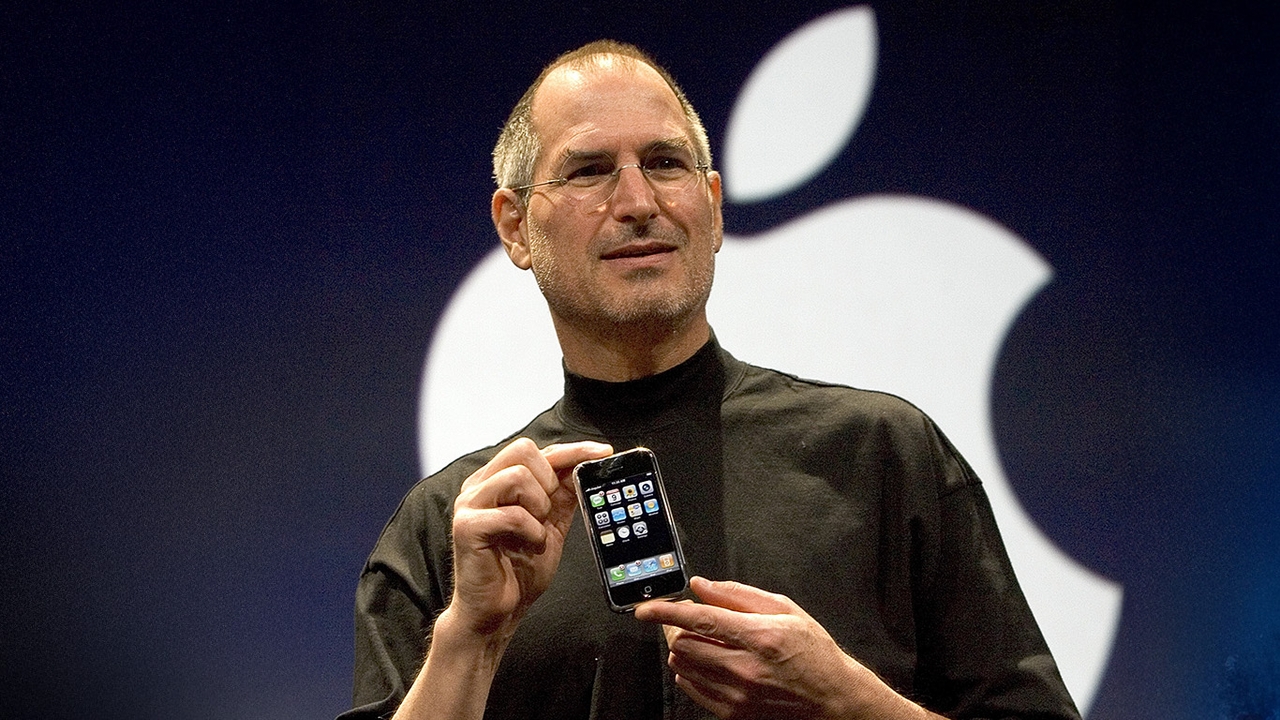
On 9 January 2007 at Macworld, Steve Jobs, the late co-founder and former CEO of Apple, introduced the "first iPhone" which did not merely unveil a new communication device but announced the arrival of a technology that would forever change how humans interact with the digital world. It marked a pivotal shift for Apple from a computer company to a leader shaping modern technology.
From that day, the iPhone achieved commercial success to become the market leader in smartphones and redefined the concept of the "smartphone era" entirely. This device permanently altered the relationship between humans and technology, affecting lifestyle, work, communication, and the entire digital economy.
When Apple launched the iPhone in 2007, Steve Jobs called it a "Revolutionary Product" that would revolutionize the mobile phone industry, believing it was time to completely "rethink" the phone rather than just improving existing models.
Jobs always believed that good technology should not make users feel like they were operating a machine. The iPhone's goal was not to build a more powerful phone but to redesign the entire user experience—from hardware and software to services—based on simplicity, elegance, and natural human connection.
The first iPhone launched in June 2007 at a price of $499 (around 15,000 baht), sold exclusively through the AT&T network. However, Apple presented not just high-priced hardware for the time but a new concept of a mobile phone: a full touchscreen without a keyboard or stylus, designed with the user at the center of every aspect.

Initially, Apple shifted the perception of phones from communication devices to true internet-connected portable computers. The introduction of a full touchscreen and multi-touch technology, operated by fingers, made device control natural and intuitive. This interface became the new industry standard that all smartphone makers would follow.
Subsequently, the iPhone continuously set new standards in processing power, Retina Display screens, and dramatically improved cameras. Crucially, the launch of the App Store allowed developers to sell applications directly to consumers. The phone became a multifunctional device replacing many daily gadgets—from alarm clocks and cameras to music players, car GPS, flashlights, calendars, notebooks, and even wallets.
Moreover, the iPhone made mobile internet smooth and natural, leading to a surge in mobile traffic and a behavioral shift from Desktop-first to "Mobile-first" which created new human behaviors simultaneously. Smartphones became the 33rd human organ, requiring people to be constantly online. The iPhone transformed communication into real-time and borderless exchanges. Social media, video calls, live streaming, and chat apps became integral to daily life.
From a device once seen by many as expensive and unnecessary, the iPhone has become one of the most successful technological innovations in history, gradually embedding itself into daily life as the first thing people see at morning alarm and the last before sleep. It changed how people communicate, meet, consume media, and express identity.

Data from 2025 estimates about 1.561 billion active iPhone users worldwide, nearly 20% of the global population, transforming from a niche tech product for early adopters into a major economic driver, especially in technology and industry.
The iPhone created a new economic era centered on applications, sparking the App Economy and Creator Economy, and platform businesses driven primarily by smartphones. It forced the global tech industry to rethink UX, Mobile-first design, and ecosystems.
The iPhone's success made Apple one of the world's most valuable companies and diminished the roles of many legendary mobile phone makers. Apple demonstrated that controlling the ecosystem—from hardware and software to services—can create long-term structural advantages that persist today.
Since its first launch in 2007 through 2025, Apple has released 19 main iPhone generations comprising 51 models.
2007 – (1) First iPhone
2008 – (2) iPhone 3G
2009 – (3) iPhone 3GS
2010 – (4) iPhone 4
2011 – (5) iPhone 4S
2012 – (6) iPhone 5
2013 – (7) iPhone 5S, (8) iPhone 5C
2014 – (9) iPhone 6, (10) iPhone 6 Plus
2015 – (11) iPhone 6S, (12) iPhone 6S Plus
2016 – (13) iPhone SE (1st Gen), (14) iPhone 7, (15) iPhone 7 Plus
2017 – (16) iPhone 8, (17) iPhone 8 Plus, (18) iPhone X
2018 – (19) iPhone XS, (20) XS Max, (21) XR
2018 – (19) iPhone XS, (20) XS Max, (21) XR
2019 – (22) iPhone 11, (23) 11 Pro, (24) 11 Pro Max
2020 – (25) iPhone SE (2nd Gen), (26) 12 Mini, (27) 12, (28) 12 Pro, (29) 12 Pro Max
2021 – (30) 13 Mini, (31) 13, (32) 13 Pro, (33) 13 Pro Max
2022 – (34) iPhone SE (3rd Gen), (35) 14, (36) 14 Plus, (37) 14 Pro, (38) 14 Pro Max
2023 – (39) iPhone 15, (40) 15 Plus, (41) 15 Pro, (42) 15 Pro Max
2024 – (43) iPhone 16, (44) 16 Plus, (45) 16 Pro, (46) 16 Pro Max
2025 – (47) iPhone 16e, (48) iPhone 17, (49) iPhone 17 Pro, (50) iPhone 17 Pro Max, (51) iPhone Air

Source data BusinessofApps , CNBC , VOX , Forbes
Follow the Facebook page: Thairath Money at this link -