

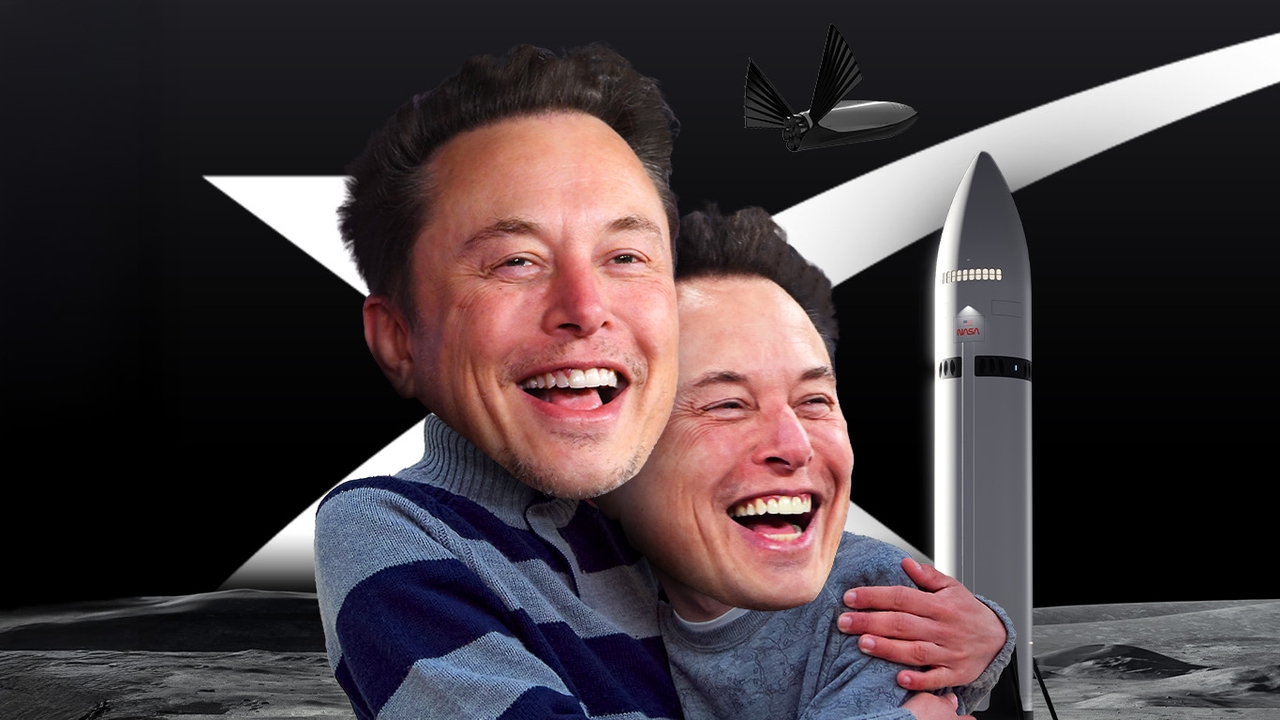
SpaceX, the space technology company owned by the world’s richest billionaire Elon Musk, announced in a blog post last Monday that it has acquired xAI, Musk’s own AI company. Combining the two companies will enable SpaceX to integrate AI with other smart technologies. Elon Musk stated in the post that "this will drive innovation both on Earth and beyond."
This decision comes as SpaceX prepares to go public, signaling a clear push to increase company valuation. Analysts project this IPO to be the largest in technology history, with SpaceX's valuation expected to soar to $1.25 trillion after merging with xAI.
Last year, SpaceX offered secondary share sales, valuing the company at $800 billion. Meanwhile, xAI raised over $20 billion in its latest funding round earlier this year, pushing its valuation past $230 billion.
In March 2025, Elon Musk also merged xAI with X (formerly Twitter), enabling users to access Grok directly on the platform. This led to heavy criticism after some users misused Grok.
Subsequently, the U.S. Department of Defense announced plans to use Grok at the Pentagon as a GenAI tool to assist military data analysis alongside Google's Gemini. However, SpaceX remains the larger defense contractor, holding multi-billion-dollar federal contracts covering security projects, satellite launches and management, and nationally strategic space missions.
A Reuters report from late January stated that SpaceX is projected to earn profits exceeding $8 billion on revenues of $15–16 billion in 2025. In contrast, xAI has yet to report profits, as it continues to invest heavily in building robust AI infrastructure to compete in the market.
In the blog post, Elon Musk also mentioned plans to build a data center in space, explaining, "AI requires enormous amounts of energy; terrestrial capabilities are insufficient… Therefore, the only reasonable solution is to move these resource-intensive activities to a location with vast energy and space availability. And, of course, 'space' is called that because there is plenty of it ."
In 2025, SpaceX launched more spacecraft into orbit than ever before, mostly sending Starlink internet satellites. These repeated launches have allowed SpaceX to manage costs effectively.
Elon Musk added, "Within the next 2–3 years, the lowest-cost method to build AI processing power will be in space. This cost advantage will enable innovation companies to accelerate AI model training and data processing at unprecedented speeds and scales."
"This integration of advanced AI, space infrastructure, and global data platforms reflects a long-term vision beyond commercial innovation—it's about laying the foundation for human civilization in an era where technology and the cosmos connect like never before," Elon Musk wrote in the post.
Follow the Facebook page: Thairath Money at this link -https://www.facebook.com/ThairathMoney