

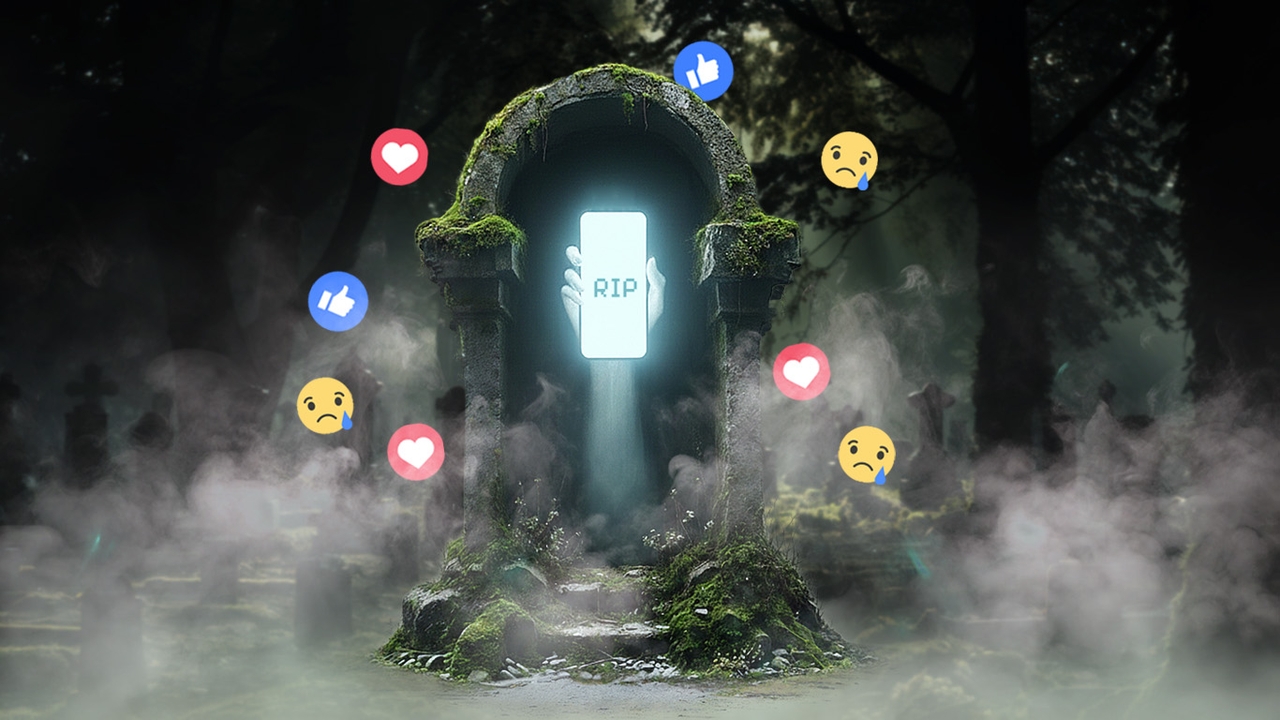
At the end of December, Meta, the technology company behind one of the world's largest social media platforms, was granted a patent for a concept involving the use of a Large Language Model (LLM) to simulate the behavior of social media account users, such as replying to posts, commenting, or responding to messages.
"The language model may be used to simulate the user's persona when the user is not active on the social platform, including cases where the user is on an extended break from social media or in the event the user has passed away.""The language model may be used to simulate the user's persona when the user is not active on the social platform, including cases where the user is on an extended break from social media or in the event the user has passed away."
According to the document, the person named as the inventor of the patent is Andrew Bosworth, Chief Technology Officer (CTO) of Meta. He filed the patent application in 2023, but recently a Meta spokesperson told Business Insider that"The company currently has no plans to develop this technology as described."
According to the patent document, Meta explains the rationale behind this technology concept as follows:"If you stop posting on social media, whether to take a break from the online world or because you have passed away, the experience of your followers will be affected—in other words, they will miss you."If a user dies, the impact is even more severe and permanent, as that person can no longer access the platform.
To fill this gap, Meta has developed a "digital clone" or a "Digital Clone" which simulates a user's social media persona by training AI models on the user's specific data, such as posting history, comments, likes, and created content, enabling the AI to understand the user's past behavior.
This digital clone can like posts, comment, reply to direct messages (DMs), or interact with others' posts on behalf of the account owner. Meta views this as beneficial for influencers or creators who earn income from its platforms since such a tool could maintain engagement even when the user wants to take a break from social media.
Additionally, the patent mentions technology that could allow the LLM to simulate video call or voice conversations with users.
Despite the patent approval, a Meta spokesperson emphasized that"Filing a patent merely discloses the concept and does not necessarily mean the company will develop or deploy the technology."
Meta is among the tech companies that have long focused on managing digital legacy. About a decade ago, Facebook launched a feature allowing users to designate a Legacy Contact to manage their social accounts after death, a feature later adopted by Apple as well.
Furthermore, in 2023, as Meta pushed forward with building the Metaverse, Mark Zuckerberg expressed the idea of creating virtual avatars of deceased individuals, stating that"If someone loses a loved one and is grieving, interacting or reminiscing with memories can help provide healing."
These technologies are known by various names such as Death Bots, Ghost Bots, or Grief Tech, aiming to help people cope with loss by preserving the digital identity of the deceased indefinitely. Numerous startups have emerged from this concept, including examples like
Edina Harbinja, a law professor at the University of Birmingham, said this issue touches not only legal aspects but also deep social, ethical, and philosophical questions, though she sees benefits since current grief support services are deteriorating.
Harbinja views Meta’s patent as evidence that this technology is moving into the mainstream, noting that it is unsurprising that major tech companies are entering this space, which also signals growing public acceptance of the concept.
Even with positive reception, critical questions remain that require thoughtful answers about whether when technology intersects with "death" and "grief," is it truly beneficial? Having AI act on our behalf during a digital detox is one matter, but employing it to mimic those who have passed away—is that really appropriate?
Combining AI with death and grief remains a highly sensitive issue, opening broad debates on philosophy, ethics, digital rights, and privacy. Meanwhile, social media platforms seek to increase engagement and content volume, which also increases their data holdings.
Edina Harbinja believes Meta’s concept is still primarily driven by business motives. It remains to be seen how Meta will implement this technology, when it will be released, and whether it will be used across all Meta-owned social platforms, each of which has different user behaviors.
Joseph Davis, a sociology professor at the University of Virginia, expressed concerns about the impact on human psychological healing, explaining thatone of humanity's essential tasks in coping with grief is confronting the reality of loss.
He added, "Let the dead be dead," or "Let the dead rest." Attempting to bring them back—even as simulations that seem real—may cause confusion and deepen sorrow rather than provide healing.
Thus, the question is not just whether Meta can do this, but whether society is ready for "immortal digital personas" on social media.
Source:Business Insider
Follow the Facebook page: Thairath Money at the following link -https://www.facebook.com/ThairathMoney