

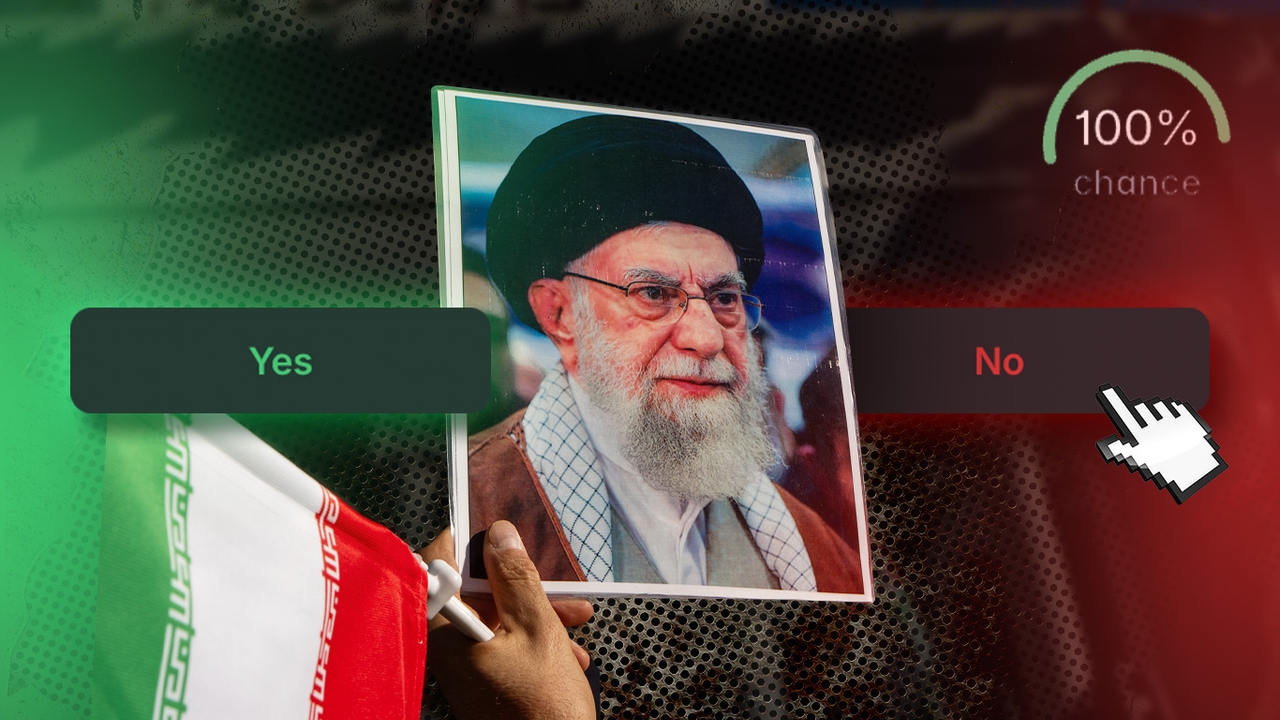
While the United States and Israel attacked Iran over the past weekend, "gamblers" on platforms like Polymarket and Kalshi, both prediction markets, reaped enormous profits from their bets. On Polymarket alone, trading volume reached as high as 529 million U.S. dollars, with this massive amount occurring almost immediately after the first explosion news broke in Tehran.
This abnormality raised the question: Was insider trading involved? And Did this cross ethical boundaries? These platforms allow betting on sensitive issues such as war. Polymarket added contracts related to ongoing military conflicts, including the possibility of China invading Taiwan, Russia capturing cities in Ukraine, and U.S. attacks on Iran.

Both Polymarket and Kalshi offered bets on "what will happen in Iran," and when Ali Khamenei was reportedly killed in an attack last Saturday, both platforms immediately faced backlash.
Blockchain analytics firm Bubblemaps SA reported that six newly created accounts on Polymarket, established in February shortly before the attack, collectively earned about 1 million U.S. dollars by betting that the U.S. would attack Iran by 28 February. These accounts had only one betting history: "when the U.S. would strike." Notably, some contracts were bought at about 10 cents per share just hours before the first explosion reports in Tehran.
Such patterns have been seen as warning signs linked by analysts to insider trading—using privileged information in prediction markets, an industry still lacking broad regulation and clear standards distinguishing luck from advance knowledge.
However, such transaction patterns alone are not conclusive. Similar cases previously suggested insider trading, such as bets on Nicolás Maduro being ousted in January and other suspicious cases. The contract on the 28 February Iran attack closed on Saturday with a cumulative trading volume of about 90 million U.S. dollars since the market opened, marking the platform's highest trading day.

Shayne Coplan, founder and CEO of Polymarket, once stated that prediction markets "are the most accurate tools humanity has ever had," positioning the platform as a tool to provide societal insights, while Kalshi's co-founders Luana Lopes Lara and Tarek Mansour aim to make the platform a money-making source because "everything can become an asset," even information whose occurrence is uncertain.
Polymarket is among the largest prediction market platforms, while Kalshi, regulated by the U.S. Commodity Futures Trading Commission (CFTC), is becoming a hub for borderless and lightly regulated geopolitical speculation.
Kalshi carefully designs contracts; for example, its Khamenei-related contract, with over 50 million U.S. dollars traded, included an "exception" stating that if he died, investment positions would be closed at the latest price before death, rather than a binary win/lose payout.
The platform confirmed it does not open markets decided by "death," and in regulated U.S. markets, contracts tied to war, terrorism, or assassinations are generally prohibited.
Nevertheless, this exception was tested last Saturday when large amounts of money continued flowing into the market even as reports of Khamenei's death emerged. Kalshi continued promoting this contract on social media that morning, issued additional statements, then later suspended trading.
On the evening of the incident, the company's CEO posted on social media announcing a full refund of fees from this market. Ultimately, Kalshi decided to refund users' net losses, totaling about 2.2 million U.S. dollars from the company, according toBloomberg.
This episode highlights regulatory and contract design "gaps," raising questions about how markets can allow betting on geopolitical events without causing ethical issues that laws aim to prevent.
A Kalshi spokesperson stated the company's rules were clear from the start and unchanged, with outcomes decided by the rules. Refunds of fees and net losses were made because the company felt the user experience might have been unclear. Polymarket has yet to comment.
The controversy sparked debate, with prediction market supporters arguing that geopolitical contracts provide real informational value because liquid markets with real money produce quicker and more accurate signals than traditional intelligence or news reporting. They also help manage risks, for example, shipping companies passing through the Strait of Hormuz or oil traders exposed to Middle East supply risks can use these contracts for faster risk management.
Kalshi's CEO explained on X that "we do not list markets directly tied to death, and if a market’s outcome might involve death, we design rules to prevent anyone profiting from death."
Regarding the Khamenei-related market, such as bets on "Ali Khamenei ending his role as Supreme Leader," Kalshi’s founder said it has legitimate purpose because leadership changes in Iran affect global oil prices, national security, and world order. Moreover, authoritarian leaders can leave power without dying, as with Nicolás Maduro in January.

However, critics argue that war betting has different incentives than election or economic data bets, because when the event's basis is "violence," the risk of misuse is far greater.
Dennis Kelleher, CEO of Better Markets, said prediction market companies seek to benefit both ways: allowing trading on everything to increase volume while narrowly interpreting laws that clearly prohibit trading related to assassinations and war.
The backlash comes as new business models emerge based on the belief that "everything can be traded," from press conference length to war outcomes.
Prediction markets reflect the idea of "cutting out intermediaries, letting the crowd set prices, and treating those numbers as truth," turning the Iran case into a test of whether this logic has ethical limits.
Source: Bloomberg [1],[2],[3],Business Insider
Follow the Facebook page: Thairath Money at this link -https://www.facebook.com/ThairathMoney