

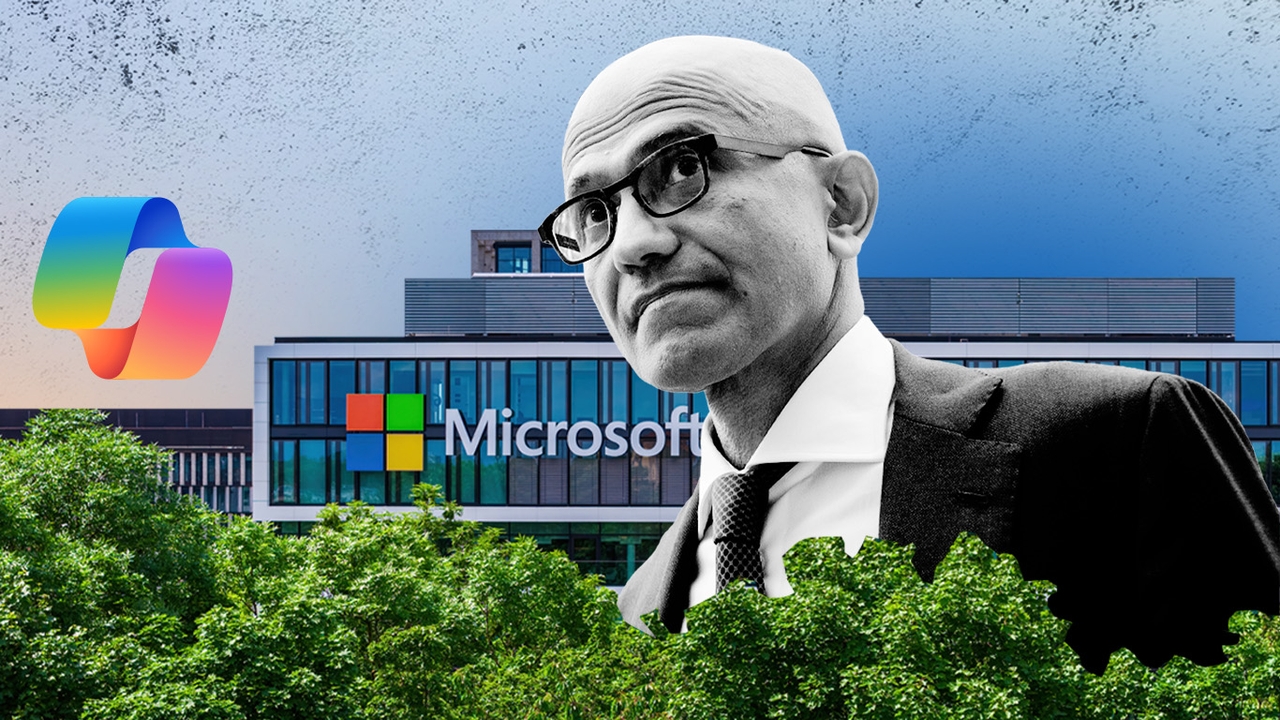
Microsoft announced a major restructuring of its Copilot team, centralizing leadership and shifting focus towards serious AI model development. This follows criticism that Microsoft Copilot's AI product has yet to win widespread user acceptance and has fallen behind competitors more than expected.
Satya Nadella, CEO of Microsoft, announced the reorganization of the Copilot executive team by merging the engineering groups responsible for enterprise and consumer customers. Jacob Andreou, a former Snap executive, was appointed Executive Vice President to oversee the entire Copilot experience for both consumer and enterprise sides, centralizing operations.
Meanwhile, other executives including Ryan Roslansky, Perry Clarke, and Charles Lamanna will manage Microsoft 365 applications and the Copilot platform, all reporting directly to Nadella.
This restructuring also paves the way for Mustafa Suleyman, head of Microsoft's AI group and co-founder of DeepMind (acquired by Google), to focus more upstream on developing world-class AI models for Microsoft over the next five years. These frontier AI models will serve as the foundation for product development company-wide amid investor pressure for significant returns on investment.
Since establishing the Superintelligence team last year, Microsoft has accelerated investment in personnel and computing power to build impactful product-level models, improving efficiency, cost of goods sold (COGS), and enterprise suitability.
Additionally, Suleyman told the Financial Times that Microsoft must become truly self-reliant by building its own powerful AI models and reducing dependence on OpenAI. Although Microsoft maintains a long-term strategic partnership and holds about 27% of OpenAI's commercial business, the two companies are increasingly competing in the enterprise market.
Since officially launching Copilot in 2023, Microsoft has positioned it as the “new UI of the computer”—not just a feature but an intelligent assistant embedded across workflows, from composing emails in Word and analyzing data in Excel to summarizing meetings in Teams. It is considered one of the earliest AI agents.
Behind Copilot lies Microsoft's investment of over $10 billion in AI startup OpenAI, alongside annual multi-billion-dollar spending on data centers and AI chips to build the Azure AI cloud infrastructure supporting Copilot, integrated across Microsoft's existing product ecosystem.
Thus, Copilot is more than a product; it is a new revenue engine Microsoft expects to use to increase enterprise software package prices, raise revenue per user, and lock customers into its ecosystem.
However, despite Microsoft being among the largest AI investors, Copilot clearly trails competitors, especially in daily active users (DAU). Sensor Tower data shows Microsoft Copilot had about 6 million DAUs in February.
Moreover, enterprise usage remains below expectations, with reports that Microsoft had to lower sales targets in some business units. In its latest earnings report, Microsoft disclosed selling about 15 million Microsoft 365 Copilot licenses out of over 450 million enterprise customers, a relatively small proportion.
On the consumer side, Copilot apps and websites have approximately 150 million monthly users, trailing Google's Gemini with around 750 million monthly users, while market leader ChatGPT boasts about 900 million weekly users.
As Copilot has yet to meet expectations, Microsoft is addressing issues “upstream.” The restructuring aims to clarify the Copilot product, responding to customer and employee feedback that the Copilot brand, scattered across Outlook, Word, Windows, Teams, and Edge, creates complexity and results in an unsatisfactory user experience.
Originally designed to simplify tasks, Copilot has faced significant criticism. This user feedback has limited its broad adoption, while ChatGPT has become a globally used AI app, and Gemini has successfully integrated into Google's ecosystem.
In many cases, Copilot leaves users feeling that the AI does not meet basic needs, fails to deliver consistent experiences, complicates workflows, and, worse, users feel it is overly imposed. Copilot is embedded in Windows 11 and Microsoft 365 in a way that is nearly unavoidable, with some employees feeling forced to use it within their organizations.
On social media, content mocking Copilot has proliferated, labeling it as an “annoying coworker” or “incompetent,” with one clip garnering over 300,000 likes and jokes about different Copilot versions reflecting genuine user confusion. Some have even reverted to older Office versions without Copilot.
From one perspective, the backlash against Copilot may be positive, showing users are engaged and vocal. This critical feedback could become valuable data for improvement.
Therefore, assigning Suleyman to focus on model development signals Microsoft's intent to address root causes by unifying experiences into a coherent system, making Copilot truly smarter—not merely adding features—and bringing its own AI models to market to reduce dependence on external AI models, especially OpenAI's.
Furthermore, Copilot's challenges reflect a major issue in the AI industry: users do not want AI embedded everywhere, talking constantly or acting like an overbearing assistant. Whether Microsoft can transform Copilot into something people genuinely want to use remains to be seen; this AI team restructuring may mark the beginning of that answer.
Sources CNBC , Financial Times , Qz , Techradar
Follow the Facebook page: Thairath Money at this link -