

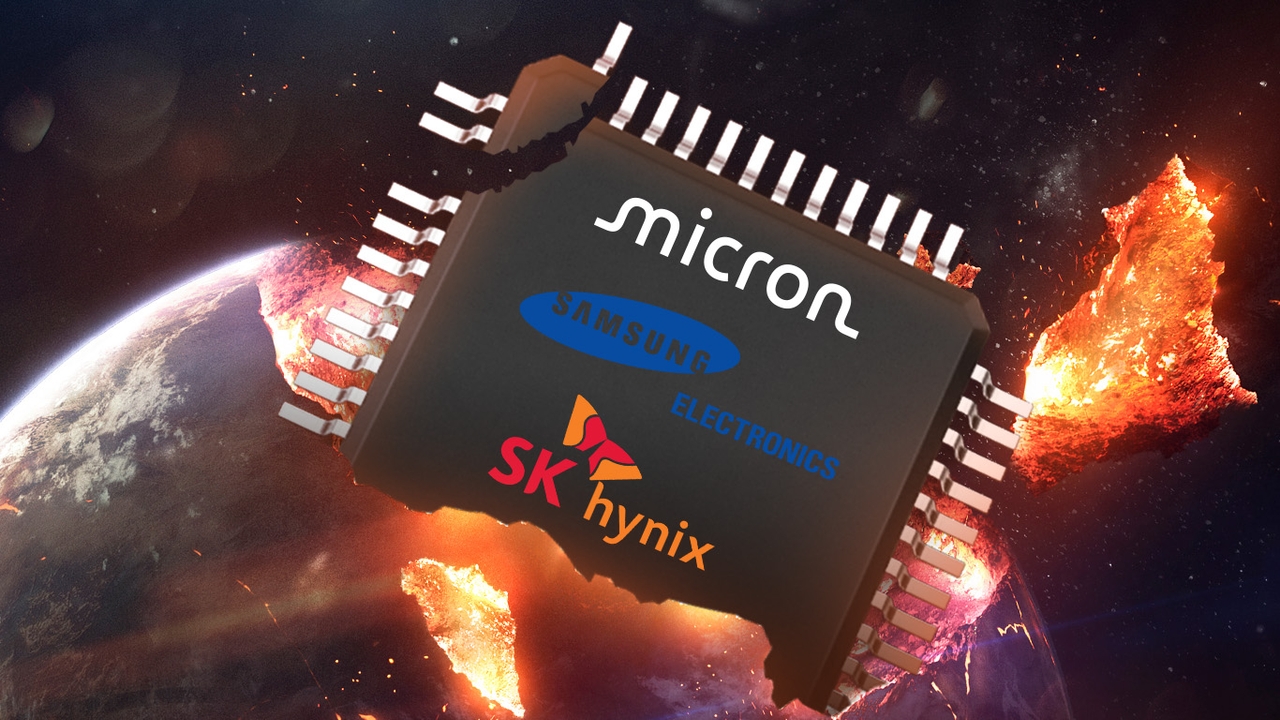
The global semiconductor industry may experience a "supercycle" with widespread severe impacts. Signals from three leading memory chip manufacturers—Micron Technology, Samsung Electronics, and SK Hynix—are increasingly aligned that the “memory chip shortage crisis” may not be a short-term cycle but is developing into a structural problem lasting through the end of the decade.
Recently, chip manufacturers have accelerated production capacity toward high-bandwidth memory (HBM), causing the supply of DRAM (Dynamic Random Access Memory) and NAND memory types—such as SSDs and USB drives—to tighten.
At the same time, wafer constraints and limited production expansion have widened the gap between demand and supply. However, the latest situation has become more complex, as tensions in the Middle East introduce a new unpredictable and uncontrollable variable.
Although the Middle East is not a direct chip manufacturing base, it is a crucial hub of global infrastructure heavily relied upon by the industry. The main related factors include
1. Energy factors have become uncontrollable costs. Chip factories are among the highest energy-consuming industries. If the conflict affects vital oil routes such as the Strait of Hormuz, energy prices will fluctuate immediately, inevitably pushing up costs for producers like Samsung Electronics and Micron Technology.
2. Logistics factors cause delays affecting the entire system. Key transportation routes like the Red Sea and the Suez Canal are vital arteries of global trade. Even partial disruptions can stall deliveries of machinery, raw materials, and finished chips throughout the supply chain.
3. Raw material factors create hidden risks. Industrial gases and chemicals used extensively in chip production depend on global manufacturing and transport networks. Geopolitical uncertainties increase the chance of repeated supply shocks amid already tight supplies.
Amid this uncertainty, chip makers have begun noticeably changing their behavior. Led by Micron Technology, which has initiated its first-ever 5-year customer contracts, Samsung Electronics is negotiating 3- to 5-year agreements, and SK Group warns that chip shortages could last until 2030. Locking in these contracts reflects customers’ concerns not only about price but also about securing supply access in an unstable world.
On the other hand, manufacturers are accelerating investments to solve the problem. Micron plans to spend at least $25 billion, while Samsung budgets as much as $73 billion. However, from an investor perspective, this situation may be double-edged: although it helps increase long-term capacity, it could lead to “oversupply” if conditions improve sooner than expected.
Warnings from the major chip manufacturers make it clearer that the wounds from the Middle East may affect more than just energy prices—they are embedding long-term cracks in the global semiconductor industry. This “supercycle” is characterized by supply lagging demand over many years, with AI as a key accelerator amid insufficient capacity and unavoidable geopolitical uncertainties.
Source of information CNBC
Follow the Facebook page: Thairath Money at this link -