

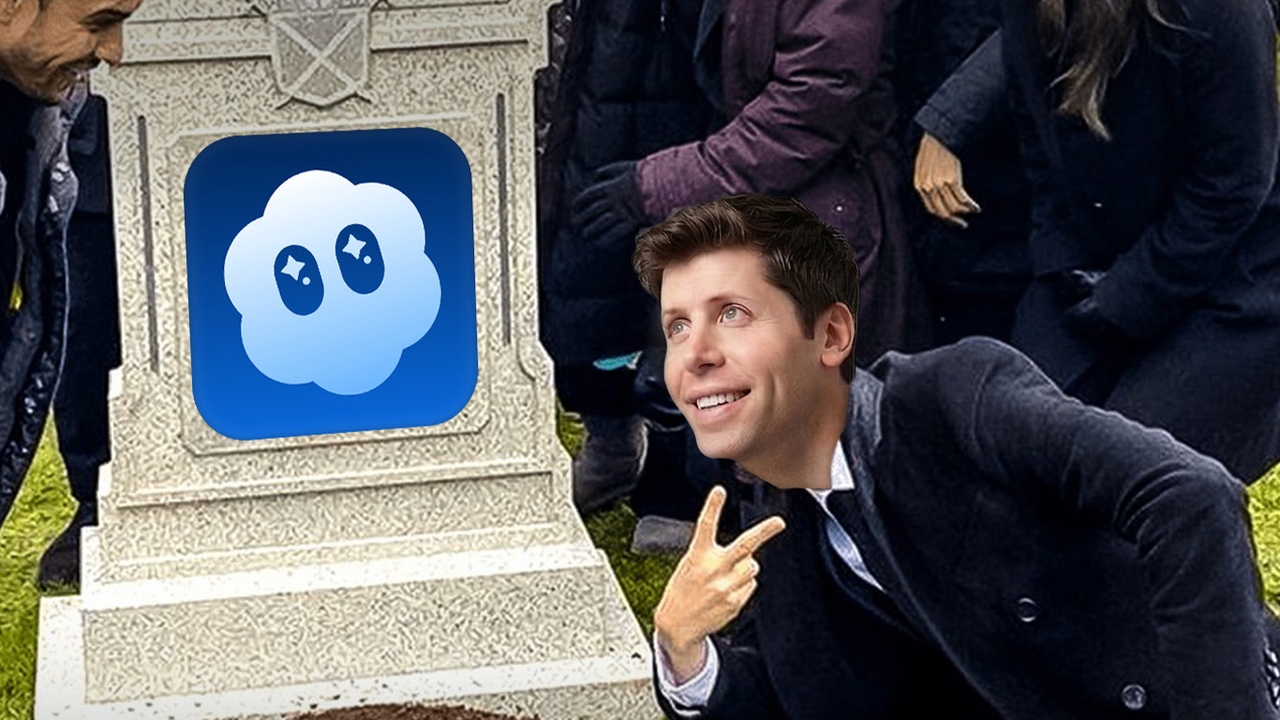
OpenAI announced the discontinuation of service. “Sora” an AI video creation tool, officially ending both its application and API offerings after seven months since launch, to focus on developing advanced AI such as robotics and agentic AI capable of replacing human tasks.
This decision reflects OpenAI's reprioritization ahead of its IPO and withdrawal from the AI-generated video market, a field even global AI leaders find challenging.
Sora was first introduced early 2024 and launched officially in September 2025 as a video app featuring a social feed similar to TikTok, allowing users to create cinematic-quality videos by typing simple text commands (Text-to-Video), with a Cameo feature enabling users to insert themselves into scenes, remix content, and instantly share on the social feed.
By late 2025, Sora topped the App Store charts, surpassing 1 million downloads in under five days, becoming the world’s most talked-about AI product, seen as the "future of video creation" poised to disrupt creative content and the film industry.
By the end of 2025, OpenAI announced a major partnership with The Walt Disney Company in a $1 billion deal (approximately 32 billion baht) where Disney acquired shares in OpenAI in exchange for licensed use of over 200 Disney characters on Sora for three years. Users could create fan-inspired videos, and Disney+ planned to curate AI videos for distribution, making this deal a potential game changer that would transform Sora into a content platform and a new business model for OpenAI.
However, Disney avoided openly discussing the deal throughout, and with Sora’s service shutdown, the deal effectively ended completely. This raised the question: why was such a promising product closed?
Reports indicate one main reason Disney withdrew was copyright concerns amid lawsuits against various AI image and video companies. Sora faced heavy criticism over deepfake misuse and AI-generated low-quality content flooding online. The most serious issue involved training models on images and videos without consent.
Sora used an opt-out model allowing AI to learn from data unless copyright owners requested removal, which shifted the burden onto IP owners and directly conflicted with Hollywood’s principles, drawing industry criticism. Some content creators and fans vehemently opposed the deal, including CODA (Japan’s content industry group with members like Studio Ghibli), which sent an open letter to OpenAI demanding a halt to using content for training Sora 2.
Facing mounting negative publicity, Disney ultimately ended all cooperation with OpenAI and canceled its share acquisition plans, stating it would continue working with AI platforms in ways that respect copyrights and creators. Ending the Disney partnership deprived Sora of premium content, a key selling point, and damaged Sora’s and OpenAI’s credibility within the industry.
Sora generated buzz but failed to generate revenue.
Another major reason for OpenAI’s closure of Sora was its high costs but low revenue. Sora’s operating costs were the highest among AI products. Creating a single video required far more processing than text or images, meaning higher user numbers led to greater losses.
Moreover, Sora lacked a robust revenue model. Many users experimented with the app rather than used it regularly, and retention was poor, which was a critical weakness. According to Sensor Tower and KBCM Research data, Sora’s monthly active users (MAUs) peaked around 6 million in December 2025 but declined through 2026. Downloads also dropped to about 1 million by February this year. Hence, despite initial hype, Sora failed to meet market needs by generating buzz but not income.

Sora’s case shows that even with OpenAI’s advanced resources and AI, winning consumer market hearts is difficult. Shutting down Sora was a business focus decision to cut parts that might cause long-term harm amid immense pressure.
OpenAI is currently raising substantial funds to expand AI development, needing to prove it can generate real revenue, not just hype, especially as it prepares for an IPO within the next two years. This includes portfolio restructuring and reprioritization, reducing costly projects like delaying data center investments and stopping the underperforming Instant Checkout feature on ChatGPT.
OpenAI chose to exit a highly competitive, low-revenue, and reputation-risky market to bet on AI that bridges digital and real worlds with real revenue potential. Currently, OpenAI focuses on enterprise AI sales to organizations paying and using services continuously, and integrating platforms into a Super App through ChatGPT, which will combine web browsing, Codex (AI coding tool), and other features into one platform rather than competing in the consumer market with strong existing players.
Ultimately, Sora’s story underscores the reality that no matter how advanced the technology, massive investments must yield real returns. Discontinuing Sora may be just the start for OpenAI to become a genuinely profitable AI company after raising over $10 billion from global investors.
Read more
Source information CNBC , The New York Times , Yahoo Finance , QZ
Follow the Facebook page: Thairath Money at this link -