

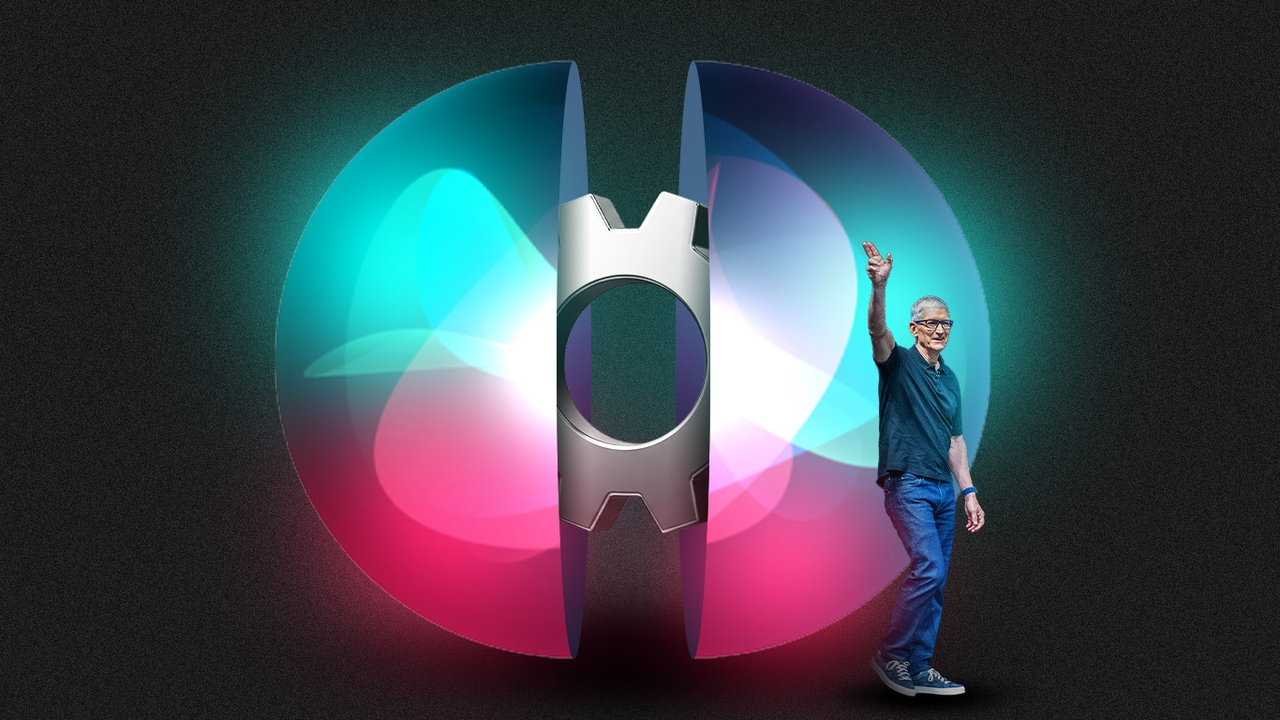
Ahead of WWDC 2026 in June, Apple announced a complete overhaul of Siri to support external AI. This marks a significant strategic shift for a company once known for its strict ecosystem control.
This move reflects increasing pressure as Apple is seen to be falling behind competitors like Google and Samsung in the intensifying global AI race. This shift is more than a feature upgrade; it acknowledges Apple's trailing position in AI and a need to change the game.
This strategy change shows Apple's concerns about its position in AI, as many analysts warn the company risks falling further behind if it cannot build an AI advantage, especially in Siri.
Apple has faced multiple challenges, including losing top AI talent and delays in internal technology development, forcing the company to find ways to accelerate real innovation.
For decades, Apple’s strength lay in tightly controlling both hardware and software. However, under the new system, Apple plans to allow Siri to connect with external AI models such as ChatGPT, Google Gemini, and Anthropic’s Claude, letting users choose which AI answers their queries. Apple had previously begun experimenting with ChatGPT integration.
The new strategy embeds AI into the operating system to preserve user experience while opening Apple’s ecosystem and platform to external AI via Siri. The key feature, Extensions in iOS 27, will turn Siri into a "central hub for AI" where users can download desired AI models, moving beyond being just Apple’s smart assistant.
This feature will have a dedicated category in the App Store, akin to an “AI App Store” that aggregates AI services from external developers, creating a new marketplace on the iPhone similar to the App Store. Developers can create services, and Apple acts as the platform, taking a revenue share through commissions. This model opens a path for Apple to earn 30% commission from AI apps and subscription services on the App Store.
Historically, Apple’s software like iMessage, Maps, or Photos aimed to boost hardware sales rather than generate direct revenue. This contrasts with competitors who aggressively monetize AI via subscriptions and premium apps. Apple believes most users won’t pay directly for Siri or its AI, making the old model of "Apple Intelligence" revenue generation risky.
Analysts believe this shift indicates Apple’s future may focus more on hardware and chips than on AI models or software, which have not matched competitors’ advancements. Consequently, Apple has little choice but to adopt an “App Store + Search” model to maintain profitability.
All these details will be revealed clearly at WWDC 2026 on 8 June, potentially one of the most important Worldwide Developers Conferences in Apple’s history. Early information about the new Siri in iOS 27 includes deeper integration with Spotlight Search and new features such as “Ask Siri” and “Write with Siri.”
However, while the “AI App Store” model aligns with past successes, some analysts caution that allowing external AI into Siri resembles permitting other systems onto the iPhone, raising critical questions about how much control Apple will retain over user experience long term. This Siri overhaul is thus a pivotal moment, with the world watching if Apple can catch up to leading AI competitors.
Read more
Source Bloomberg
Follow Facebook page: Thairath Money at the link -