

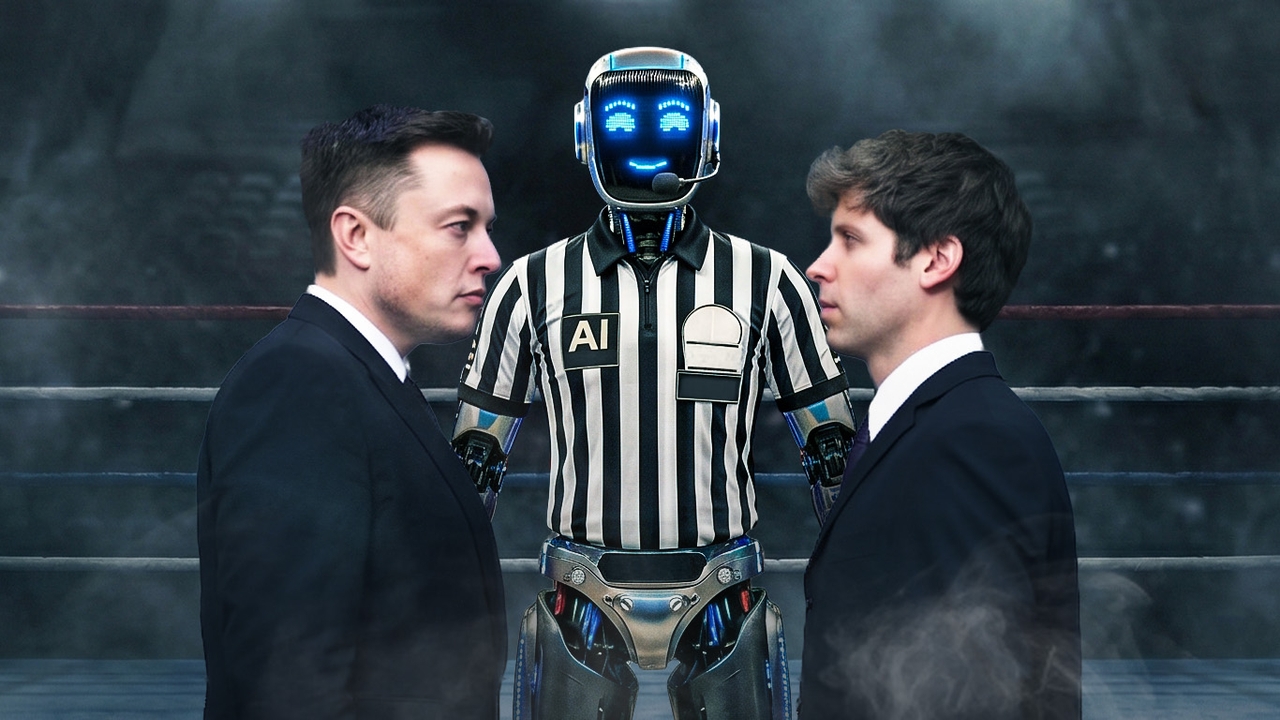
United States court ruling dismisses major case between Elon Musk and Sam Altman. A jury in California unanimously ruled that Musk's lawsuit was filed too late under the law, resulting in all allegations expiring by default. This meant the court did not need to rule on whether OpenAI was actually at fault, closing another major chapter in the conflict between two of AI’s most powerful figures.
The dispute between Elon Musk and Sam Altman started with their alliance before becoming one of AI’s most significant splits. Together, they founded OpenAI in 2015 as a nonprofit organization, aiming to develop AI for humanity’s benefit and to prevent tech giants such as Google from monopolizing the technology.
Over time, OpenAI transitioned to a "for-profit capped-profit" model and then a commercial enterprise to secure substantial funding for AI development. It partnered with Microsoft and grew into a highly valuable AI company, driven by the success of ChatGPT.
In 2024, Musk sued Altman and OpenAI, alleging betrayal of the organization's founding agreements and mission, with the main points being:
Musk described OpenAI’s conduct as "stealing a charity" and asserted he was "misled" into backing the organization before Altman shifted its direction for personal benefit. He demanded damages up to $150 billion and Altman’s ouster.

OpenAI rejected all allegations, arguing Musk knew about plans to commercialize from the beginning. They also claimed he tried to take total control of the company before departing in 2018 to found the competing firm xAI.
OpenAI responded with a countersuit, accusing Musk of attempting to obstruct competition in the AI sector by engaging in a "campaign of harassment" intended to damage the company instead of upholding the organization's founding principles.
During the 2026 trial, substantial evidence attracted worldwide tech attention, including testimony that Musk once suggested OpenAI be passed to his children after his death, causing significant discomfort among the founders.
Several former OpenAI executives testified regarding Altman’s untrustworthy conduct during his tenure. Personal texts, meeting records, executive diaries, and early company emails prompted foreign media to label the case the "Ego War of the AI Age," portraying a dispute between two of the era's most powerful figures.

In the end, the court did not decide on the ideological merits of Musk’s claims but ruled that his lawsuit was untimely. This outcome effectively clears the path for OpenAI, currently raising enormous funds, to pursue its growth toward trillion-dollar valuation status.
The trial is considered more than a legal dispute; it exposes the power dynamics, ambitions, and broken ties between two pivotal AI leaders who are shaping one of humanity’s most powerful technologies. It also underscores important considerations for those closely following AI developments.
This raises questions about whether highly influential AI should be governed by nonprofit organizations or public companies, whether AI development inevitably demands enormous investment from major financiers, and whether technology creators can uphold their ideals when their businesses are worth hundreds of billions. Ethical business conduct and consumer safety are critical issues, as founders' power struggles could affect the industry's and AI’s future.
Further reading on OpenAI news
Sources Reuters , Business Insider , BBC
Follow the Facebook page: Thairath Money at this link -