

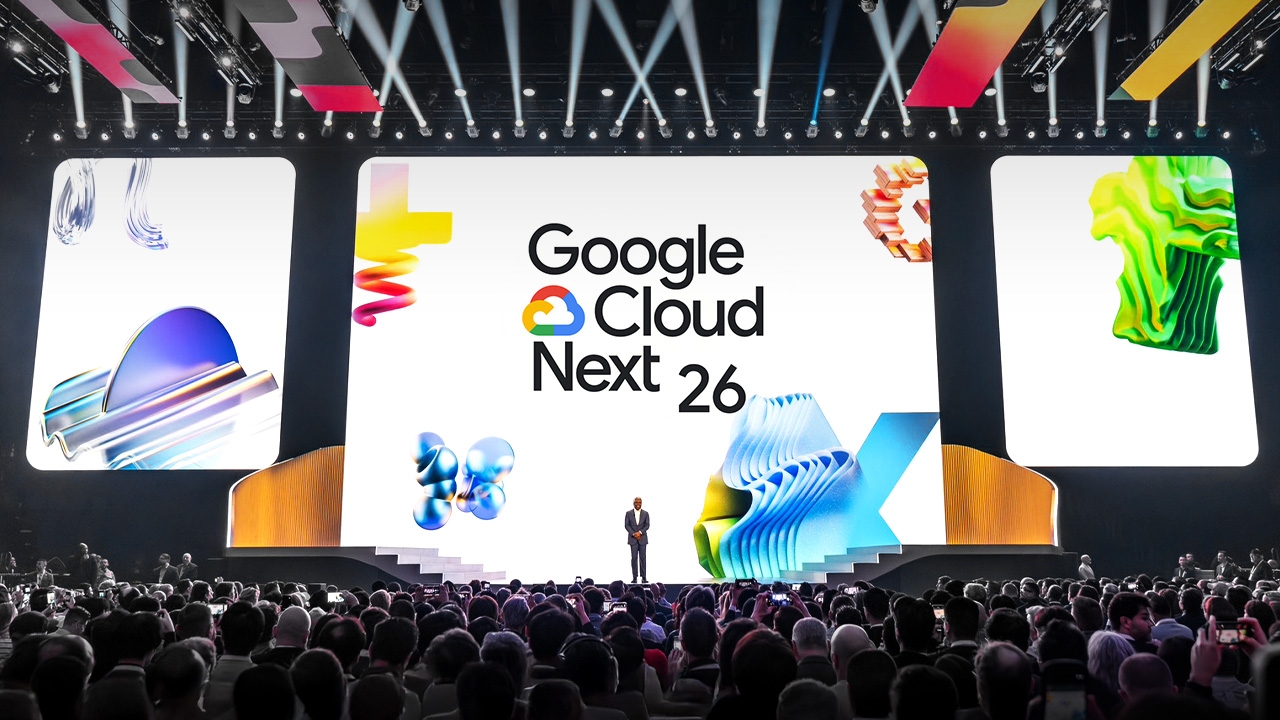
Throughout the first quarter of 2026, the term "AI Bubble" resurfaced as one of the most discussed topics among global investors when Big Tech companies collectively announced plans to invest over $660 billion in a single year—more than the GDP of Israel. Among these players, Alphabet, Google's parent company, declared an investment range of $175-185 billion, nearly doubling its previous year's spending.
. Digital Frontiers on the YouTube channel: Thairath Money,summarizes insights from the Google Cloud Next 2026 event to provide perspective on what Google envisions in the AI landscape and why it is willing to take such a significant gamble.
Before diving into event details, let's understand from the financial statements because in business, "money" is the clearest reflection of conviction.
In 2025, Alphabet, Google's parent company, generated total revenue of $402.8 billion, surpassing $400 billion for the first time in history, and posted a net profit of $132.2 billion, becoming the most profitable company worldwide in 2025.
So, where does this revenue come from?
Google Services (Search + YouTube + others) account for 85% of total revenue, growing 12%.
Google Cloud makes up 15% of revenue but grew 36%, nearly three times faster than Services.
Other Bets (including Waymo) contribute less than 1%.
In terms of profit, Google Cloud, which was previously unprofitable a few years ago, earned $13.9 billion this year, growing 128% or doubling within a single year.
This illustrates that Search remains the mainstay, but Cloud is the "second pillar" rapidly emerging.
What's notable is that despite such huge profits, the company continues to invest aggressively, as seen in its capital expenditures (CapEx) on data centers and chips:
In 2022, it spent $31 billion.
In 2025, this rose to $91.4 billion.
In 2026, it plans to invest $175-185 billion.
This is nearly a sixfold increase over just four years, and the CFO indicated further increases in 2027. The question is: why does the world's most profitable company need to accelerate investments so aggressively?
The answer lies in Google Cloud, the company's "new engine," because as the world uses more AI, demand for cloud services rises in tandem.
How powerful is this engine? Looking at the just-announced first-quarter 2026 figures:
Google Cloud grew 63% year-over-year, outpacing AWS and Microsoft Azure.
Cloud's margin soared from 9.4% to 32.9% within a year.
Backlog, or contract value waiting to be recognized as revenue, surpassed $460 billion.
Sundar Pichai clearly stated at the event that in 2026, over half of the company’s AI compute power will be devoted to Cloud, signaling Google's chosen path for investment.
Back in last year, the main theme at Google Cloud Next was "Adoption," encouraging people to "start using" AI. This year, the focus shifted to "Agentic AI," meaning AI that not only assists thinking but "actually performs tasks on our behalf."
Thomas Kurian, CEO of Google Cloud, declared on stage: "The era of the pilot is over. The era of the agent is here."
Supporting data: nearly 75% of Google Cloud customers have deployed AI in production, and Google itself is Customer Zero. Sundar Pichai revealed that nearly 75% of all new code at Google is now written by AI (approved by engineers), up from 50% at the end of last year, all within just a few months.
The heart of this new era is the launch of the Gemini Enterprise Agent Platform, positioned by Google as the "command center for organizations in the Agentic era."
Pichai disclosed that the monthly paid user base of Gemini Enterprise grew 40% quarter-over-quarter in Q1 2026, noting that customer questions have shifted from "Can we build agents?" to "How do we manage many agents?"
This platform supports over 200 leading models, ranging from Gemini 3.1 Pro, Gemini 3.1 Flash Image (Nano Banana 2), Lyria 3, to Anthropic’s Claude Opus, Sonnet, and Haiku models. Google Cloud also recently added support for Claude Opus 4.7 on the platform.
Across several sessions at the event, it became clear that AI is shifting from a "tool" to a "new form of labor." Here are actual cases already deployed:
In Southeast Asia, several cases have advanced, including CIMB Niaga in Indonesia using AI agents to provide financial advice tailored to customers' life stages; Singapore’s FairPrice Group integrating AI agents with Smart Carts in its "Store of Tomorrow" project; DBS, Emtek Group, and AEON 360 in Malaysia combining finance and retail, using AI agents to offer "0% installment" financing at checkout.
Numbers reflecting scale of real usage:
Over the past 12 months, Google Cloud has 330 customers processing over one trillion tokens each, and 35 customers exceeding 10 trillion tokens. Google's AI models now process over 16 billion tokens per minute via API, up from 10 billion tokens last quarter. Google is signaling that "the trial era is over" and large-scale real-world use is underway.
Regardless of changing use cases, every company needs compute and data. Google knows this well and has built a "fortress" that competitors can't catch in the short term. At the event, Google unveiled its 8th generation TPU in two distinct models:
These innovations boost cost-efficiency by up to 80% compared to prior models, allowing businesses to handle nearly twice the workload at the same cost. Both chip models will be officially available by the end of this year.
What truly differentiates Google is its "end-to-end" or vertically integrated approach—from data center cooling systems, the Virgo network connecting up to 134,000 chips operating as a single computer, to software that orchestrates millions of chips working simultaneously.

Lesson from Jeff Dean: When Google decided to "design its own chips."
In one session, Jeff Dean, Google's Chief Scientist behind the company's innovations for 25 years, recounted that back in 2012, he estimated how much computing power would be needed for a voice command system used worldwide.
The answer was that it would require building an entirely new Google just for that feature—an impossible task.
The solution was for Google to "design its own chips," specialized for AI tasks. The first TPU chip operated 30 to 80 times faster than general market chips.
Amin Vahdat summarized succinctly: "Lessons like this give us the courage to invest in seemingly crazy ideas. We are ready to try and ready to fail." This fortress took 13 years to build, and money alone can't solve short-term problems.
Citadel and Anthropic: Signs that this fortress really pays off.
Consider Citadel Securities, one of the world's largest hedge funds, which recently switched to Google's TPU. In an interview, Sid Nadella, a former Goldman Sachs trader for 20 years, candidly said hedge funds switched to TPU because "it's better value and cheaper than competitors."
This is a key indicator because Citadel is known for very selective technology choices—every millisecond counts. If Citadel switches, others will likely follow.
Anthropic also signed a major deal to use one million TPU chips in 2026, with plans to triple that in 2027. Interestingly, Google is an investor in Anthropic, meaning Google is not just selling but becoming the "infrastructure backbone of the entire AI industry," including competitors.
Google Cloud has transformed from a loss-making business to a new money-making machine. Its operating margin has jumped dramatically, as seen in annual cloud profits:
In 2024, Cloud made $6.1 billion profit.
In 2025, profit doubled to $13.9 billion.
In Q1 2026 alone, Cloud earned $6.6 billion profit, tripling year-over-year, with margin soaring from 9.4% to 32.9%.
This means for every $100 of Cloud revenue, about $33 remains as profit, which is excellent for a cloud business.

The Wiz deal: Completing the enterprise puzzle.
A few years ago, Google Cloud lost money every quarter. To fully secure the enterprise market, Google recently closed a $32 billion deal to acquire Wiz, a cybersecurity company, in March—Google's largest-ever acquisition.
Why Wiz? Because large organizations today use multiple cloud providers to spread risk, but this creates security gaps that no single cloud covers. Wiz was created to solve exactly this problem.
Wiz's founder said at the event: "Future cyber warfare will be bot versus bot, and the only way to fight AI is with AI."
Remarkably, Google's newly launched Triage and Investigation Agent has processed over 5 million alerts, reducing threat analysis time from 30 minutes to 60 seconds. With Wiz, customers no longer need to choose a cloud provider—Google can manage them all.
The nearly 33% margin signals Cloud is becoming Google's "second pillar" after Search. This explains why Sundar announced that half of the company’s ML compute will go to Cloud—it's a highly profitable engine supporting the company’s second core business.
At Google, AI is not confined to software. At the event, Gemini Robotics was launched—AI moving beyond screens into actual robots, enabling robots to "think and understand the real world."
Notable use cases include:
Robotics reflects a new market opening—from factories and warehouses to hospitals and care services. These robots will become the "new form of labor" soon, and importantly, every robot's movement and decision must be processed via Google's Cloud and TPU infrastructure.
The accelerating loop.
Google invests in chips → chips power models → models drive robots → robots increase compute demand → Google invests more in chips.
Amin Vahdat noted in an interview that compute demand is "flipping" from mainly training models to continuous real-time usage, which consumes more power.
This year we may see various AI ROI forms: cost reduction, efficiency gains, and new customer experiences. But what's hard to express is the "speed at which AI is transforming the world"—faster than imagined. Consider just the event's themes:
Last year (2025), the theme was Adoption: "How will we use AI?"
This year (2026), it became Agentic AI: "Agents fully performing tasks."
Next year (2027)? Possibly Monetization.
No matter how much is invested in AI, it must ultimately generate revenue. Back to the initial question: Amid warnings about an AI bubble, what is the world's most profitable company betting on? Google's answer is clear: it is positioning itself as the "infrastructure backbone of the AI economy," not just a market player. Broadly, AI is not just about "who wins" but about "where money flows in the economy."
Today, money flows to infrastructure, but over time it will go to those "who generate real revenue from AI." Ultimately, the biggest advantage may not be the best AI user, but those "present at every layer of this system."