

Blockchain was once among the most talked-about technologies in the digital world. Many believed it would revolutionize everything—from finance, banking, and elections to government operations—even becoming a key campaign promise. Yet over the years, questions have persisted about whether Blockchain can truly change the world as once expected.
. . . “Mr. Arm,” the owner of the 9arm channel, who often creates videos explaining hot topics in technology in an easy-to-understand way for Thai audiences, detailing the workings behind these technologies, made a video titled “Reviewing Blockchain from 2026.”
After the eras of Crypto and Metaverse, how has the technology transformed Thai society and the world?
And in 2026, where does Blockchain stand in the real world? The video offers a “Reality Check” on which use cases have truly proven themselves and which remain overhyped expectations amid technological excitement.
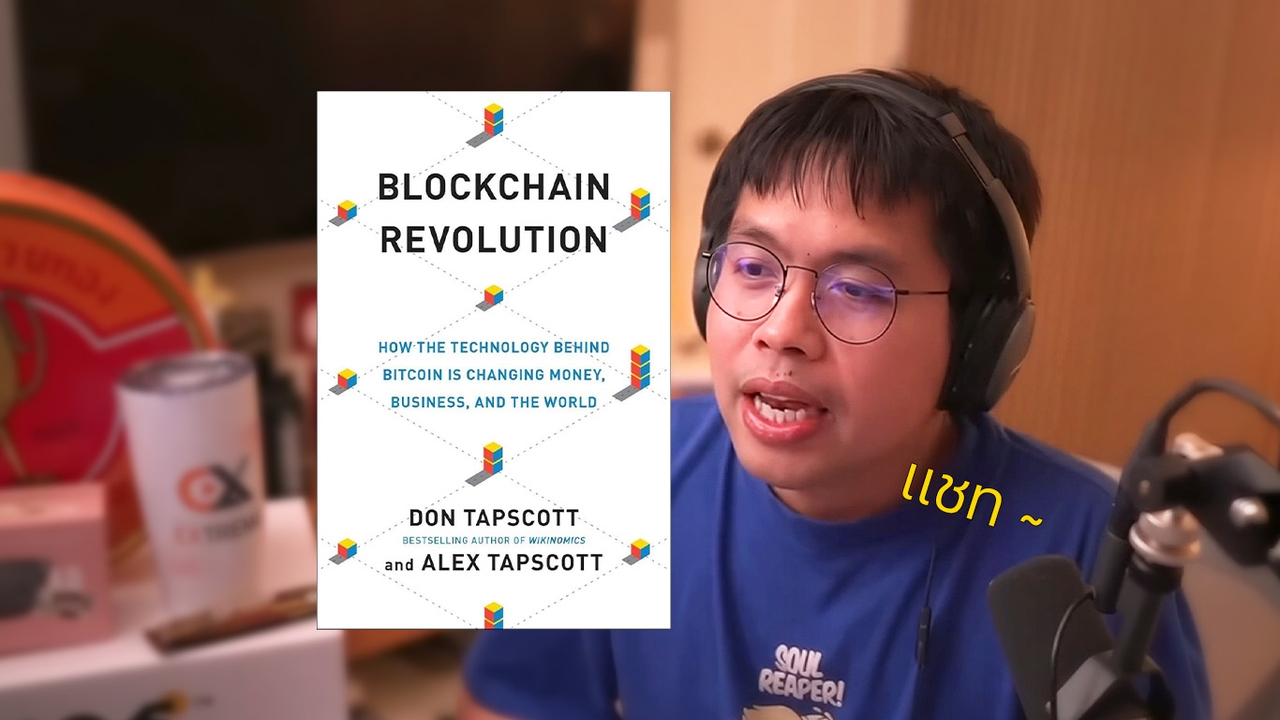
Mr. Arm gave an example from about 10 years ago when the book“Blockchain Revolution: How the Technology Behind Bitcoin Is Changing Money, Business, and the World” by Alex Tapscott and Don Tapscott,caused a stir in the tech industry and fostered belief that Blockchain would become the new world infrastructure for finance, government, and the digital economy.
But by 2026, many use cases had not been widely realized. Mr. Arm’s view is that many technologies are initially overhyped beyond their actual capabilities, and Blockchain is a classic example of the Hype Cycle.
At the time, it was believed Blockchain would enable more decentralized systems without intermediaries like governments, platforms, or banks. In finance, this was called Decentralized Finance (DeFi). However, in reality, true decentralization is rare despite claims of “no one controls it.”
Mr. Arm explained that DeFi exists, functions, and is used, but only as a small part of the global financial system—such as lending, exchanges, and yield farming. Most people still prefer banks for convenience and protection when problems arise,
such as wrong transfers, scams, or hacked accounts, because they can call the bank or Visa for help. He sees intermediaries sometimes not as a weakness but as something consumers want for confidence and security.
He gave the example that governments in many countries can still track, freeze wallets, or compel exchanges to reveal customer data, even if the system claims to be “decentralized.” Blockchain hasn’t eliminated state control but has only changed how control is exercised.
Following the previous point, Mr. Arm believes technology that achieves mass adoption must be easy enough for ordinary people, not just tech-savvy users. He cited seed phrases of 20-24 words as too complex for most, as losing them can mean total asset loss with no help.
He referenced research showing that 80-90% of NFT trading during the boom was wash trading—buying and selling to inflate prices. Also, NFT sales do not grant copyright ownership of art.
Many mistakenly believe buying an NFT equals owning the art’s copyright, but usually it only confers token possession rights, not commercial rights, and enforcement still depends on laws and governments if works are copied. He sees NFTs as digital collectibles rather than a copyright revolution.
Mr. Arm noted that many banks and global organizations announced moving systems onto Blockchain but later canceled projects due to high costs, slow development, and no clear advantage over existing lower-cost databases.
A key issue is that decentralized systems lack an authority to address user problems like hacked accounts or scams, whereas traditional databases can freeze accounts, reverse transactions, or help victims, which most users still want.
Many companies later realized modern databases can perform tasks similar to Blockchain and sometimes better meet business requirements.
A common misconception is that Blockchain uniquely provides immutable data storage. However, this immutability can be problematic if incorrect data is entered initially, as it cannot be corrected.
In contrast, modern databases like PostgreSQL can implement audit logs and cryptographic verification without the complexity of decentralization and offer greater flexibility, especially when correcting human errors, unlike Blockchain where errors may be permanently locked in.
Major failures include attempts by retailers like Walmart and global shipping firms like Maersk to use Blockchain for tracking goods, warehouse locations, containers, and ships, which ended in project termination.
Mr. Arm explained that such systems require cooperation from all supply chain participants—from producers, factories, transport companies to retailers—but in reality many companies hesitate to bear costs to run nodes or share data with competitors.
Ultimately, many found that regular databases or websites linked via QR codes are easier, cheaper, and nearly as effective, as without full participation the network effect fails. More complex technology is not always better.
Another heavily discussed use case was elections, with hopes it would increase transparency, verifiability, and reduce fraud.
Mr. Arm said the main election problems are not about decentralization. Although Blockchain records are immutable, fraud or vote manipulation can occur before data enters the chain and even afterward.
As long as governments design and own election systems, significant transparency gaps remain. People often try to solve social and political issues with Blockchain, though the real issues are governance, not technology.
Blockchain is not a total failure; some use cases have proven effective, especially Stablecoins like USDC, which enable faster cross-border transfers compared to traditional banks that take days and charge high fees.
However, Mr. Arm notes that Stablecoins’ success does not reflect the originally advertised decentralized ideal, as most are controlled by private companies regulated by governments, allowing authorities to monitor or freeze accounts.
Additionally, Bitcoin is increasingly accepted as a store of value rather than a new financial system. Meanwhile, Europe is experimenting with Blockchain for Digital ID to verify identity, a use case more aligned with Blockchain’s nature than trying to replace all global systems.
Mr. Arm’s conclusion is that Blockchain is not bad technology but is not the answer to “everything” as once claimed. It may take another 10-20 years to find truly appropriate use cases, similar to AI research starting in the 1970s, which had no widespread applications until recently.
Follow the Facebook page: Thairath Money at this link -