

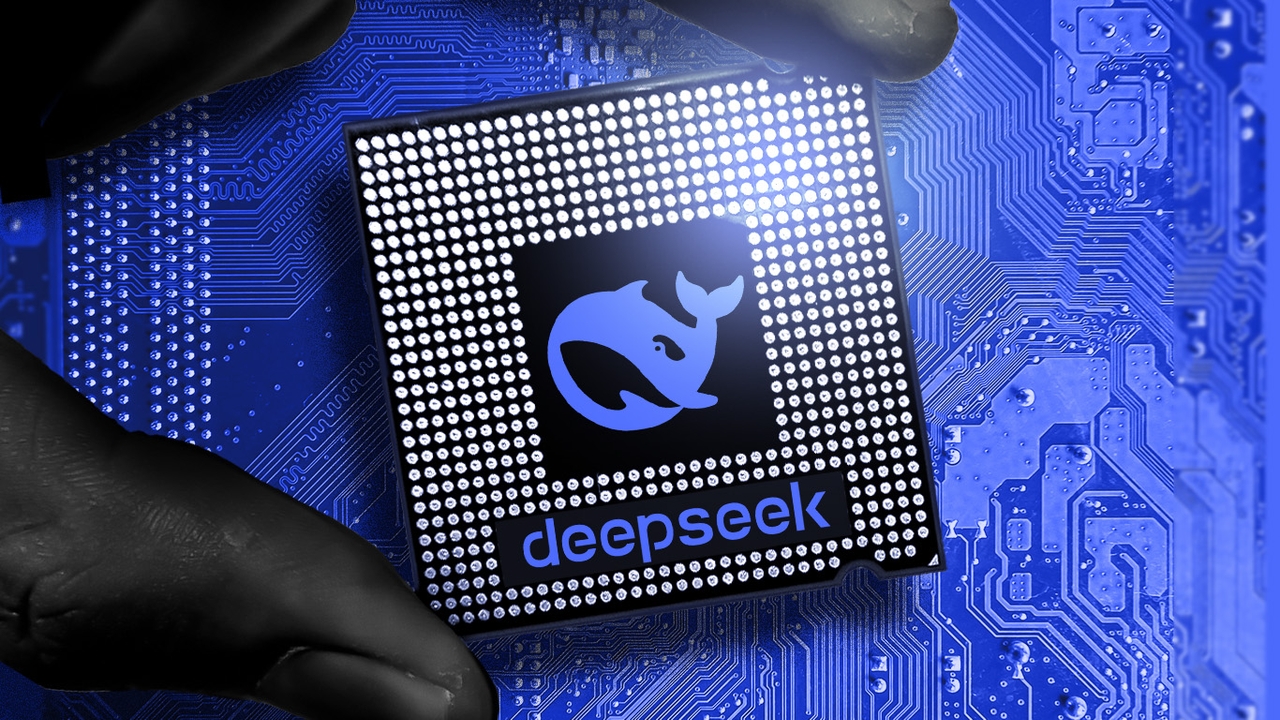
DeepSeek, a rising AI startup in China, is quietly developing its own AI chip, according to Reuters. The chip is designed for inference tasks, meaning processing AI model outputs after training, a market segment growing fastest in the AI industry.
If successful, DeepSeek will not only develop AI models but will become a full-stack AI company covering everything from software to hardware, similar to OpenAI, Google, and Meta, which are also developing their own chips.
Previously, Western competitors like OpenAI launched Jalapeno, their first inference chip developed with Broadcom, while Anthropic reportedly is also exploring its own AI chip development.
For DeepSeek, chip development is strategic because U.S. export controls prevent Chinese firms from accessing Nvidia’s advanced AI chips, and the Chinese government is encouraging domestic tech firms to create substitute technologies to reduce reliance on foreign suppliers.
To date, DeepSeek has used both Nvidia and Huawei chips. Its R1 model, which shook the global tech stock market in early 2025, was trained on Nvidia H800 chips, later banned from export to China by the U.S., prompting the company to increasingly use Huawei’s Ascend chips and launch the V4 model optimized for Huawei’s architecture.
However, sources say DeepSeek’s chip development project is still in early stages. The company is negotiating with chip design partners, semiconductor fabs, and memory manufacturers while quietly recruiting chip design engineers.
Although most analysts agree that DeepSeek’s chip development does not yet impact Nvidia’s business in the short term—since it is early stage and constrained by advanced chip manufacturing and high-bandwidth memory technology—the market is starting to see the broader trend: China’s AI investment focus is shifting from software toward hardware.
Investors are increasingly focusing on companies across China’s AI chip supply chain, including chip developers, semiconductor manufacturers, and memory producers, who could benefit if China builds a more self-reliant AI ecosystem.
This expectation arises as Huawei faces new competition not only from DeepSeek but also from Alibaba and Baidu, who are accelerating their own AI chip developments. Meanwhile, news about DeepSeek may further pressure U.S. semiconductor stocks.
Recently, the PHLX Semiconductor Index (SOX) dropped more than 4.6%, while Micron Technology fell 4.7%, and Sandisk declined over 7%, as investors question how much upside remains in the previously hot AI stock rally.
Zachary Hill, portfolio manager at Horizon Investments, said the current market rotation is moving funds out of sharply rising AI stocks, especially semiconductor and memory chip companies, because investor expectations are so high that it’s nearly impossible for companies to outperform those forecasts.
Despite selling pressure in the U.S., many analysts see DeepSeek’s story as creating positive sentiment for Chinese AI and chip stocks, reflecting China’s efforts to build comprehensive AI capabilities from models to hardware.
For years, AI competition has been measured by who creates smarter models, but now the critical question is who controls the hardware more effectively.
Owning proprietary chips not only reduces GPU costs from Nvidia but also allows control over performance, power consumption, and the supply chain, making the AI race about infrastructure as well as models. Investors are beginning to see the growth potential of the entire ecosystem.
If DeepSeek succeeds, investors may increasingly watch Asian AI and chip stocks as key challengers gradually catching up to U.S. leadership in the global AI industry.
Read more
Follow the Facebook page: Thairath Money at this link -