

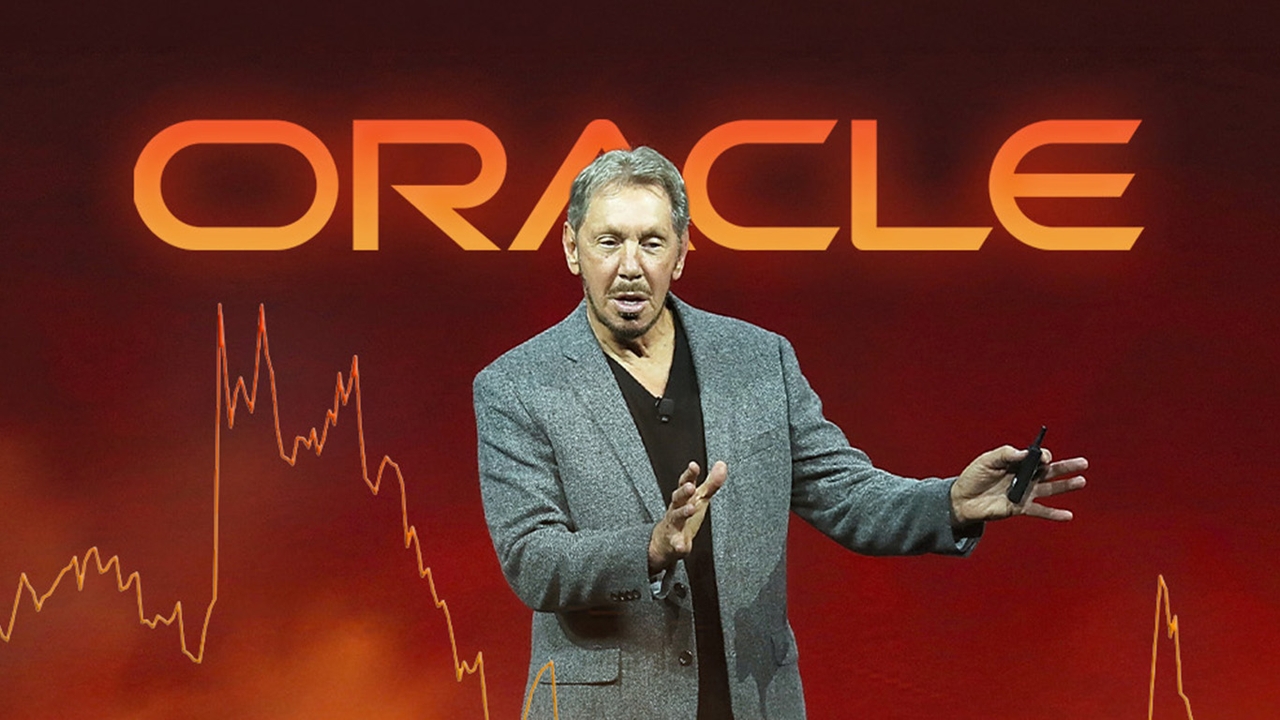
Oracle, the software giant betting its future on AI and Data Centers, is under significant pressure from the bond market as the cost of credit default swaps (CDS) on its debt hits the highest level since 2008.
Meanwhile, S&P Global Ratings downgraded Oracle's credit rating to BBB-, just one notch above Non-Investment Grade (Junk Bond), citing continuous increased spending on AI. This situation not only reflects Oracle's financial condition but also positions the company asa new risk indicator for AI investment.This is attracting close attention from investors worldwide.
Over the past two years, Oracle has shifted from a database software developer to a major AI infrastructure player by rapidly building large Data Centers to meet the demands of Cloud clients and OpenAI.
However, this accelerated investment required massive capital expenditures and borrowing, causing the company's debt load to rise quickly, prompting credit rating agencies to question whether future cash flows will be sufficient to cover the growing debt.

Data from ICE Data Services shows Oracle's 5-year Credit Default Swap rate—a key credit risk measure—rose to about 2.03% per annum (203 basis points) on Monday morning, the highest level since records began in late 2008, surpassing the previous record of 198.23 basis points set just last Friday.
At the same time, Oracle's bonds across all maturities were sold off, widening yield spreads. The 6.7% coupon bonds maturing in 2056, one of the most actively traded, saw spreads widen by about 8 basis points to 263 basis points, while the 5.7% bonds maturing in 2036 widened by around 9 basis points to 205 basis points, according to Trace data.
Oracle holds a special status in the bond market as one of the largest issuers in the Bloomberg US High-Grade Corporate Bond Index outside the financial sector, making it regarded as a "credit risk barometer" for AI investments. It represents the investment model for AI among major tech firms that may face increasing credit risks going forward.
Tyler Richey, an analyst at Sevens Report Research, noted that since 2025, although Oracle's stock price has risen at times, its CDS levels have not declined correspondingly. This suggests equity investors believe Oracle will grow from AI, but bond investors still see persistent credit risk.
Typically, stock markets respond to "growth opportunities," while bond markets focus on "debt repayment capacity." When a company invests heavily before generating revenue, bond investors are the first to assess its ability to manage debt burdens.
Although AI revenues are growing, the market is starting to question whether investments of hundreds of billions in AI infrastructure will yield returns quickly enough. If revenue growth lags or competition from low-cost AI models intensifies, the company may face increased cash flow pressures and debt burdens.
In Oracle's case, this dynamic is clear—not due to poor performance but quite the opposite. Its latest quarterly report shows record revenue of $67.4 billion and net profit of $17 billion, the highest ever.
Yet, simultaneously, Oracle invested $55.7 billion in Data Centers and AI infrastructure, resulting in a negative free cash flow of $23.7 billion and requiring $43 billion in debt issuance within a year, pushing total debt to approximately $156 billion.
Oracle's shares have fallen over 60% from their peak in September 2025, followed by S&P Global's credit downgrade. Investors are closely watching Moody's decision, which currently rates Oracle at Baa2 with a Negative Outlook due to ongoing heavy AI investments.

Analysts believe Oracle's situation could mark the start of a new risk assessment cycle in the AI industry. While the S&P 500 remains near historic highs, bond markets are becoming more cautious.
This is evident from persistently elevated high-yield spreads and rising bond yields, reflecting ongoing market uncertainty about the credit risks of companies heavily investing in AI.
For investors, the key lesson from Oracle is that in the AI era, risk is no longer reflected solely in stock prices. The bond market is becoming the early warning system, signaling whether massive AI investments will generate real returns or become long-term debt burdens pressuring tech companies' balance sheets.
Sources: Bloomberg , Business Insider , Oracle
Follow the Facebook page: Thairath Money at this link -