

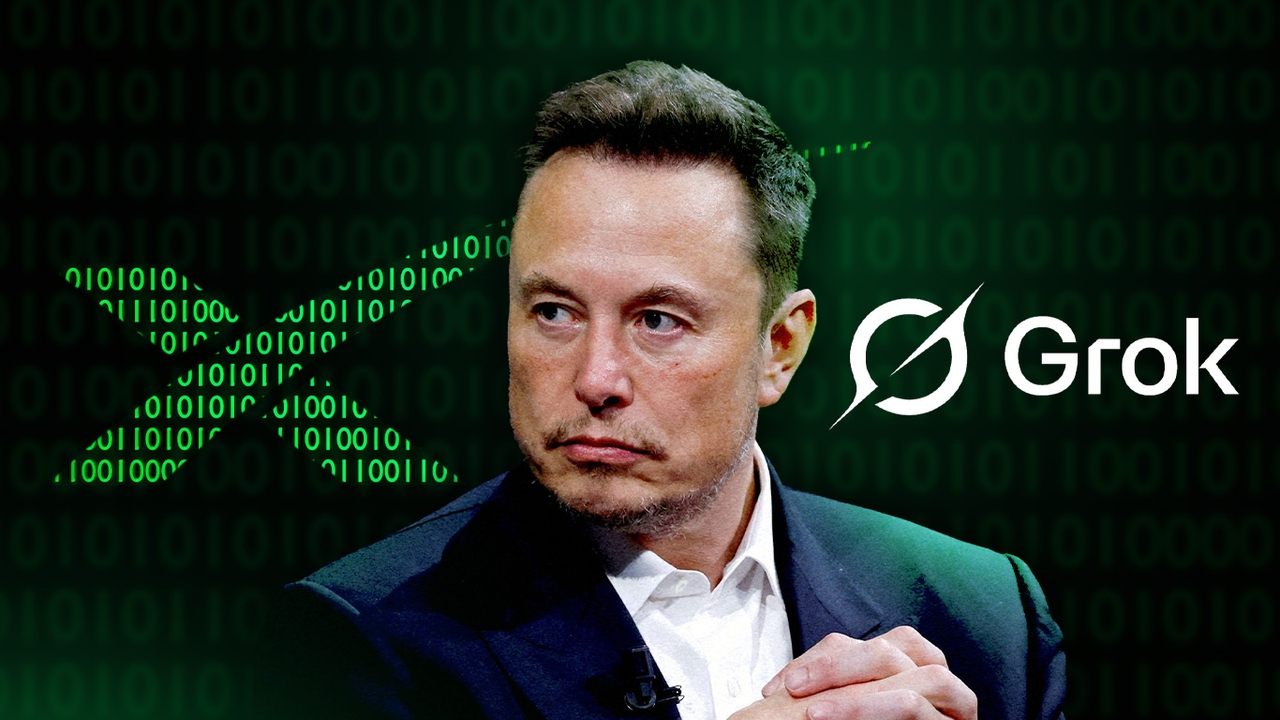
Elon Musk is accelerating SpaceX’s full-scale entry into the AI arena, betting that AI will soon become the company’s highest revenue generator. At the same time, he announced SpaceX will use all its company data, including employee data, to train Grok to enhance AI capabilities.
Elon Musk revealed this direction during a SpaceX employee meeting, stating AI is becoming critically important to the company's future. He predicted SpaceX’s AI revenue will surpass all other business revenues by September, or next month, and expects AI income in Q4 to significantly outpace other sectors.
Musk’s remarks come as AI plays an increasingly vital role in SpaceX’s business. The Q2 financial results disclosed on 4 August show AI is no longer just a future project but already generates revenue.
In that quarter, SpaceX reported total revenue of $7.81 billion, with $2.56 billion from AI, $4.29 billion from Connectivity (including Starlink), and $962 million from space product manufacturing.
This means AI accounted for about one-third of total revenue that quarter. Although still behind Connectivity, Musk believes AI growth will accelerate sharply, becoming the company’s main revenue source within months.
This shift follows a major transformation of SpaceX from a primarily aerospace company into one integrating space and AI after acquiring xAI.
SpaceX is developing multiple AI projects, from the Grok model to building infrastructure for AI processing. One highlighted public project is building a data center in space to train and run AI models.
SpaceX also announced it will rely on Nvidia technology and plans to use the new Vera Rubin computing architecture for this system. Additionally, SpaceX acquired AI coding startup Cursor for about $6 billion, marking another major AI market bet by Musk.
Another key point from the employee meeting is the plan to use SpaceX’s internal data to train Grok. Musk said SpaceX will use all its data in training the AI model.
He told employees they will be like “parents of AI” because Grok will be trained on their thoughts, ideas, and beliefs. However, SpaceX has not disclosed specifics about what employee data will be used or how it will be integrated into the AI training process.
This issue is not unique to SpaceX but reflects an industry trend where AI companies increasingly seek real-world data, moving beyond years of training models on vast internet datasets.
Tech companies are turning to new data types to help AI better understand real-world operations, especially data related to computer use, human work, factory processes, and sensor inputs. For example, Meta once initiated a project to collect employees’ keystroke and mouse movement data for AI development but abandoned it following strong employee opposition.
SpaceX’s case will be closely watched regarding how internal and employee data are used to train AI, and the resulting questions about privacy, employee rights, and data usage boundaries.
The push to develop Grok comes amid fierce AI market competition, with xAI’s models still trailing leading models from companies like OpenAI and Anthropic in some benchmarks.
Recently, SpaceX launched Grok Bot, an AI agent capable of autonomously operating computers, including accessing websites and apps, drafting emails, writing code, and performing various automated tasks.
Developing such AI agents requires massive data to train AI to understand computer usage and independently make multi-step decisions. Thus, Musk’s plan to use all SpaceX data to train Grok is not just about increasing data volume but also about building AI that comprehends real organizational workflows and can leverage that knowledge for SpaceX’s business.
From a company once reliant mainly on Falcon 9, Starship, Dragon, and Starlink revenues, SpaceX is now making a major bet that AI will become its new revenue engine and possibly its largest business within months, potentially making SpaceX a major global AI player.
Read more
Follow Thairath Money Facebook page at this link -