

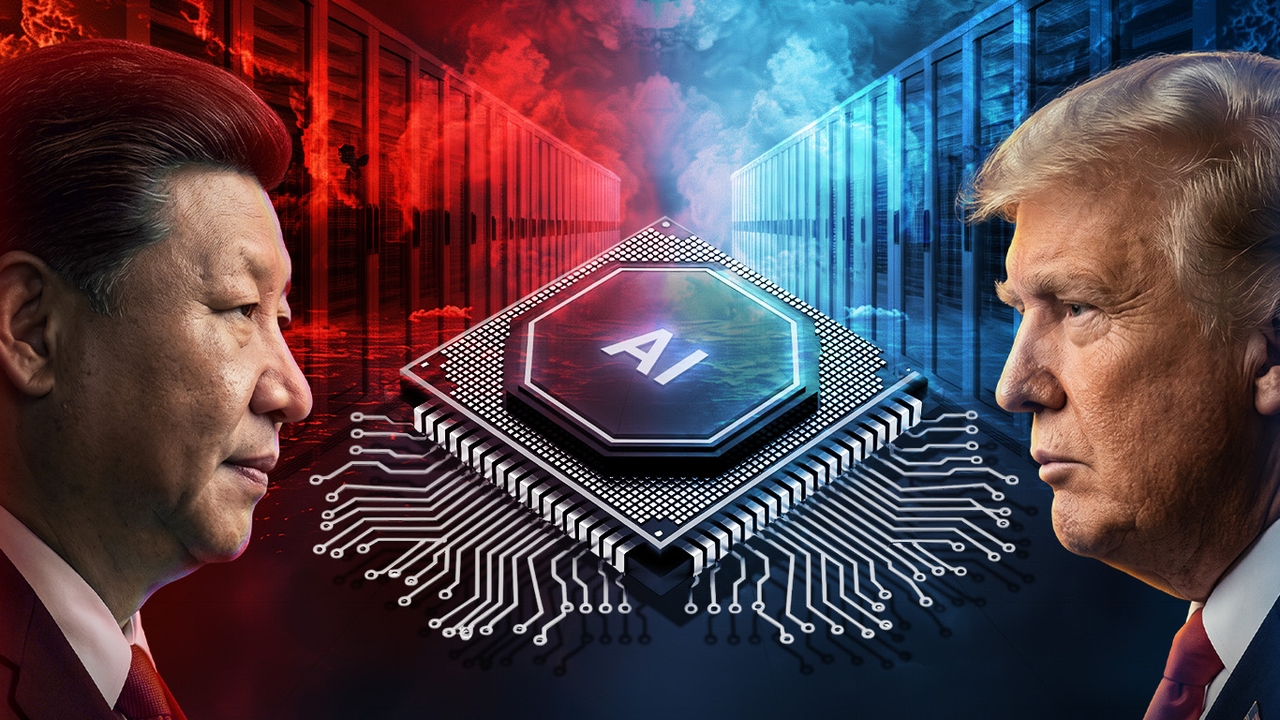
The AI competition between the US and China is reaching a critical turning point. Originally a contest over who could develop superior AI models, it has expanded to include battles over semiconductors, infrastructure, critical minerals, and global economic alliances.
The US is striving to maintain its advantage by controlling technology and building supply chains with less dependence on rival countries, while China is rapidly advancing its own technologies and promoting open-weight AI to expand its global market influence.
The situation became clearer after Chinese President Xi Jinping launched the "World Artificial Intelligence Cooperation Organization" in July, establishing a China-led AI cooperation framework parallel to the US's Pax Silica initiative.
Simultaneously, China's open-weight AI models are rapidly evolving, closing the gap with US companies like OpenAI and Anthropic. This competition has moved beyond government policy into directly impacting business directions and investments in the global AI industry.
Recent reports indicate the US plans to notify dozens of countries to pick a side in the AI rivalry with China, warning that nations participating in China's AI cooperation framework could be excluded from the US-led AI alliance, according to US officials and an internal government draft letter.
Last year, the US launched the Pax Silica program aimed at securing supply chains related to AI models, semiconductors, and critical minerals amid intensifying technology competition between Washington and Beijing.
Currently, about 10 countries have joined this program, including Kazakhstan, a key mineral source and the only country known to participate in both US and Chinese cooperation frameworks. Other close US allies include Japan, Australia, and South Korea.
The draft letter, prepared by the US State Department, was sent to 35 countries that signed the “AI Opportunity Statement” in June. This group includes Pax Silica members and others seeking AI collaboration with the US.
The push for countries to choose sides aims to limit China's access to resources crucial for developing advanced AI, which could provide military and economic advantages.
The draft letter states, “Being part of everything means being part of nothing,” emphasizing that signing the Pax Silica declaration is not merely membership but a "commitment." It urges countries to carefully decide on AI issues and notes that one cannot maintain such a status while simultaneously joining overlapping programs with conflicting expectations, without directly mentioning China.
It remains unclear when the US will send this letter or if the content will be revised beforehand, as the draft is undated. Meanwhile, the Chinese embassy in Washington expressed opposition to politicizing trade and technology issues. A spokesperson said such actions "would hinder global AI progress and benefit no one."
The Pax Silica agreement aims to encourage US allies and partners to jointly develop initiatives, including export controls, ultimately reducing reliance on rival countries for critical minerals, AI models, and semiconductors, which are essential AI infrastructure.
This move could spark a competition to control the entire AI supply chain from upstream to downstream—from minerals used in chip production, semiconductor manufacturing equipment, processing chips, data centers, cloud services, foundation models, to AI applications.
If the US proceeds with pressuring allies to pick sides, the global AI supply chain may increasingly split into two ecosystems, forcing companies to choose markets, technologies, and business partners more cautiously.
For investors, this may mark a turning point in AI investment themes, shifting focus from simply having the best AI model to the larger question of who controls the AI ecosystem most effectively.
If US-China competition intensifies, AI chips will become increasingly strategic assets as the core of data centers and AI systems. Semiconductor companies within US and allied supply chains may benefit from investments to secure supply chains and reduce Chinese dependence. However, export controls might also limit their market access since China is a large consumer.
Investors should look beyond OpenAI, Anthropic, or model developers, as AI investments now cover chips, memory, servers, networks, data centers, energy, cloud, and software.
Recently, major investors have refocused on large companies controlling AI infrastructure like Microsoft, Amazon, and Google, due to their processing power, capital, and customer bases supporting long-term investments.
If AI divides into two poles, companies with revenue or supply chains linked to China may face higher perceived risk, while those in US and allied supply chains could gain a geopolitical premium for secure supply chains. However, not all US stocks will rise, as valuations remain key, especially after massive AI-related investments in data centers and infrastructure.
The AI race increases the importance of critical minerals, as chip and tech infrastructure production relies heavily on raw materials. Mining and processing companies of these minerals could attract attention if the US and allies accelerate supply chain development outside China. Kazakhstan’s role is significant, involving not just technology alliances but access to essential advanced industry resources.
Investors should be cautious as this competition could heighten AI trade volatility. Every time the US tightens export controls or China successfully develops substitute technologies, markets may need to revise profit forecasts for AI supply chain companies. Previously, US chip stocks were sold off amid concerns about AI investment costs and Chinese competition before markets refocused on long-term winners.
If the US continues to pressure allies to choose sides, investors should monitor four key areas simultaneously: chips and semiconductors; data centers and energy; critical minerals; and companies controlling AI platforms. For AI stock investors, upcoming focus should extend beyond company performance or model capabilities to include US export policies, Chinese AI progress, supply chain bifurcation, and AI infrastructure costs. These factors will increasingly determine who emerges as "winners" and who gets left behind in the next AI investment cycle.
Source information Reuters , Financial Times
Follow the Facebook page: Thairath Money at the following link -