

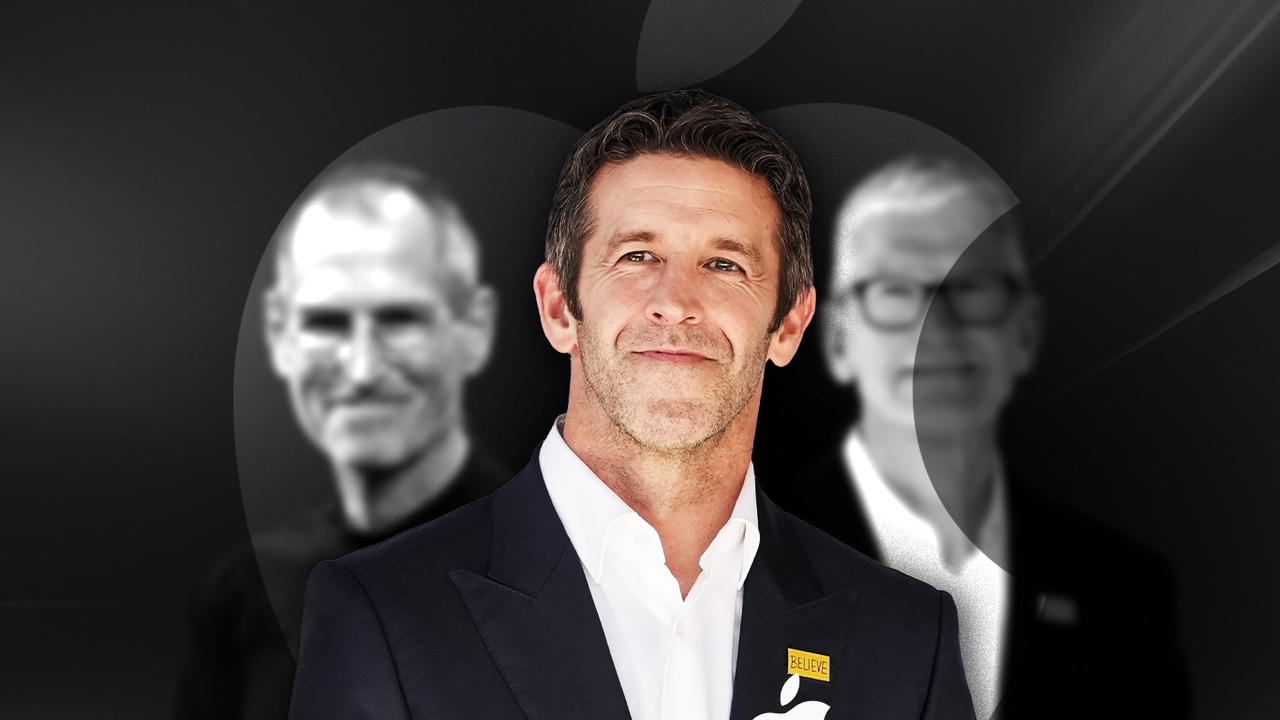
On 1 September, John Ternus will officially step up as Apple’s new CEO, coinciding with Apple’s major annual product launch season. This year appears to be one of the most anticipated in recent years for new device unveilings.
These include the first foldable iPhone and several other products still under development, such as camera-equipped AirPods that interpret the user’s surroundings, smart glasses, home security systems, and wearable camera devices that can be worn as necklaces or clipped to clothing.
Many of the products expected this season have been overseen by John Ternus since his time as Apple’s head of hardware. With a hardware veteran now leading the company, the key question is how this decades-old gadget maker will enter the AI era.
Apple grew from device creation, and John Ternus has spent over 25 years developing those products. He began his career at Apple as a Mac design engineer, gradually taking responsibility for products like the iPad, AirPods, and iPhone, before leading the entire hardware engineering division.
However, being CEO involves more than product creation. John Ternus has limited experience in finance, sales, legal affairs, and government relations, meaning he will need to rely more on his executive team.
Sabih Khan, Chief Operating Officer; Kevan Parekh, Chief Financial Officer; and Eddy Cue, head of services business, are likely to take on bigger roles and have more influence over Apple's future direction.
One of Apple’s most important figures is Tim Cook, who has been CEO since 2011. He took over two months before Steve Jobs passed away, at a time when many questioned whether Apple could continue without its iconic co-founder and leader.
Under Tim Cook’s tenure, Apple’s performance improved steadily, with revenue nearly quadrupling to $416 billion and market value increasing fifteenfold. While he did not create a world-changing product like the original iPhone, successful new products like AirPods and Apple Watch were launched.
He also expanded the services business, including Apple Pay and Apple Music, growing this segment from a minor part of the company into a revenue source now larger than Apple’s entire business at the start of his CEO tenure.
However, Tim Cook will not disappear from Apple; instead, he will become Executive Chairman, managing Apple’s relationships with President Donald Trump and the Chinese government, and handling other tasks assigned by the new CEO.
Tim Cook’s continued role does not indicate a lack of confidence in John Ternus, who has been seriously considered as successor for about two years.
After announcing the leadership transition, Tim Cook told employees, “There is no one on this planet I trust more to lead Apple into the future than John.”
Cook described John as someone who can see the big picture from 30,000 feet while also diving into the smallest details of a problem.
However, Cook’s plan to not fully retire raises questions about how much freedom John Ternus will have to shape Apple in his own way.
So far, the two remain closely linked, appearing at events together to show that Apple’s leadership transition maintains continuity in overall management.
Although John Ternus officially becomes CEO on 1 September, the transition will not happen overnight.
Tim Cook, now 65, and many longtime senior executives are gradually leaving Apple, while John Ternus takes over amid a significant generational shift within the company.
The key question is not only whether he can manage Apple well, but also how effectively he can oversee the organizational transition during this major change.
Meanwhile, several senior executives are leaving Apple to join competitors. For example, in June, Paul Meade, who led Smart Glasses and Mixed Reality Headset units, left Apple for OpenAI, citing dissatisfaction with his role following organizational restructuring associated with John Ternus’s rise.
Subsequently, Apple began layoffs in teams related to Vision Pro, mostly affecting game and Immersive Video groups. There were also cuts in device security, audio engineering, Siri connectivity, testing, and operating system development teams.
While many question whether the iPhone is nearing its end, John Ternus thinks the opposite. He has overseen the iPhone’s redesign plan for three years, starting with last year’s thinner iPhone Air, followed by this year’s foldable iPhone.
This will continue through 2027 with a new glass-focused iPhone design, marking the iPhone’s 20th anniversary.
John Ternus insists the iPhone remains central to Apple’s strategy and consumers’ daily lives, believing people still want a single device that can do everything.
However, some Apple executives worry about John Ternus’s ability to handle logistics and supply chain challenges, especially the current memory chip shortage that has driven up production costs.
Supply chain management is Tim Cook’s strongest expertise; before becoming CEO, Cook was renowned for managing Apple’s supply chain effectively. Thus, John Ternus will not manage this crisis alone.
It is expected that he will rely on Sabih Khan, as well as procurement, sales, and operations teams to address rising parts prices and shortages, which Apple expects to persist into next year.
Above all challenges, Apple’s greatest concern is trailing competitors in AI. Although Apple has launched the first version of Apple Intelligence, feedback has been insufficient.
Previously, Tim Cook dismissed the AI head and restructured Siri leadership, transferring responsibilities to the head of software engineering and executives who led the Vision Pro project.
Since Apple’s internally developed AI technology has not met expectations, last year the company began building a new model for Siri using Google’s Gemini as the system’s foundation.
This decision upset many employees on Apple’s Large Language Model team, leading some leaders and staff to leave for companies offering higher pay.
Apple also scaled back certain AI research projects, increasing concern among its internal AI model development team.
It remains to be seen whether Apple will make a big bet on Siri AI by September, aiming to fully launch a new Siri AI version capable of competing with ChatGPT.
A major issue is that this type of AI is very costly, so Apple must find ways to turn Siri AI into a profitable business, possibly through subscription fees or opening APIs to external developers.
But before reaching that point, Apple must overcome Siri’s longstanding reputation as a voice assistant prone to errors and limited usefulness, despite positive reviews of the new Siri AI version’s improved performance.
From John Ternus’s perspective, AI is not just a consumer product but a tool to transform how Apple develops products.
Before becoming CEO, one of his final decisions as head of hardware was to launch an AI platform to accelerate product development, improve hardware testing efficiency, and enhance device reliability.
“We will be able to solve even tougher problems,” Ternus told employees, viewing AI as a way for Apple to apply lessons from past products to those in development, aiming to make new products more useful.
Apple has planned to launch camera-equipped AirPods and home display devices for years but has postponed these due to immature AI technology. Thus, the company hopes the new Siri AI will solve these issues.
However, installing AI devices in homes could mean placing cameras or AI sensors throughout living spaces or on people, a risky move for Apple, which has built its brand on privacy.
Apple is pursuing a different approach: although Smart Glasses have cameras for photos and videos, the new AirPods and home security devices will not record viewable video but instead send data for AI to analyze the environment.
Ultimately, after 1 September, John Ternus will officially become Apple’s new CEO. He will not only inherit a multi-trillion-dollar company but also lead Apple as the world enters the AI era, with the crucial question of whether Apple can remain a world-changing company.
Source:Bloomberg
Follow technology and innovation news on Digital Transformation with ThairathMoney for your “Better Finance, Better Life” athttps://www.thairath.co.th/money/tech_innovation
Follow the Facebook page: Thairath Money at this link -https://www.facebook.com/ThairathMoney