

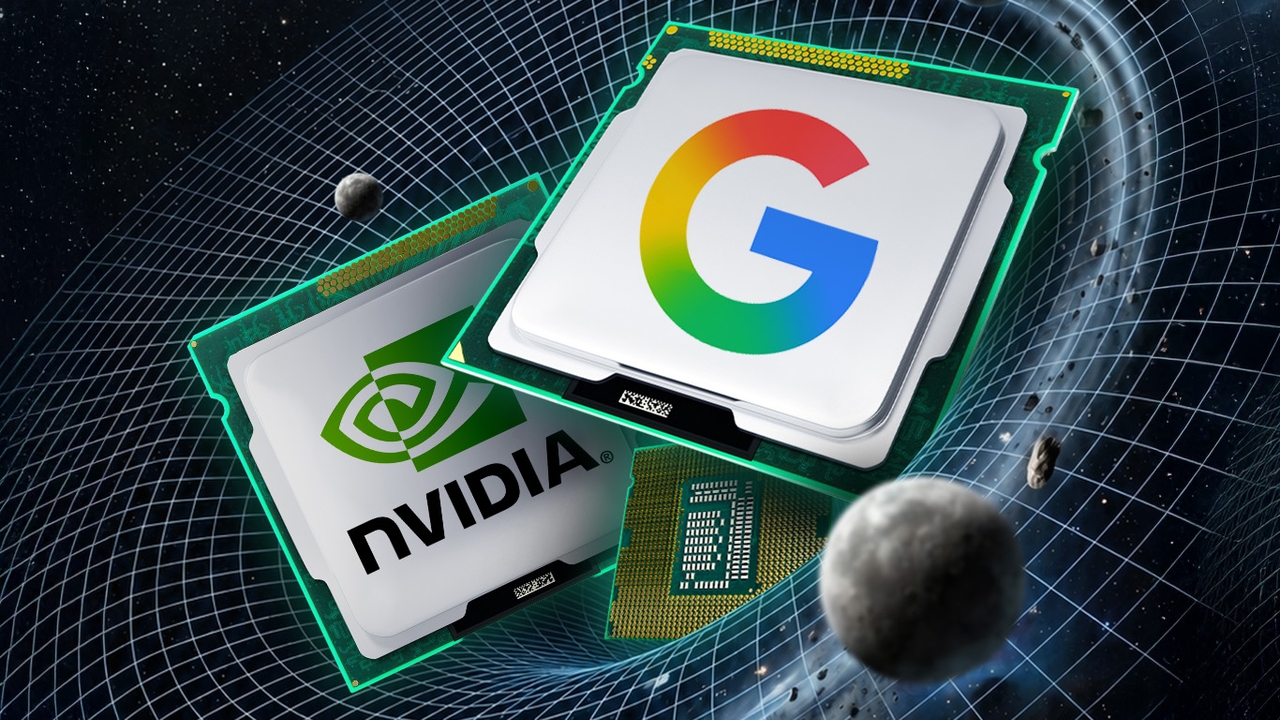
As demand for AI processing rapidly increases and terrestrial data centers face constraints in energy, space, and cooling systems, technology companies are exploring new infrastructure models beyond Earth.
One concept gaining attention is Space-based Data Centers, which are data centers in orbit using satellites as infrastructure for AI processing and relying primarily on solar power as their energy source.
Recently, Google has taken a serious step into this field by sending its self-developed AI chips, Tensor Processing Units (TPUs), into orbit aboard SpaceX's Falcon 9 rocket last Thursday. This marks Google's initial real-world test of the space data center concept.
This launch was part of SpaceX's Transporter-18 mission from Vandenberg Space Force Base in California. The mission deployed multiple Planet Labs satellites, including a prototype satellite powered by solar energy and equipped with Google's TPU for AI processing experiments.
This test represents the first time thatProject Suncatcher,an Alphabet initiative, has operated in orbit. Google first revealed this long-term research project in November 2025 to explore the feasibility of building AI infrastructure powered by solar energy that can operate continuously in space.
Travis Beals, Senior Director of Project Suncatcher, stated after the launch that the team has established contact with the satellite and the system is functioning as expected. He views this mission as an initial step in researching whether space can support scalable machine learning infrastructure in the future.
Although Google recently launched TPU chips into orbit, competition in space computing has begun earlier.
One notable company is Starcloud, a space computing startup that launched NVIDIA H100 GPUs, which are data center-grade processing chips, into orbit since late 2025 to test AI processing in space.
Starcloud envisions satellites functioning as orbiting data centers powered by solar energy and connected in networks to support AI workloads.
Meanwhile, Axiom Space is developing its own orbital data center concept, aiming to build infrastructure for processing and storing data in space. It has previously tested data center systems aboard the International Space Station (ISS).
The space industry giant SpaceX is also advancing in this direction. Elon Musk announced plans to build space data centers using large satellite networks equipped with GPUs and solar power systems.
He has estimated that space data centers could become the most cost-effective method for AI training within the next two to three years. Gwynne Shotwell, SpaceX's Chief Operating Officer, indicated plans to deploy "Supercompute in Space" by 2027.
Additionally, Blue Origin, Jeff Bezos's private American aerospace and commercial space tourism company, is developing space data center concepts with TeraWave providing communication infrastructure to support these systems.
A key reason for moving data centers to space is energy considerations. Alphabet states that satellites in Low Earth Orbit (LEO) can access nearly continuous sunlight and potentially generate up to eight times more solar energy than on Earth.
If technology advances to enable networks of interconnected satellites, it could create infrastructure capable of supporting large AI workloads without relying on massive terrestrial data centers.
This concept is seen as a promising option to address the growing compute demand driven by AI development, as increasingly complex AI models require vast amounts of GPUs, TPUs, data centers, and energy.
Investors are beginning to commit real capital to this market, increasing its attractiveness. For example, Starcloud has continuously raised funds, attracting both technology investors and chip industry players.
A particularly notable investor is NVIDIA, which not only manufactures GPUs destined for space-based processing but also has invested in Starcloud. NVIDIA's involvement reflects the recognition of space computing as a "new compute market" that could play a significant role in the AI industry long term.
For investors, the critical issue is not just the capability to send chips into space but the "unit cost of computation," and whether it can compete with Earth-based data centers.
If technology can reduce energy production and processing costs in space, the space data center market could become a vital AI infrastructure. However, if satellite launch, maintenance, and cooling system costs remain high, this concept may remain a long-term investment requiring years of validation.
Nevertheless, significant challenges remain for space data centers. A major limitation is the cost and frequency of rocket launches, as deploying large amounts of equipment into orbit is expensive and commercial flight capacity is limited.
Additionally, chips and electronic equipment must operate under harsh conditions, including extreme temperatures, space radiation, and cooling constraints. Another risk involves orbital debris, which could increase complexity and costs in maintaining large satellite networks in the future.
Therefore, Google's launch of TPU chips into space is not yet the opening of a new data center but an experiment to verify whether computation in space is feasible. If Google's test and those by competitors like Starcloud and SpaceX succeed, the change will not only be in satellite technology but also in the entire AI economic infrastructure.
Source information CNBC , Fast Company
Read technology news and digital transformation innovation with Thairath Money for better financial life at https://www.thairath.co.th/money/tech_innovation
Follow Thairath Money on Facebook at this link - https://www.facebook.com/ThairathMoney