

It is undeniable that today online fraud, or "scams" has become one of the economic crimes causing damage worldwide, especially in Southeast Asia, which has become a key area for transnational criminal networks. These networks no longer only create fake accounts to scam victims but have evolved into sophisticated criminal organizations with complex structures—from sourcing technology, creating online identities, contacting victims, to moving and laundering money through financial systems.
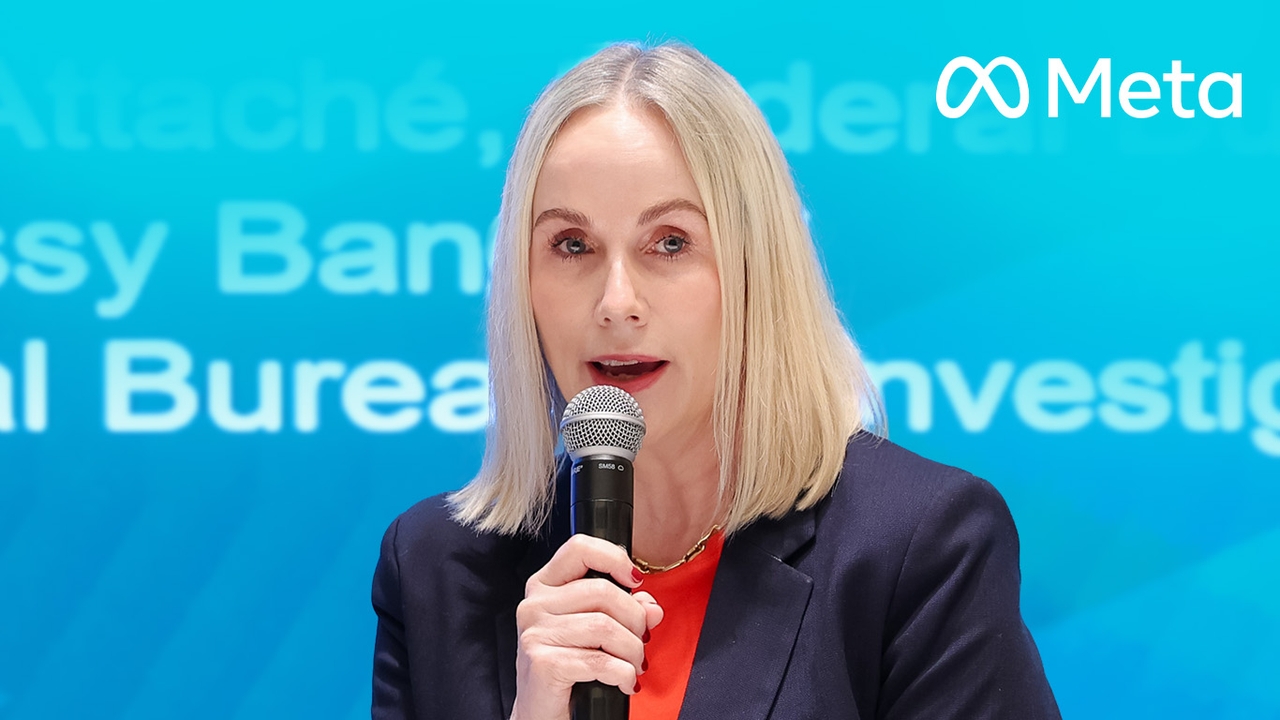
Thairath Money spoke with Beth Ann Lim, Director of Public Policy Strategy at Meta, during the Global Anti-Scam Summit (GASA) Asia 2026 held in Bangkok. They discussed the behind-the-scenes cooperation between tech companies and law enforcement in dismantling transnational scam networks, the limitations of online platforms, and key challenges governments must collectively address.
One of the most interesting points from the interview is the acknowledgment that, although Meta possesses user data and advanced detection technology, the company only sees part of the entire scam process. Closing accounts on Facebook or Instagram does not necessarily mean the underlying criminal network is destroyed.
Meta revealed at GASA that in the first half of 2026, it removed 65 million scam advertisements worldwide on Facebook and Instagram, with 94% proactively detected and acted upon before any reports.
Throughout 2025, Meta also shut down 10.9 million Facebook and Instagram accounts linked to Scam Centers, as well as 6.8 million WhatsApp accounts.
These figures reflect the scale of the problem the platform faces. Meta stated it has invested in AI detection technology, platform integrity systems, and expert investigations to identify and block extensive scam networks.
However, deleting such a vast number of accounts or ads is not the ultimate solution to combating scams, as fraudulent activities do not occur on a single platform but involve multiple industries and countries.
Beth Ann explained a major misconception in combating scams is seeing the problem as solely occurring on online platforms, whereas in reality, a single scam involves multiple operational stages and various service providers across industries.
Meta uses an analytical framework called the "Attack Chain" to understand the operational structure of scam networks, dividing it into five critical steps:
Build Infrastructure building infrastructure such as sourcing servers, SIM cards, mobile phones, and devices used in operations.
Create Accounts preparing accounts, including creating online identities for scams.
Engagement approaching targets and interacting with victims through online platforms.
Execute Fraud carrying out fraud and deception, like tricking victims into transferring money or conducting financial transactions.
Clean Up and Move covering tracks by deleting accounts or relocating operations to evade detection.
Beth Ann noted that Meta's main role is monitoring the third phase, Engagement, where scammers contact users via the company's platforms.
Therefore, the data Meta can monitor represents only a portion of the entire process. Information about equipment sourcing, money movement, and laundering transactions may be under the control of telecom companies, banks, or payment providers.
"Meta only sees the interactions with users on the platform but does not see where scammers buy servers, what SIM cards they use, or through which systems money is transferred and laundered. That information belongs to other service providers."
She compared this process to assembling a jigsaw puzzle, where each company holds only one piece of information. Without linking data from all sectors, no one can see the full picture of the criminal network.
Therefore, Meta emphasizes cross-sector and cross-regional cooperation, especially data sharing through the Global Signal Exchange network, connecting tech companies, financial institutions, and law enforcement agencies.

One example Beth Ann cited is a joint operation in May involving tech companies and law enforcement, including Meta, the U.S. Department of Justice, and the Royal Thai Police, with officials coordinating between Bangkok and Washington, D.C.
This operation was a disruption effort aimed at interfering with and dismantling the criminal network's operational capacity. Each company used its data and tools to tackle the same network from different parts of the system.
Beth Ann revealed that Meta closed about 1.4 million advertising accounts on Facebook and Instagram during the operation, while Microsoft shut down more than 20,000 fraud-related accounts.
Other participating tech companies included Coinbase, which helped block approximately $3 million in cryptocurrency, and Starlink, which suspended service usage related to the network.
As a result, the Royal Thai Police arrested 63 suspects. This outcome highlights that combating scams goes beyond deleting online accounts; it requires connecting data across sectors for prosecuting offenders and assisting real-world victims.
Beth Ann emphasized that such cooperation must expand further into banking and telecommunications, since scam networks rely not only on online platforms but also on communication infrastructure and financial systems.
When asked whether deleting vast numbers of scam accounts effectively solves the scam problem, Beth Ann indicated that focusing on managing issues only on a single platform may be insufficient.
Even if Meta successfully removes scam-related accounts from Facebook, the fraudulent process elsewhere may continue because criminal networks can operate through financial systems, payment channels, or switch to other platforms.
"When we remove an account from Facebook, it cannot be used on our platform anymore. We have done our part, but other parts of the scam process, including financial and payment systems, still need to be addressed."
This highlights the limitations of Account Takedown measures, which, although reducing scammers' access to victims, cannot alone measure how much scam networks have been dismantled—especially when these criminal organizations adapt rapidly by creating new accounts, changing contact channels, and relocating operations.
Beth Ann gave the example that in 2025, increased pressure on Scam Centers in Myanmar and northern Cambodia led some networks to relocate to regions like West Africa and the Middle East.
She believes the key issue is that suppression in one country often pushes criminals to move elsewhere, rather than ending their operations. Moreover, the high financial returns from scam businesses motivate these networks to persist despite pressure from authorities and tech companies.
Another challenge Beth Ann highlights is the differences in laws and regulations governing international data exchange.
Although tech companies, banks, and law enforcement hold data that could track criminal networks, sharing this information is restricted by varying legal frameworks in each country.
Some countries impose disclosure limitations, others have distinct personal data protection laws or cross-border data transfer requirements, complicating intelligence exchange and potentially delaying swift action.
Beth Ann stated that the region needs "legal clarity" to ensure all parties understand what data can be shared, under what conditions, and how such data can be used to combat transnational crime.
"If banks, telecoms, and online platforms work within their own silos without exchanging data, we cannot truly solve transnational scam networks."
She explained that a single scam network might target victims across multiple countries—such as the U.S., Japan, Australia, and Malaysia. If each country only sees its own data, they cannot connect the dots to identify the criminal network behind these actions.
For Meta, the biggest challenge is not just developing more effective detection technology but enabling data scattered across multiple countries and industries to be used collaboratively.

When asked about the scam situation in Thailand and the current safety of Facebook users, Beth Ann emphasized the importance of user self-protection alongside platform measures.
She revealed that Meta runs an online safety education campaign called One Step Ahead, covering 18 markets in the Asia-Pacific region, reaching about 439 million people. In Thailand, the campaign has reached approximately 21 million people through cooperation with local agencies, including the Securities and Exchange Commission of Thailand.
Simultaneously, Meta has developed user protection tools across its platforms, notably employing AI to detect scam patterns and alert users of risky behavior. This includes suspicious friend requests flagged by indicators such as few mutual friends or accounts listing foreign locations.
On Messenger, Meta has advanced scam detection systems that identify common fraud patterns and allow users to submit recent messages for AI review, which then recommends next steps.
WhatsApp is developing a Scam Alert feature users can enable, providing private warnings on their devices about potential scam attempts before deciding to block, report, or continue conversations, as well as alerts for suspicious device linking requests.
Meta also promotes the use of Passkeys and two-factor authentication to reduce unauthorized account access risks. The company states over one billion WhatsApp users currently use Passkeys.
However, these tools still depend on user judgment because, although systems can flag risks, users may be persuaded to continue transactions off-platform.
Beyond technological and legal limitations, another global scrutiny Meta faces concerns platform responsibility for Scam Ads, directly linked to its core ad-driven revenue model.
Previously, Reuters published an investigative report in November 2025 citing internal Meta documents estimating that revenue from ads related to scams and prohibited goods and services combined could account for about 10% of 2024 revenue, roughly $16 billion.The figure was an internal estimate revealed by Reuters, not solely Scam Ad revenue, and Meta contested the assessment as overly broad. Nevertheless, the report raised concerns over conflicts between ad revenue generation and responsibility to prevent scammers from using the platform.When asked about the report,
Beth Ann
explained that the company continuously works with law enforcement and governments, investing in tools and technology to prevent fraud. She emphasized, "Meta does not want scams on the platform because it definitely harms our business." She disclosed that in the first half of 2026, Meta removed about 65 million accounts on Facebook and Instagram, with 94% detected proactively. The company continues to invest and implement measures to make the platform a place people want to use and insists it does not want bad businesses on its platforms. However,
Beth Ann
did not directly address the proportion of revenue from Scam Ads as reported by Reuters or discuss conflict of interest management between ad revenues and user safety. This remains a critical question regarding the accountability of major tech firms, especially as online platforms act as ad providers, detection technology developers, and gatekeepers of user access within their ecosystems. From Account Removal to Disrupting the Entire Scam Economy
The discussion reflects that combating online crime faces more complex challenges than merely improving AI to detect fake accounts or scam ads more accurately.
While tech companies can close some access points to victims, if funding continues to move, networks can create new accounts and relocate operations, allowing scams to persist by changing form or location.
Therefore, the crucial challenge for governments and tech companies is not just increasing account removals but establishing cooperative systems linking data from platforms, telecommunications, banks, and law enforcement to track criminal networks throughout their operations.
For Thailand, which plays a role in coordinating and operating with global tech firms, the next challenge is to elevate such cooperation to be continuous rather than occasional large-scale operations.
Regarding platform providers, whether Meta or others used daily, the key question remains how much these Big Tech companies can move beyond account takedowns to actively dismantle transnational criminal business structures and take responsibility for risks arising on their platforms.
Removing scam accounts from screens may not alone suffice to stop crime in the real world.
Sources and Further Information
Meta

, Scam Protection Centre Read more technology and digital transformation news with ThairathMoney to help you achieve “Good Finance, Good Life” at https://www.thairath.co.th/money/tech_innovation
Follow the Facebook page Thairath Money at this link – https://www.facebook.com/ThairathMoney