

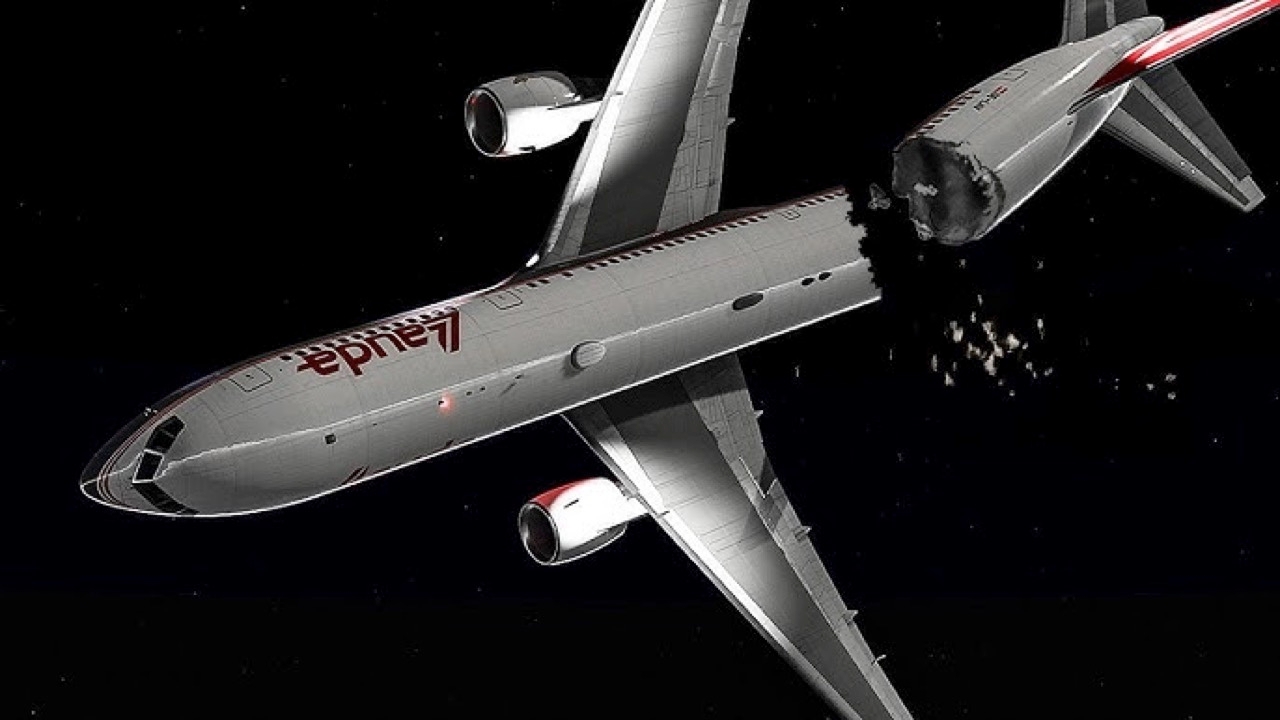
Air travel is considered the safest mode among all human-made transportation vehicles, including cars, ships, and trains. Flights operated by airlines certified for safety by international aviation organizations such as the N.T.S.B. and the U.S. Federal Aviation Administration (F.A.A.) are among the safest with the lowest accident risk. However, when accidents occur, they are often severe with significant casualties and lasting impacts, as seen in the case of LAUDA AIR Flight NG004, which will be discussed here.


LAUDA AIR was established in 1978 by Niki Lauda, a three-time world champion Formula 1 race driver from Austria. After retiring from racing due to a car fire accident, Lauda started an aviation business by operating charter flights, initially purchasing FOKKER F27 aircraft to provide charter services within Europe. Subsequently, Niki obtained a commercial aviation license from Austria's Ministry of Transport and launched charter routes using BOEING 767 aircraft, flying from Vienna to various European Union countries.


After establishing his airline and gaining public trust, LAUDA AIR was authorized by Austria's Department of Transport to expand flights to New Zealand, Australia, South Korea, Taiwan, Hong Kong, Central America, South America, and Thailand. In October 1987, LAUDA AIR operated BOEING 767-300S aircraft on long-haul routes, modifying the original 290 passenger seats down to 246 to increase legroom for comfort on extended flights. The BOEING 767-300S is a medium-range aircraft (approximately 6,000 kilometers range at cruise speed). Although not as large as the 777 or 747 and less ideal for long-haul flights, it featured advanced avionics and digital navigation systems, making it a modern, safe, and reliable aircraft. The 767-300S was newly introduced to LAUDA AIR in 1989 after leaving BOEING's assembly line. By 1990, LAUDA AIR had expanded to cover over 50 countries worldwide, improving service standards with attention to detail, earning Niki Lauda recognition as Person of the Year by TREND magazine for his success and Austria's reputation in aviation.

The Fatal Flight NG004
On Sunday, 26 May 1991, at 21:05 Hong Kong International Airport time, LAUDA AIR's BOEING 767-300S Flight NG004 departed from Hong Kong bound for Bangkok, with a final destination of Vienna, Austria. The flight took off from the runway headed toward Don Mueang International Airport, covering a distance of 950 nautical miles. The flight time was about two and a half hours, and the approach and landing at Don Mueang proceeded without any abnormalities along the route from Hong Kong to Bangkok.

At the parking area, after disembarking passengers, Flight NG004's 767 was cleaned internally, refueled, and underwent routine checks. The 213 passengers waiting in the departure lounge for the Vienna flight were called to board. First Officer Captain TOM WELSH, an experienced American pilot with extensive flight hours, and co-pilot JOSEF THURNER from Austria taxied slowly to the runway assigned by air traffic control. Weather conditions were clear with visibility of 11 kilometers, light clouds, wind speed of 6 knots, and a moonlit sky. However, along the route crossing the Thai-Myanmar border, small rain clouds had formed in that area.

At 23:02 Don Mueang Airport time, air traffic control cleared LAUDA AIR Flight NG004 for takeoff, instructing the crew to switch radio frequency to 119.1 MHz VHF for BANGKOK DEPARTURES air traffic control after takeoff.
After takeoff and climbing, Captain TOM WELSH turned the aircraft right, heading southwest. At 23:10, radar at Bangkok air traffic control clearly tracked the 767-300S's position, direction, and altitude. Controllers instructed the pilot to climb to a flight level of 11,000 feet and change frequency to 128.1 MHz for BANGKOK CONTROL radar, managing airspace near the Thai-Myanmar border. The aircraft climbed to 5,000 feet, then switched radio frequency as instructed. After radio contact ended, Captain Welsh climbed the plane to its cruising altitude of 31,000 feet. Meanwhile, co-pilot JOSEF THURNER contacted LAUDA AIR ground operations in Bangkok to report flight and landing times at Vienna as 0308 UTC. This was the last contact from Flight NG004.

At 23:17, radar signals from LAUDA AIR's BOEING 767-300S disappeared from the BANGKOK CONTROL air traffic control monitor. The on-duty controller, startled, quickly recovered composure and radioed BANGKOK DEPARTURES, which had radar and communication capabilities, to try to contact the 767. They also broadcasted to nearby aircraft to assist in contacting or locating the missing plane, but no response was received from the 767.

The situation worsened when Thailand's Department of Civil Aviation search and rescue center received radio reports from police that villagers in Dan Chang District, Suphanburi Province, had witnessed a large aircraft explode midair. Debris scattered and fell in a large fiery ball onto the dense forest area of Khao Phu Toei National Park, characterized by thick jungle, high valleys, and limestone cliffs. Eyewitnesses reported multiple large fireballs from the exploding plane spreading over a wide area.

Khao Phu Toei National Park is located about 200 kilometers northwest of Bangkok, with terrain consisting of dense jungle and high valleys difficult to access. Aviation safety officials reviewed weather conditions at the time of the LAUDA AIR crash using weather radar to detect any abnormalities such as severe thunderstorms or strong upper air currents that could affect the 767's climb. No abnormal weather conditions were found that could explain problems during the flight.

Rescue and aviation safety teams faced difficulties reaching the crash site to search for survivors and examine wreckage. Khao Phu Toei's dense forest is about 5 kilometers from Phu Toei village in Dan Chang District, Suphanburi Province. Upon arrival at the mountain ascent, teams found the first wreckage piece: the right horizontal stabilizer tailplane. They also saw widespread smoke from the burning wreckage throughout the mountainous area, along with numerous scattered passenger remains mixed with aircraft debris. The dense, steep forest combined with rapidly changing weather—intense sunlight and heavy rain—hindered search and rescue efforts.

Upon learning of the crash, LAUDA AIR dispatched company representatives and aviation engineers to analyze the cause, accompanied by officials from Austria's Department of Transport and international bodies including NTSB and FAA, who traveled to Dan Chang immediately. Rescue foundations reaching the site found no survivors among the passengers. Instead, they encountered numerous victim bodies scattered throughout the Phu Toei valley. After recovering all bodies, a tragic development was that only 72 out of 223 total victims (213 passengers, 2 pilots, and 8 crew members) could be positively identified.


Aviation safety officials from multiple agencies found many BOEING 767 wreckage pieces showing signs of fire damage. Analysis indicated the fire occurred in the air before impact, caused by wing tears releasing fuel that ignited upon contacting the operating engine. Crucial eyewitness testimony from Phu Toei villagers confirmed seeing the aircraft explode or at least catch fire midair before crashing.


The left cabin door, located mid-fuselage, was covered in soot but found in an area without fire damage, and its frame was not burned or charred. This indicated the door was exposed to intense heat in the air from the aircraft fire, causing contraction. This confirmed an in-flight fire occurred but did not spread to both wing tips or the right side of the fuselage in some sections. However, key evidence needed to analyze the fire’s origin, cause, and the aircraft's flight path before impact was obscured by post-crash fires damaging many wreckage parts. Weight and maintenance records showed the aircraft’s load was within standards, and the center of gravity was properly balanced.
No structural or engine abnormalities were reported that could have led to the accident, as the aircraft was just over two years old. Engine inspection revealed evidence that the engine cowling had sustained more stress than normal. The BOEING 767-300S was powered by Pratt & Whitney PW4000 engines, designed with cowlings to withstand aerodynamic loads especially during takeoff at maximum power. Damage was found on the Fan Rubstrips (rubber seals around the air intake) on both engines, indicating abnormal forces or unusual flight attitudes causing wear. Analysis of the wear patterns suggested:
1. The forces on the engine cowling exceeded those experienced during takeoff.
2. The forces acted downward and clockwise, consistent with the plane pitching nose-down with abnormal rolling and yawing motions. This scenario was considered unlikely because the aircraft was climbing at high engine rpm. For a pilot to deploy the Thrust Reverser intentionally or not, they must reduce throttle to idle before moving the reverser controls. Additionally, the Air-Ground system prevents hydraulic pressure from deploying the reversers in flight. Testing on other aircraft showed this system functioned as designed. An electrical fault might cause the Thrust Reverser to deploy spontaneously.

About nine months after the accident, an important part was recovered: the Directional Control Valve (DCV) of the left engine's Thrust Reverser hydraulic system, still in relatively good condition. It was delivered to the Department of Civil Aviation and forwarded to BOEING for analysis along with NTSB and FAA officials. Detailed tests of the BOEING 767 Thrust Reverser system showed that an electrical short circuit could cause the reverser to deploy spontaneously. For deployment to occur, the Hydraulic Isolation Valve (HIV) must open to allow hydraulic pressure into the system, which is controlled by the Air/Ground Electrical Sensing System or the Auto-Restow Circuit. This Auto-Restow Circuit automatically stows the reverser if sensors detect misalignment, activating the HIV solenoid coil whether in the air or on the ground. However, a short circuit in the DCV solenoid coil could activate the reverser even with circuit breakers intended to prevent such faults. Tests showed as little as 8.2 VDC could trigger the solenoid, with a 1 in 599 chance of occurrence.


In the worst case, a short circuit in the Thrust Reverser wiring could apply 22.6 VDC to the solenoid coil for one second. Tests could not determine the severity of the reverser's response or if the Auto-Restow Circuit would successfully retract it. Circuit breakers might trip after the short circuit event. The extensive wreckage scatter made it difficult to detect electrical faults, so it could not be confirmed whether wiring or electrical system failures caused the reverser to deploy. BOEING tested the 767 hydraulic system with the HIV open and found that contamination in the DCV solenoid valve could increase hydraulic pressure on the deployment side, causing the reverser to deploy without pilot command. Upon learning this, BOEING informed the FAA to expedite corrective improvements.


The Cockpit Voice Recorder (CVR) and Digital Flight Data Recorder (DFDR) were recovered from the wreckage and sent to the NTSB in the U.S. for data extraction. Unfortunately, the DFDR tape was damaged by heat and data could not be retrieved, but the CVR was less damaged and some data was recoverable.


Below are the final recorded cockpit voice messages before the recording system stopped:
23:07:48: The captain said to the co-pilot upon seeing a warning on the EICAS (Electronic Indication and Cockpit Alerting System) screen: “That keeps that’s come on [again]!!!” indicating the warning message appeared again.
23:08:52: The co-pilot said, “So we past transition altitude – 1013,” informing the captain they had passed the altitude where the pressure setting changes to standard 1013 millibars.
23:08:54: The captain replied, “OK.”
23:10:21: The captain said, “What’s it say in there about that? Just ah…” likely indicating the co-pilot was consulting the Boeing 767 Quick Reference Handbook for over a minute, asking if there was relevant information.
23:10:27: The co-pilot read aloud from the manual: “Additional system failures may cause in-flight deployment – expect normal reverse operation after landing,” explaining the system might malfunction and deploy in-flight but should function normally after landing.
23:10:35: The captain responded, “OK – just….ah let’s see…,” taking the manual from the co-pilot to review himself.
23:11:00: The captain said, “OK,” returning the manual.
23:11:43: The co-pilot, still concerned about the EICAS message, asked, “Shall I ask the ground staff?” suggesting contacting ground personnel for advice.
23:11:46: The captain asked, “What’s that?” seeking clarification.
23:11:47: The co-pilot said, “Shall I ask the technical men?” offering to consult technical staff.
23:11:50: The captain, uncertain, said, “Ah... you can tell ’em about it… it’s just… Ah no… it’s probably… ah water or moisture or something. Because it’s just on… it’s coming on and off.” He speculated that moisture might be causing the intermittent warning on the EICAS. The Reverse Isolation Valves warning light or L or R REV ISLN VAL message on the EICAS signals possible hydraulic fluid flow issues behind the HIV valves. The manual notes possible in-flight Thrust Reverser deployment but offers no specific corrective actions, only stating that reversers may deploy erroneously in flight.
23:12:04: The captain said, “But… you know it’s a … it’s doesn’t really… it’s just an advisory thing…,” indicating the warning was advisory, not an emergency.
23:12:19: The captain, still concerned, said, “Could be some moisture in there or something.”
23:12:27: The co-pilot suggested, “Think you need a little bit of rudder trim to left, eh?” recommending a slight left rudder trim adjustment.
23:12:30: The captain asked, “What’s that?”
23:12:32: The co-pilot repeated, “You need a little bit of rudder trim to the left.”
23:12:34: The captain acknowledged, “OK.” The slight right bank requiring left rudder trim was a normal flight condition and likely unrelated to the in-flight Thrust Reverser deployment.
23:13:14: The co-pilot audibly counted numbers in German for 3 minutes and 19 seconds without meaningful communication.
23:17:01: The co-pilot exclaimed immediately, “Ah… Reverser’s deployed!”
23:17:02: Sounds of severe airframe vibration occurred.
23:17:04: Metal tearing noises were heard.
23:17:05: The captain swore.
23:17:06: More metal tearing sounds followed.
23:17:08: Four-tone danger warning alarms sounded.
23:17:11: A one-second danger siren sounded and stopped.
23:17:16: The danger siren sounded again and continued until the tape ended.
23:17:17: The captain said despairingly, “Here – wait a minute!” amid ongoing metal tearing sounds.
23:17:19: Two-tone metal tearing sounds occurred.
23:17:22: The captain swore again.
23:17:25: The tape recording became erratic and unintelligible.
23:17:27: The captain made unintelligible sounds.
23:17:28: Various loud noises continued until the tape ended.
23:17:30: The recording ended.


Possible Causes of the BOEING 767-300S LAUDA AIR Flight NG004 Accident
Thailand’s Aircraft Accident Investigation Committee concluded that the probable cause was the left engine Thrust Reverser deploying in flight without pilot command, leading to loss of control. The exact reason for the unintended deployment could not be definitively proven. Following the accident, the NTSB issued urgent recommendations within a month for manufacturers to revise the Thrust Reverser system. The FAA issued a notice on 11 September 1991 establishing a task force of government and aviation industry officials to review aircraft design philosophies and certification of passenger aircraft using Thrust Reverser systems. They mandated that reversers only deploy on runway surfaces and required designs to prevent in-flight deployment.


Subsequently, new aircraft engineering tests and evaluations began. For BOEING 767 aircraft powered by Pratt & Whitney PW4000 engines, the Thrust Reverser systems were completely redesigned to fix multiple faults that could cause unintended in-flight deployment. FAA certification was completed in February 1998. Additionally, the FAA revised flight data recorder (DFDR) design standards to increase heat resistance, preserving flight data for accident investigations.

Passenger aircraft, designed for comfortable travel and human-machine cooperation, can sometimes experience uncontrollable malfunctions. However, such errors lead to improvements that prevent recurrence, honoring the sacrifices of pilots, engineers, and passengers who contribute to the highest travel safety. This reflects humanity’s dream of soaring through the blue sky. We mourn the 223 lives lost on LAUDA AIR BOEING 767-300S Flight NG004.
References: Aviation Safety Division, Royal Thai Air Force Headquarters; Aircraft Accident Investigation Committee; Ministry of Transport and Communications, Thailand.