

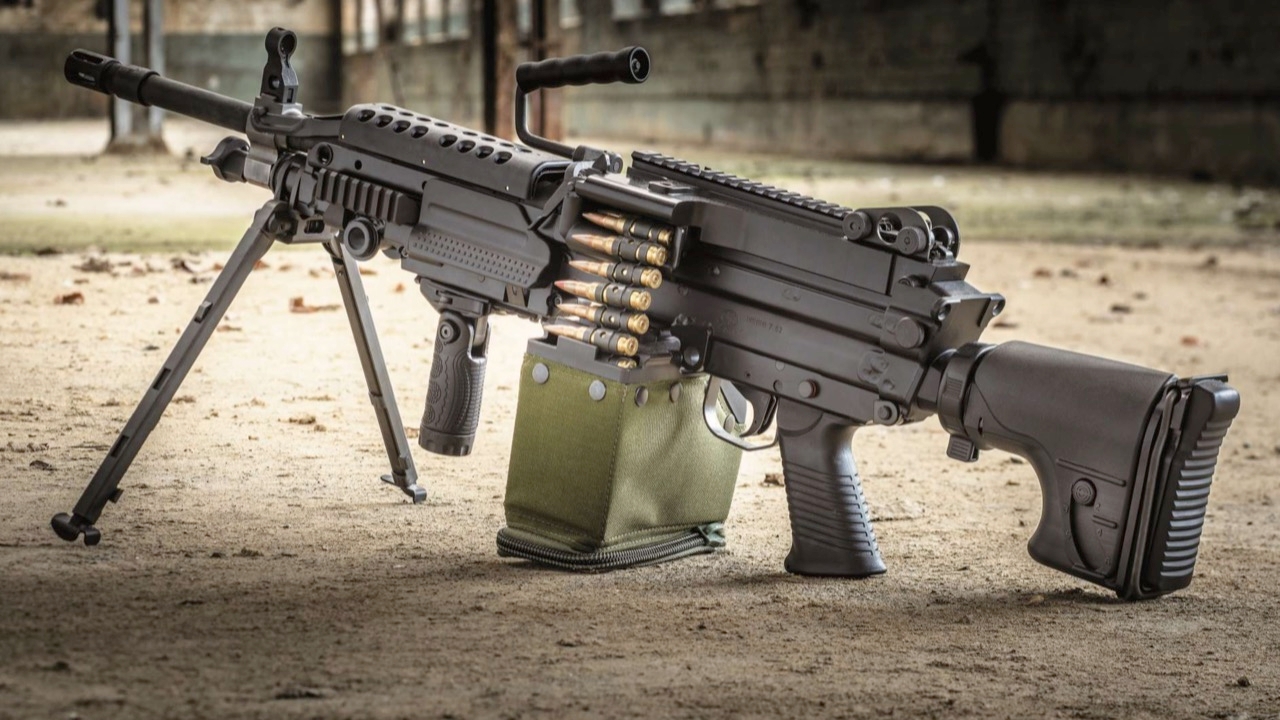
Sergeant Major Saeng Klangprakorn, 38, from Prakhon Chai District, Buriram Province, a member of the 23rd Infantry Regiment, 3rd Battalion, died in a clash alongside Private Phanuphat Saosa of the same unit on 16 December at Hill 350 near Prasat Ta Kwai, Phanom Dong Rak Subdistrict, Surin Province. They served in the 3rd Infantry Battalion, 23rd Infantry Regiment (R.3 Bn.3), using standard infantry weapons of the Royal Thai Army such as the MAG 7.62 mm light machine gun and the unit's curved-trajectory support weapon, the 60 mm mortar, to increase firepower at the platoon and battalion levels. Continuous training with these weapons is provided to new soldiers and personnel to ensure proficiency and readiness for missions, especially in defending national sovereignty.
Sergeant Major Saeng and Private Phanuphat
The sacrifice of Sergeant Major Saeng Klangprakorn and Private Phanuphat Saosa from the 23rd Infantry Regiment, 3rd Battalion, led to the recapture of Hill 350.
Both provided covering fire for the withdrawing team under heavy fire from Cambodian soldiers who had established a stronghold on Hill 350, resulting in their deaths from enemy weaponry.
We pay tribute to the 22 brave soldiers who gave their lives defending Thai territory. We honor their great sacrifice and extend our condolences to the families of the fallen. They are forever heroes of the Thai nation.


Primary unit weapons
Colt M4 carbine rifle
MAG 7.62 mm light machine gun: A key standard weapon for infantry units.
60 mm mortar: A crucial support weapon at the platoon and battalion levels, used to provide fire support and destroy targets.


The Colt M4 carbine with scope is a highly efficient, compact rifle ideal for combat in buildings, bunkers, or trenches—typical infantry assault missions. Currently, the M4 is being gradually adopted in infantry units and is a favorite among front-line troops. It is also widely used by special forces worldwide. In Thailand, the M4 Carbine, developed from the M16, is a popular assault rifle used by special forces and police, with variants like the fully automatic M4A1 and the M4 Monolithic featuring an integrated rail and receiver for added strength. It is favored for close-quarters battle (CQB), firing 5.56 mm rounds.


FN M249
The FN M249 light machine gun for infantry units was first developed by FN Herstal as the FN MINIMI® and entered U.S. service in 1988. It features an 18.5-inch barrel and the distinctive FN manufacturing process involving forged and chrome-lined barrels. It fires 5.56x45 mm NATO rounds and can use both magazines and linked ammunition belts.


FN MAG 7.62
The MAG Infanterie is the standard MAG machine gun for infantry, also known as the MAG 60.20 or MAG 58. Manufactured by Belgian company FN Fabrique Nationale, over 20 MAG variants exist, each adapted to infantry needs with differences in details. The original light MAG model had a wooden stock; later versions use plastic stocks, and the latest include Picatinny rails for mounting aiming devices to improve accuracy. The newer FN MAG models have improved feeding systems and can attach ammo boxes. The MAG 10.10 version is designed for jungle warfare with shorter barrels and stocks for maneuverability.


Light Machine Gun (LMG) firing 5.56 x 45 mm NATO rounds: Ultimax 100 Light Machine Gun
The Ultimax 100 feeds from STANAG (AR-15) 30-round magazines or 100-round drum magazines. Designer Sullivan engineered a recoil system allowing the bolt to move back without hitting the buffer or receiver, reducing recoil significantly via a "constant recoil" system, though this lengthens the weapon. The buttstock is removable. The Ultimax 100 fires from an open bolt with a seven-lug rotating bolt controlled by a cam and uses a firing pin that strikes upon impact. It is fully automatic only, firing at 400-600 rounds per minute. The gas system has five adjustable settings. It has a 20-inch parabolic barrel, weighs 4.7 kilograms, and features a receiver made from sheet metal stamping and synthetic components.

Infantry units are equipped with curved-trajectory support weapons such as mortars to provide fire support from the rifle platoon up to the battalion level. Mortars at company to regiment levels have overlapping effective ranges, enabling defensive operations with sufficient depth to prevent enemy advances at distances exceeding approximately 4 kilometers.

The 60 mm mortar is produced by the Defense Industry and Military Energy Center (SorWorSorPor), under the Defense Industry Command.
The 60 mm Model 88 mortar (K.60 mm) is a standard unit weapon used to provide fire support for assault and defense by rifle platoons at the front line. It is a high-impact weapon with long range, capable of being disassembled for transport, and is part of the infantry company. Its maximum firing range is 3.5 kilometers, with a blast radius of about 21 yards—covering a 42-yard diameter circle filled with explosive force and shrapnel.
We mourn all the brave soldiers who sacrificed their lives or suffered injuries defending Thailand. We honor the great sacrifices of the three armed forces, including police, border patrol, rangers, village defense volunteers, medical and nursing personnel, and emergency rescue units. Our deepest condolences go to the families of the fallen. You are forever heroes of the Thai nation.