

Classic Japanese cars are known for their practicality, flexible transmissions, and durability over time. Some models have gained reputations for their strength and resilience. Today, some of the most beautiful vintage Japanese cars still challenge the passage of time and each era. They once stirred excitement in the global market and left unforgettable impressions on car lovers. Here are 10 notable Japanese cars that have endured challenges, achieving both success and failure, yet their beauty remains undiminished by time.


Mazda Cosmo 110S Sport Coupe 1968
Mazda has created many impressive sports car models during its 100-year history, which was quietly celebrated amid the COVID-19 pandemic. While Mazda has produced many great cars, only a few models match the beauty of the Cosmo sports car. Its design and drivetrain made a mark on the automotive industry in several ways. With futuristic styling and a classic silhouette that captivates at first glance, the Cosmo 110S coupe was the first production model with a rotary engine. It debuted as a concept sports car a full year earlier, with production exceeding that of the Toyota 2000GT. At the 1966 Tokyo Motor Show, the Cosmo attracted media acclaim. Before production, 80 prototype units were sent to Mazda dealerships for performance testing during 1967-1968 to prove that the Wankel rotary engine — which Mazda claimed was revolutionary — was practical and reliable in customer hands. Confident in the new rotary engine's durability, Mazda launched the first Cosmo 110S in 1968, producing roughly one car per day. Total production over five years was just 1,176 units — more than the Toyota 2000GT but equally rare.


The original Cosmo was a compact sports coupe and Mazda's flagship model from 1967 to 1996, ending with the fourth generation under the Eunos brand in Japan. It featured a 1.0-liter twin-rotor engine with no pistons but triangular rotors spinning inside, producing 110 horsepower and 131 newton-meters of torque. Beyond excellent handling and speed, the Cosmo impressed with its well-equipped interior, including a Clarion radio with deep bass speakers and convenient dashboard map lights. Everything about the Cosmo evokes a nostalgic dream of a past era when cars maintained their classic style fully.


The Cosmo's 998cc rotary engine initially produced 110 horsepower. From mid-1968 onward, power increased to 130 horsepower, raising the top speed by 8 km/h to 180 km/h and improving acceleration. After a three-year hiatus, Mazda revived the Cosmo name for a family sedan with a rotary engine and luxurious 2+2 seating in 1975. The name continued until production ended with the Eunos Cosmo coupe, a fourth-generation triple-rotor rotary model, in 1996.
The Cosmo's charming appearance, striking interior, and responsive driving experience have earned sincere admiration from enthusiasts who drove the Cosmo Sport, maintaining genuine praise for decades to this day.

Honda NSX 1991
As one of the most stunning JDM cars of the 20th century, the 1991 Honda NSX remains captivating despite its rarity today. Its sporty look and original styling by world-renowned design house Pininfarina attract more attention than some Ferrari models.


The NSX, considered Japan's first supercar by Honda, was developed to compete with top sports cars of the era like the Porsche 911 and Ferrari 348 TB. It was based on the Honda HP-X Concept (Honda Pininfarina eXperimental). Honda, without a sports car tradition, surprised the world by producing an affordable, easy-to-drive mid-engine sports car that could outperform pricier Western rivals. The 1991 NSX featured a sharp, strong design with a lightweight aluminum body, distinctive headlights typical of 20th-century supercars, and aerodynamic pop-up headlights that adjusted when not in use.


The NSX cockpit drew inspiration from F1 race cars and the U.S. Air Force's F-16 Falcon fighter jet, combining simplicity with excellent driver seating and all-around visibility. Details included a three-spoke leather-wrapped steering wheel, a 6-speed manual gearbox, and analog speedometers. The futuristic yet simple standard equipment matched the 1991 era. Under its central structure, the NSX housed a 3.2-liter V6 DOHC naturally aspirated engine featuring Honda's VTEC technology, delivering thrilling performance up to 8,600 rpm.

Honda S2000 1999
Following the success of the legendary NSX supercar, Honda engineers demonstrated their skill with another classic: the S2000, a two-seat fabric-top roadster. Upon its launch, the S2000 quickly gained popularity. Convertible enthusiasts appreciated its dynamic and exciting high-revving VTEC engine. Featuring a longitudinal front-engine, rear-wheel-drive layout, the S2000 offered weight distribution comparable to the Mazda MX-5, but was designed larger and more powerful.

Introduced in 1999, the S2000 is among Japan's most visually appealing convertibles. This sporty roadster inherited the legacy of Honda's proud S600 convertible, celebrating Honda's 50th anniversary. The S2000's sharp headlights emphasized the front's presence. The driver's seat was designed for those seeking thrill and close road feel. As a compact 2-door sports car, it offered only two seats. Though over 20 years old, its driver-centric display features a large modern gauge cluster. Amenities included power windows, a power-folding soft top, ABS brakes, and stability control. Its heart was a 1,997cc DOHC 4-cylinder VTEC engine, front-mounted longitudinally, driving the rear wheels through a 6-speed manual. The aluminum hood and rearward engine placement optimized weight distribution, achieving a low center of gravity and balanced 50:50 weight ratio ideal for a high-powered sports car.


The red and black engine cover prominently displayed the DOHC VTEC badge. Its engineering precision delivered 240 horsepower at a high 8,300 rpm. Weight reduction yielded a power-to-weight ratio of 5.26 kg per horsepower, granting outstanding performance. Acceleration from 0 to 100 km/h took only 6.2 seconds; the quarter-mile was covered in 14.5 seconds, with a top speed of 241 km/h. The engine's natural sound was pleasant, with exhaust tones changing with RPM, adding charm. This echoed Honda's decades-long involvement in Formula 1 and CART ChampCar racing. At high revs, the S2000 felt sporty and distinctive. Its quick response and finely tuned VTEC engine made it a cherished Japanese collectible convertible, especially enjoyable at low speeds with the top down.

Lexus LC500
The Lexus LC500 is Japan's premier luxury sports car, embodying Lexus's future drivetrain technology and product direction.
The new Lexus LC500 is larger than the smaller Lexus RC coupe. It serves as the flagship luxury coupe from Japan's prestigious automaker, competing directly with top rivals like the BMW 650i.

Its front features impressively designed hook-shaped daytime running lights, creating a powerful and elegant presence. The overall styling resembles the Lexus LFA, making the LC500 appear modern and highly expensive. To match the sporty performance of German competitors, Lexus fitted it with a naturally aspirated 5.0-liter V8 engine producing 471 horsepower and 530 newton-meters of torque. The aluminum-block engine has 32 valves (4 per cylinder) and a 7,300 rpm redline, delivering thrilling excitement.

The car is lightweight thanks to aluminum components and reinforced braces, weighing 2,035 kilograms. Despite its mass, it handles mountain roads with numerous curves with impressive stability and comfort—hallmarks of Lexus's distinctive style that is hard to replicate.


The 5.0-liter naturally aspirated V8 is a gem in V-engine sports cars. Its exhaust and engine sounds at high revs impress American muscle car fans. In Sport or Sport+ modes, exhaust bypass valves fully open. The car accelerates from 0 to 100 km/h in 4.7 seconds. Its smooth 10-speed automatic transmission is tuned for rapid acceleration, making it Lexus's most efficient drivetrain. The LC's gearbox responds excellently, designed for smooth street driving and aggressive track performance. The system keeps engine speed high during cornering regardless of fuel economy. During heavy braking, the electronic system downshifts two gears immediately. The manual mode with paddle shifters works well. Drivers can also adjust steering feel. The suspension handles winding valley roads with almost no body roll, an outstanding achievement.


Toyota Supra A80 MK4 1993
Among legendary sports cars, Toyota's Supra MK4 from the late 20th century stands out. Without doubt, the MK4 Supra is among the most famous and sought-after Japanese sports cars. Its 3.0-liter 2JZ-GE engine delivers 220 horsepower, making it a dream for classic car enthusiasts. Its movie appearances further raised its value. The naturally aspirated engine was sold in Japan, while the twin-turbo variant was available in the U.S., producing nearly 100 more horsepower. The 2JZ-GTE turbocharged engine delivers 321 horsepower and 427 newton-meters of torque. Notably, the MK4 Supra accelerates from 0 to 100 km/h in just 4.9 seconds and covers the quarter-mile in 13.1 seconds at 175.4 km/h. These impressive figures have earned it a reputation as one of the fastest Supra models ever, though newer A90 Supras have since surpassed it.

The hugely successful movie The Fast and the Furious helped cement the Toyota Supra A80's status in the high-performance car hall of fame. For car enthusiasts, the Supra rose to fame even before stars Paul Walker and Vin Diesel did. Introduced in 1993, this high-performance Japanese car featured a 3.0-liter inline-six turbo engine producing 326 horsepower, driving the rear wheels, and capable of 0-100 km/h in 4.9 seconds. The Supra 3.0 Turbo competed with sports cars like the Ferrari F355 and Porsche 911 Turbo. It was not just a sports car but among Toyota's first supercars. The famous 'JZ' six-cylinder engine was known for its tunability, leading to countless aftermarket modifications. Owners often modified their A80s, making unmodified examples rare and highly valuable.


The Toyota Supra A80 MK4 focused on weight reduction and safety, prioritizing driver and passenger protection. Lightweight materials like an aluminum hood and plastic fuel tank helped reduce overall weight. It was the first Supra model equipped with comprehensive driver and passenger airbags. Additional features included four-channel side-impact ABS brakes. The low seating position enhanced the driving experience, and the powerful 2J engine's acceleration made it a 1990s racing legend.


Toyota 2000GT 1967
The Toyota 2000GT was Japan's answer to the Aston Martin DB5 featured in the James Bond film "You Only Live Twice." Although it appeared briefly and was modified (notably the roof was cut to accommodate Sean Connery comfortably), the 2000GT first hit the market in 1967 as Asia's first true sports car and a super classic praised by automotive critics of the late 1960s. The first prototype appeared in 1965, and 57 years later, the 2000GT remains a symbol of beauty and pride. It was fast, elegant, and extremely rare. The design and engineering marked a new era for Toyota, which had previously been known for simple, affordable, durable cars. The 2000GT was praised for its drivetrain technology and stunning design by automotive experts of its time.


It featured independent four-wheel suspension, 15-inch magnesium alloy wheels, a new radio tuner, and a stopwatch for racing. Its exterior and interior drew inspiration from 1960s classic cars. Powered by a 2.0-liter inline-six gasoline engine with three Solex carburetors, it produced 152 horsepower. Power was delivered to the wheels via a 5-speed manual transmission, enabling a top speed near 225 km/h. Driving experience-wise, the 2000GT rivaled even the German Porsche 911. Toyota never claimed it was the best Japanese car, but in reality, the 2000GT is a timeless desire among classic car enthusiasts worldwide.


The 2000GT coupe debuted as a stunning concept at the 12th Tokyo Motor Show in late 1965. Developed in collaboration with Yamaha, wealthy Japanese customers enthusiastically welcomed its production, even though only a few units were made. The 152-horsepower inline-six engine was finely tuned by Yamaha, featuring dual overhead cams borrowed from Toyota's top Crown model.

The transmission and drivetrain were advanced for the 1960s, although Toyota only had one suitable four-speed gearbox (FA) from its small trucks. The 2000GT was equipped with a synchronized 5-speed manual transmission perfectly matched to Yamaha's tuned engine, which revved up to 7,000 rpm. It was the first Japanese car with a limited-slip rear differential at a ratio of 4.38:1 and the first Toyota with four-wheel disc brakes supplied by Dunlop.

Performance-wise, the 2000GT accelerated from 0 to 100 km/h in 8.6 seconds, with a top speed of 225 km/h. Its performance was average compared to European sports cars but lively, with modern build quality for its era. The two-seat cabin, designed for smaller Japanese customers, was compact and less suitable for the larger American and European wealthy clientele. For the James Bond film, the 2000GT was modified into a convertible for scenes. Today, it is a highly collectible Japanese car, with only 351 units built and auction prices exceeding one million U.S. dollars.
The 'Grand Turismo' name suits the 2000GT, as Yamaha's world-class craftsmen created a masterpiece engine. Another Toyota team crafted the dashboard and center console from rosewood, with mahogany-wrapped steering wheel and gear knob. The interior trim was enhanced with chrome, making the gauges resemble luxury watches adorning the dashboard. The perforated black Tex-Mex style sports seats were comparable to those in contemporary Italian sports cars.

Nissan Skyline GT-R R34 1999
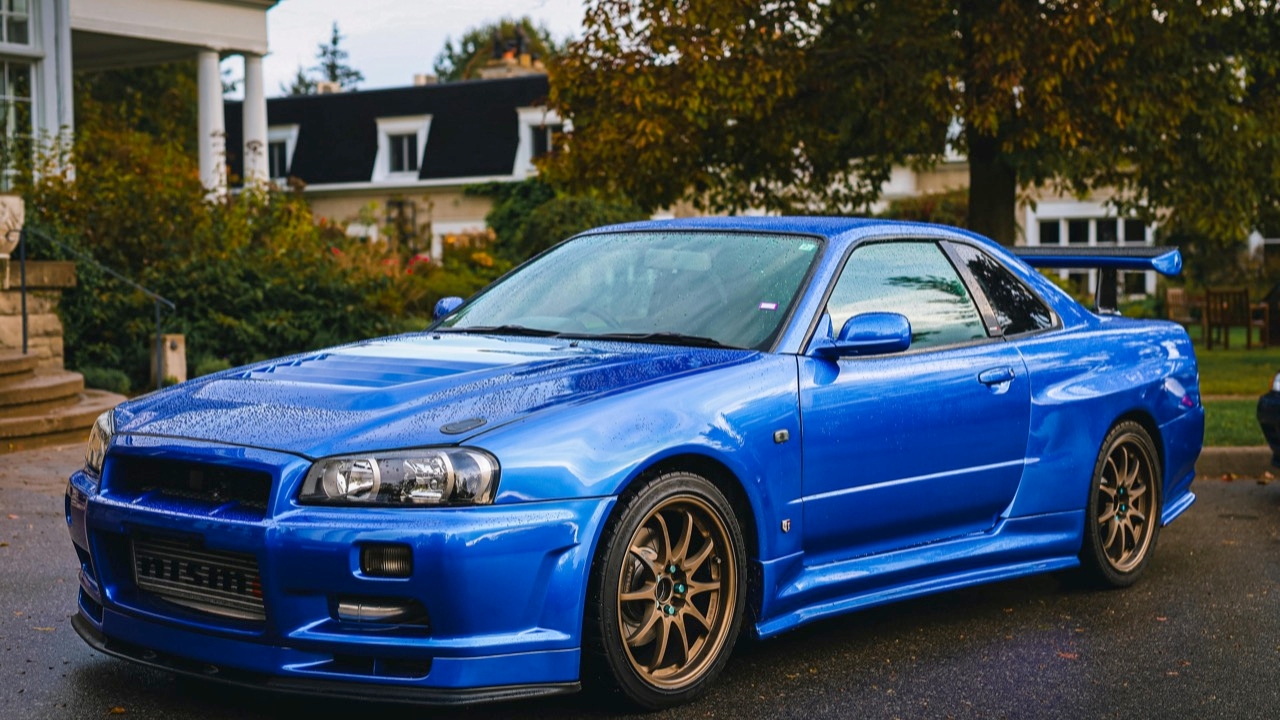
The legendary Nissan Skyline GT-R R34 (1999–2002) was the last model to carry the 'Skyline' name before the current Nissan GT-R (R35) dropped it. Its appearance in the Fast & Furious franchise alongside Paul Walker boosted its popularity as Japan's powerful coupe. Its role in the early 2000s tuning and street racing scene increased its value, with prices now exceeding 8 million baht.


The Skyline R34 is not just a Japanese sports icon but also coveted by speed enthusiasts worldwide. Many used R34 imports have entered the U.S. market at startling prices. It represents the final GT-R with the Skyline badge and greatly influenced the GT-R legend. Its distinctive features include a sleek coupe body, beautiful donut-shaped taillights, a compact rear wing, and ever-glowing exhaust tips. Inside are snug racing seats, a 2000s-style cockpit with a three-spoke steering wheel, tachometer, oil pressure gauge, and smaller gauges for temperature and fuel.

Powered by the RB26DETT inline-six twin-turbo engine, the R34 can be extensively remapped and upgraded. Key engine components are reinforced to handle high RPMs reliably. The stock engine delivers 276 horsepower, easily tunable up to 400 with simple remapping; some street R34s now boast 800 to 1,000 horsepower under the hood. It features a longitudinally mounted inline-six engine, 2.6 liters, 276 hp, 400 Nm torque, a 6-speed manual, and advanced ATTESA ET-S all-wheel drive. It accelerates from 0 to 100 km/h in 5.2 seconds, topping out at 250 km/h. The RB26 engine's incredible potential is supported by a reinforced chassis and advanced AWD system with 18-inch wheels.


The 2.6-liter RB26 engine uses twin ceramic turbochargers boosting power to 276 hp, though electronically limited to about 330 hp. This limiter can be easily removed via remapping. The sequential twin turbos deliver power to all four wheels through the ATTESA ET-S system (Advanced Total Traction Engineering System for All-Terrain with Electronic Torque Split) and a 6-speed manual transmission. Recaro seats and Brembo brakes complete the package. Under normal driving, the AWD system distributes torque to all wheels but primarily drives the rear wheels during aggressive maneuvers like drifting, as the ATTESA ET-S can switch to rear-wheel drive instantly in extreme conditions.

Mazda RX-7 FD 1992
The third-generation Mazda RX-7 emerged when Mazda competed with greats like the Toyota Supra A80, Nissan 300ZX Z32, Mitsubishi 3000GT Z16A, and Honda NSX NA1. With a mid-engine layout and other features associated with Ayrton Senna's legacy, the RX-7 FD3 carved out its own identity. It featured pop-up headlights like the Mitsubishi 3000GT and Honda NSX. The unique rotary engine, using spinning triangular rotors instead of pistons, delivered smooth power with minimal vibration, consistent torque throughout the rev range, and excellent tuning potential for more horsepower. The compact rotary engine was smaller and lighter than inline or V engines but was known for instability and higher fuel consumption.

Engineering-wise, the RX-7 was a 1990s gem. Its brakes, once a weak point in earlier models, improved in feel and responsiveness. Steering had appropriate weight and precision. The FD3's suspension was well-tuned, with a sleek design suitable for customization. Ride comfort was good, and on acceleration, the FD3 surged forward with minimal oversteer typical of lightweight, high-power rear-wheel-drive cars. The suspension kept the tires in contact with the road, enabling skilled drivers to execute beautiful drifting. Measuring 4,295 mm long, 1,760 mm wide, and only 1,230 mm high, it was a compact coupe with a Coke bottle shape and a tapered rear.

The RX-7 FD3's rotary engine featured upgraded intake, exhaust, cooling, lubrication, electrical, and electronic systems. Its two 654cc rotors were twin-turbocharged, with an intercooler cooling intake air. It had the world's first sequential twin turbos: the first turbo boosted from 1,800 to 4,000 rpm, followed by the second from 4,200 to 7,000 rpm, significantly reducing turbo lag. The FD3 offered high torque at low and mid RPMs, 240 horsepower at 6,500 rpm, and 294 Nm at 5,000 rpm. Its primary turbo spooled quickly to reduce lag and operated mid-range, with the second turbo engaging thereafter. It accelerated from 0 to 100 km/h in under seven seconds and covered the quarter-mile in less than 15 seconds.


The rotary engine spun to the redline smoothly and eerily. The 13B twin-rotor engine was a highlight of the internal combustion era, delivering excellent high-rev sound unlike conventional piston engines. Its 5-speed manual transmission showed Mazda's exceptional talent in gear ratio design to maximize performance. Shifting was precise and smooth, with perfectly positioned pedals. The 13B engine had a distinct character, with a light clutch and a firm, short-throw shifter, enabling quick and accurate gear changes.

Datsun 510 Bluebird 1968
The Datsun 510, part of the Datsun Bluebird series, was sold from 1968 to 1973 and exported to the U.S. and Canada as the Datsun 1600. This compact sedan bolstered Datsun and Nissan's motorsport legacy, producing 96 horsepower from a four-cylinder inline engine designed for easy power upgrades. Available in four-door sedan and two-door coupe body styles, the 510 was especially well-handling, featuring a sophisticated independent rear suspension that enhanced cornering. It was popular with private owners and factory-backed racing teams, achieving success. Although the Datsun 610 succeeded it in 1973, the 510 name reappeared in 1977 as part of the Nissan Violet family.

Datsun sought to emulate German automaker BMW, which was struggling post-WWII and in a similar position to Datsun. BMW transitioned from cheap microcars like the Isetta to more promising models with the 'New Class,' starting with the BMW 1600, gaining public acceptance and brand success. Datsun learned that European and American buyers favored cars designed for excellent handling, fuel economy, and reliability. Meanwhile, Japanese brands leaned toward simple, affordable, dependable vehicles for basic transportation. Datsun planned to produce a model matching the performance and appeal of the Ford Cortina but more attractive to customers. The BMW Neue Klasse 1600 succeeded first with simple, durable mechanics, agility, and driving enjoyment.

The BMW Neue Klasse featured front independent MacPherson strut suspension and a rear trailing-arm coil spring independent setup. This suspension was not new technology but was adopted by Datsun for the new 510 sedan, which used a conventional driveshaft and leaf spring rear suspension. The leaf spring system offered higher load capacity and durability but less stability. This setup suited markets and road conditions in Asia, Africa, and South America. The 510 was available as a four-door sedan and five-door station wagon.


Resembling the original Nissan GT-R (C10) sports car, the 'BMW for the poor' Datsun 510 Bluebird had round headlights and a body reflecting carburetor-era design techniques. Overall, it was a sleek car, with many believing its design was inspired by the original BMW 2002 tii, beloved by speed enthusiasts in the 1970s. The 510 was popular for its balanced dynamics. Its 1.6-liter inline-four engine produced 96 horsepower with a top speed of 160 km/h. Another excellent feature was its balanced 50:50 weight distribution, unmatched even by many modern front-wheel-drive sedans. Over fifty years later, this charming Japanese car has become a classic icon with its distinctive boxy shape, bringing success to the Japanese brand through good performance and affordability.

Lexus LFA 2009
The Lexus LFA masterpiece was first unveiled as a concept in 2005 at the Detroit Auto Show. Over time, its details evolved toward official commercial production, which began in 2009.

Sixteen years ago, Lexus announced its identity as Japan's luxury brand and challenged European supercars with a fresh design combined with advanced technology from Toyota's F1 racing team, at an exorbitant price surpassing all previous Japanese cars. Toyota started the high-performance sports car project in 2005, revealing concept sports cars in 2007 and a concept roadster at the 2008 Tokyo Motor Show. Akio Toyoda, the then-new Toyota CEO with a passion for motorsport, played a key role in making Toyota's first supercar a reality. He resembled Enzo Ferrari and Ferdinand Piech in enthusiasm and led Lexus's racing efforts with the LFA prototype at the Nurburgring, enhancing Toyota's global image despite Toyota's 2009 withdrawal from F1. Producing the LFA, despite Toyota's lack of prior high-performance sports car experience, was a mission requiring CEO and Lexus team's dedication. Only 500 units were produced worldwide, with massive project investment, making it Toyota's most expensive model project ever, elevating Lexus's brand image.

After completing production of the 500 Lexus LFA units at Toyota-Lexus's Miyoshi plant in Japan, the supercar's manufacturing standards reflected meticulous precision. The aluminum V10 engine block casting used 3D sand molds coated with resin, involving 37 parts and about a week of forming. Once assembled, the mold was filled with molten aluminum alloy at 750 degrees Celsius. Impurities were vacuum-extracted during casting. After cooling for two hours, the sand mold was removed, revealing the engine block. The block was then sent to Toyota's Formula One engine production department, a highly secretive area.

The engine assembly area is a restricted zone, inaccessible to outsiders. For over a decade, Toyota dedicated itself to F1 racing. After limited success, Toyota Motorsport GmbH (TMG) withdrew in 2009, leaving the advanced plant idle. For the LFA team, this was an opportunity for Toyota-Lexus engineers to showcase their high-performance engine assembly skills. The F1 engine plant was ideal for assembling the LFA's V10 engine. After casting, the engine block was precision-machined by computer-controlled grinders, then inspected by robots. In a sealed room, skilled technicians removed sharp edges from casting and assembled the block to ensure perfect fit. The assembled engine was then sent to Yamaha's factory in Iwata City, 90 km southeast.

Yamaha's Iwata City engine assembly room maintained strict dust control to prevent contaminants. Temperature and humidity were regulated to ensure metal expansion met specifications. The engine's 2,200 parts were divided into 61 groups for assembly by four expert engineers, each responsible for one complete engine. To avoid errors, technicians followed strict computer instructions. Assembly took about three days per engine, producing a masterpiece before installation in the LFA. The engine underwent rigorous testing nearby. The 4.8-liter V10 engine was designed for rapid throttle response, reaching 9,000 rpm in half a second regardless of gear.

The LFA's V10 engine delivered exceptional response like an F1 power unit, spinning faster than typical engines. Its rapid and precise operation required a digital TFT LCD tachometer instead of an analog needle gauge. The unique high-frequency naturally aspirated V10 sound was specially tuned at Yamaha, experts in cylinder heads, motorcycles, race engines, and musical instruments. This tuning created the LFA's distinctive engine sound, blending the relationship between car and driver like musician and instrument. The exhaust and intake sounds differ: the exhaust is audible to the public, while the intake sound accompanies the driver continuously. To perfect this, Yamaha's engine sound manager Maruyama Haji modified the intake surge tank's surface to add unique vibrations, akin to crafting a distinctive musical instrument.

Maruyama Haji enhanced the surge tank's surface to increase vibrations, producing unique sound characteristics. Yamaha engineers used two sound channels to deliver vibrations into the cabin: low-frequency waves near the driver's footwell by the accelerator, and high-frequency waves directly to the driver's ears, creating a surround sound effect during driving. After tuning, the engine was installed into the LFA. Once drivetrain assembly was complete, it was mounted to the chassis with manual bolt fastening. Fluids like engine oil and hydraulic fluids were pumped in automatically. Fiberglass panels, preferred over carbon fiber for painting reasons, formed the body sides and doors. Though cheaper than carbon composites, fiberglass is strong and light, and cheaper to repair after accidents.

The LFA's paint shop, adjacent to assembly, mostly uses robotic painting for consistency, with human operators overseeing dust control to avoid defects. Dust contamination causes paint blistering during baking. The paint shop maintains a pristine environment; workers clean before entering. Five paint layers are applied, with robots handling most and humans finishing hard-to-reach spots for flawless coverage. After baking at 100 degrees Celsius for an hour, the body moves to quality inspection. Water sprays prevent dust settling, and inspectors use special lighting to detect imperfections, polishing as needed. Painted LFAs then proceed to final assembly for carbon composite parts, interior consoles, seats, carpets, alloy wheels, and specially designed Bridgestone RE070 tires sized 265/35/ZR 20 front and 305/30/ZR 20 rear.


In 2011, the LFA Nurburgring Edition was launched to honor the German track where it was developed. This special model's V10 engine was tuned to 571 horsepower, requiring increased downforce for better grip. A large rear spoiler, front canards on left and right bumper corners, lowered and stiffened suspension by 10 mm with special springs optimized the car for high-speed track driving. The enhanced torque also led to transmission upgrades, reducing gear shift times to 0.2 seconds, with the Nurburgring model shaving 0.15 seconds off that. Only 50 units were made, each costing $70,000 more than the standard LFA.
The standard leather seats were replaced by Recaro racing seats. Larger Bridgestone Potenza RE070 tires designed for racing were fitted. Suspension height was reduced by 10 mm with new shocks and springs. Larger front splitters and carbon fiber canards added aerodynamic downforce. These modifications reduced LFA Nurburgring's weight by 10 kilograms. The transmission shifted gears faster—from 0.20 to 0.15 seconds—matching the speed of Ferrari FF's gearbox.

The airflow over the body was slowed to create downforce using fins and air ducts strategically placed, including a large front spoiler with three air intakes. The largest central intake cooled the engine and fed air to the intake manifold. The side intakes cooled the dry sump oil cooler and carbon-ceramic brake discs. Door undersides and rear pillar edges featured ducts for downforce and brake cooling. Radiators, oddly located behind the rear wheels, also received airflow through these ducts. The active rear wing, controlled by small motors and speed sensors, remains folded at low speeds and deploys above 80 km/h, adjusting angle automatically for optimal downforce. The carbon composite fixed rear wing on the Nurburgring edition is mounted permanently like a race car.

The LFA's front-mid mounted 4.8-liter V10 engine (4,805 cc) was shifted toward the car's center for better weight distribution. It mimicked Toyota's F1 V10 engine but without forced induction. The engine combined F1 technology with advanced design of intake, camshafts, and dual VVT-i variable valve timing. Cooling used two radiators placed near the rear wheel arches. The Nurburgring edition's V10 produced 571 horsepower and 500 Nm torque, slightly less torque than the Ferrari California's smaller V8. It featured a 6-speed ASG automated manual transmission shifting gears in just 0.2 seconds (0.15 seconds on the Nurburgring). The transmission and final drive were integrated like in the Aston Martin DBS, with a carbon fiber driveshaft connecting the front engine to the rear for balanced weight.

Two large aluminum radiators with electric fans were placed behind the rear wheels, using airflow management to cool effectively. The car's weight was about 1,580 kilograms, with options for numerous comfort features. The passenger compartment's structure was made from CFRP (carbon fiber reinforced plastic), woven into required shapes with strength comparable to steel. Components were hand-assembled for maximum precision rather than robotic assembly.

The steering system evolved to use an electric motor controlled by an electronic brain, replacing the heavier hydraulic power steering. This reduced engine load and weight, improving responsiveness and driver feedback. The LFA's electric steering communicated road feel better, aided by the high-level ESP stability control system that intervened when the car lost balance, rendering hydraulic power steering obsolete. The front suspension used aluminum double wishbones with stabilizer bars tuned to work with electric steering, while the rear had a multi-link setup with many aluminum parts adjustable in three settings.

The meticulous assembly slowed production but caused no issues. Lexus chief engineer Mr. Yamanaka trained workers to proceed slowly and carefully, prioritizing precision. Each worker assembled high-quality machinery, requiring extra time and overtime to meet the goal of producing one LFA per day. With only 500 units made, production ceased after two years, making the LFA highly special. Lexus has no plans to produce more. Priced at $375,000 USD (about 53 million baht including Thai taxes 15 years ago), it is Japan's most expensive road car. Although costly, the research, development, and build costs led Lexus to lose money on the LFA project. Still, the LFA elevated Lexus's global reputation and will greatly satisfy customers of every Lexus car.