

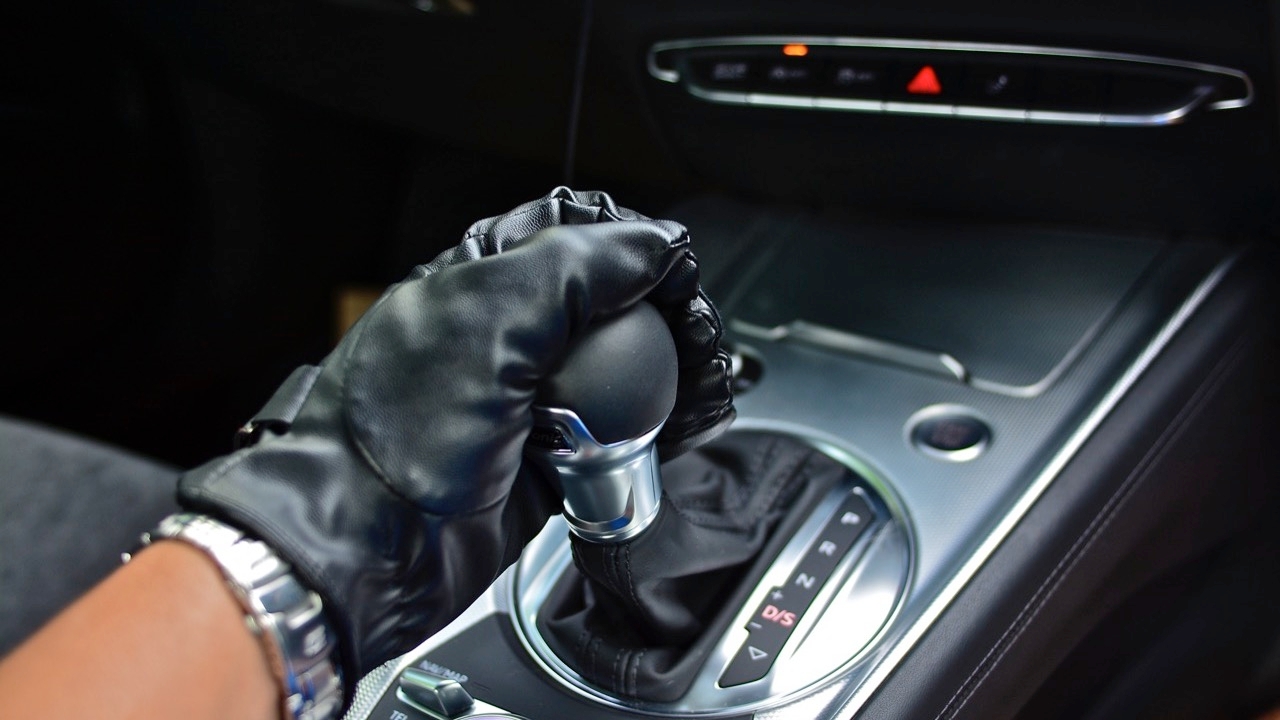
Year-end holidays often involve driving on mountain routes with automatic transmission cars, featuring steep slopes or very high mountainous areas filled with dangerous curves and deep ravines. These winding roads, common in popular tourist spots in northern and northeastern Thailand, can be challenging. For those unfamiliar with mountain roads or new car owners lacking sufficient vehicle control skills, encountering steep terrain may lead to unsafe driving, misuse of gears, or excessive speed, increasing the risk of accidents.

When driving on mountain roads, use low gears continuously when ascending or descending. Electric vehicles can select regenerative braking levels to help reduce speed on steep slopes. Avoid driving close to or over the solid centerline dividing lanes. Shift down to a lower gear with more engine braking force, such as gear positions 2 or 3, rather than high gears. Do not attempt to drive by revving the engine to the limit. For most modern personal cars with automatic transmissions, use gears 2 or 3 when driving up or down hills, switching back to drive (D) on flat terrain.

Driving an automatic car by alternating low gears on steep mountain roads allows the transmission’s low gear to slow the vehicle and prevent it from rushing downhill too quickly. Use brakes in conjunction with low gears. Continuously check the rearview mirror to watch for tailgating vehicles, which risk rear-end collisions if following too closely. If a vehicle follows too closely, safely pull to the left where possible and signal with the left turn indicator to let them pass. Yielding in this way is safer than allowing tailgaters to remain close. Tailgating is considered poor driving etiquette and can cause accidents during braking.

When approaching a downhill curve, brake and shift from the normal gear position (drive/D) down to gear 3 or 2. If gear 3 alone does not slow the vehicle sufficiently, apply brakes and shift further down to gear 2 before starting the turn. Maintain a low speed to avoid losing control. Whether driving a high-performance SUV, four-wheel drive, or a small city or eco car, avoid shifting to a higher gear while descending. Driving downhill at low speed allows better control of steering and braking.

Check the braking system before driving on steep mountain roads. Brakes are heavily used throughout the ascent and descent. On very steep downhill sections, continuous heavy braking can cause brake overheating. This occurs when the brake disc temperature becomes too high, risking damage. Ensure brake pads and discs are in good condition before the trip.
Some newer car models have Hill Start Assist Control systems that help novice drivers on steep climbs. When driving uphill, use the accelerator gradually and maintain consistent speed, smoothly increasing engine power without sudden acceleration or aggressive driving. Always reduce speed before entering curves, especially when descending. Driving at moderate speeds helps keep braking effective and safe.

Do not shift to neutral (N) while descending in an automatic car. Neutral allows the vehicle to roll downhill at high speed without engine braking, making it difficult to control direction or stop. Shifting to neutral or a high gear while descending removes engine braking force. Always use low gears when driving uphill or downhill, letting the engine slow the car naturally in gear 2 while using brakes to control speed. This method is like gently coasting down the mountain. Avoid riding the brakes or keeping your foot on the brake continuously, as this may cause brake overheating. Instead, stop periodically to let the brakes cool if necessary.

When descending, if the vehicle is heavy and has a standard braking system, and the downhill stretch is long, open the windows to detect any burning brake smell. If you smell brake pad burning, find a safe place to park and get out to stretch while allowing the brakes to rest.

A commonly neglected practice on mountain roads is maintaining safe distance from the vehicle ahead. Keeping adequate space is especially important when the vehicle in front is a large truck or a fully loaded van. When climbing steep hills, leave enough room to prevent rolling back or struggling with heavy loads on the incline. Maintaining distance gives you enough space to accelerate uphill comfortably and makes driving easier and safer, reducing the risk of rear-end collisions if the vehicle ahead stops or rolls backward.

During the winter tourist season, you may encounter drivers who are careless, powerful vehicles, or high-performance modified cars driving dangerously—overtaking abruptly, even on curves marked with no-overtaking lines. Whenever possible, avoid following trucks or passenger vans too closely. Maintain enough distance to allow safe sudden maneuvers on steep uphill or downhill roads.