

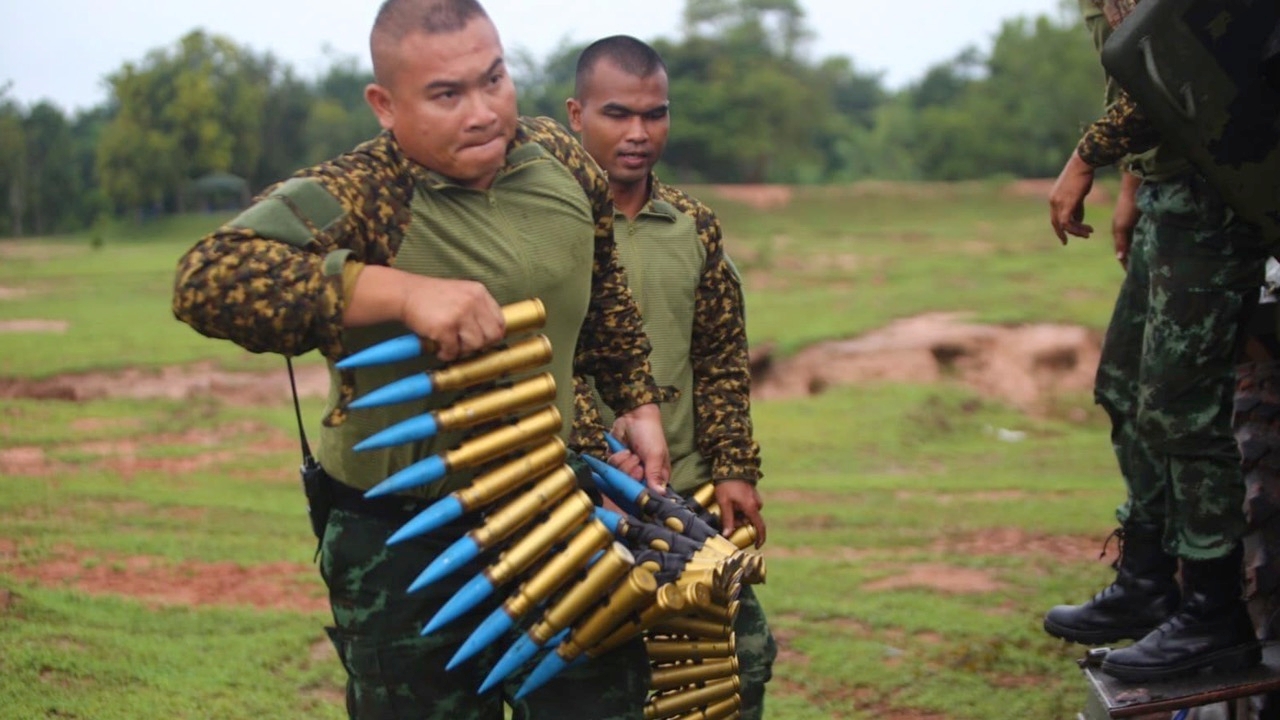
The 30mm ammunition is ideal for cannons mounted on armored vehicles and close-support weapons. It balances destructive power, firing rate, vehicle compatibility, and effectiveness—from A-10 Thunderbolt aircraft machine guns to armored vehicle bombardments against enemy positions. The 30mm round has become a standard in modern armored and aerial combat. It’s neither the largest nor the fastest round, but tactically few compare to the 30mm cannon's performance.


During the Cold War between the West and Russia, the 30mm cannon became a primary weapon. NATO forces standardized the 30x173mm round for new cannons, while Warsaw Pact countries used the 30x165mm caliber. This standard remains today. The U.S. GAU-8 Avenger seven-barrel rotary cannon, mounted on the A-10 Warthog, is the most renowned 30mm weapon, firing uranium or high-explosive incendiary (HEI) rounds at 3,900 rounds per minute. It can destroy tanks, turning them to scrap, and is legendary among pilots and infantry alike.


High-explosive incendiary (HEI) rounds are standard against personnel, light vehicles, and material destruction. They combine explosives and incendiaries, effective against soft targets and fuel depots.
Armor-piercing discarding sabot (APDS/APFSDS) rounds use tungsten or uranium penetrators to defeat light to medium armor. They are effective against armored personnel carriers, infantry fighting vehicles, and even older main battle tanks at close range.
High-explosive dual-purpose (HEDP) rounds combine fragmentation and armor-piercing effects. They can penetrate 70mm of rolled homogeneous armor (RHA) and cause severe fragmentation damage.
Training practice (TP) or inert rounds mimic ballistic properties for drills. They are marked blue and contain no explosive material.
Airburst or programmable rounds, such as the 30mm Mk310 PABM-T, can be set to detonate above or behind cover using built-in sensors or laser rangefinders. These are ideal against enemies in trenches or urban windows.
Armor-piercing incendiary (API) rounds penetrate and ignite fuel tanks and light armored vehicles, offering specialized effectiveness against these targets.
Illumination rounds are used for aiming correction and target designation, illuminating targets between 1,500 and 2,000 meters.
This variety allows a single 30mm weapon system, like the ZMT-1 mounted on wheeled armored vehicles, to engage targets ranging from infantry and light armored vehicles to low-flying attack drones.


Ukroboronprom, Ukraine's science and technology agency, produces the ZTM-1 cannon, mounted on several Ukrainian light armored vehicles. Its structure and operation resemble the 2A72 30mm automatic cannon. The ZMT-1 suits various armored infantry fighting vehicles such as the BMP-2, BMD-2/3 anti-aircraft armed vehicles, and BTR-80/90 APCs. It is also in service with foreign militaries, including Thailand. The 21st Infantry Regiment, King's Guard unit in Thailand, named after Her Majesty the Queen Mother, currently operates this cannon on wheeled armored vehicles.

The 30mm ZMT-1 cannon can fire single shots or automatic bursts, using armor-piercing or high-explosive fragmentation rounds. It can be remotely controlled mechanically. Designed to combat light armored vehicles, it has a maximum effective range of 2,000 meters, or can engage unarmored vehicles and enemy personnel at distant fortified positions such as buildings, bunkers, and trenches up to 4,000 meters. It can also engage low-flying aerial targets within 2,000 meters at subsonic speeds, with an indirect firing range up to 2,500 meters. The ZMT-1 can fire bursts up to 330 rounds per minute, with a muzzle velocity of 960 meters per second.


The ZMT-1 can be operated mechanically or remotely (using an electric trigger in remote mode). It can select between high-explosive or armor-piercing rounds, fed from dual ammunition boxes holding belt magazines. Each ZMT-1 cannon carries 500 ready rounds. The ZTM family can be independently operated or integrated into multifunction remote weapon stations, especially on AIFVs like the BMP-1U IFV and BTR-3U APC.

Ukraine’s Precision Mechanics Plant, founded in 1996, specializes in developing and producing cannons and small arms. It began producing the 30mm automatic cannons ZTM-1 and ZTM-2—Ukrainian designs comparable to the Soviet 2A42—in the early 2000s. The ZTM-2 cannon is also compatible with Kamov Ka-50/52 and Mikoyan Mi-28N attack helicopters. The ZTM series is highly versatile, structurally adaptable for use on various military platforms, capable of continuous or remotely controlled automatic firing with an electric trigger.