

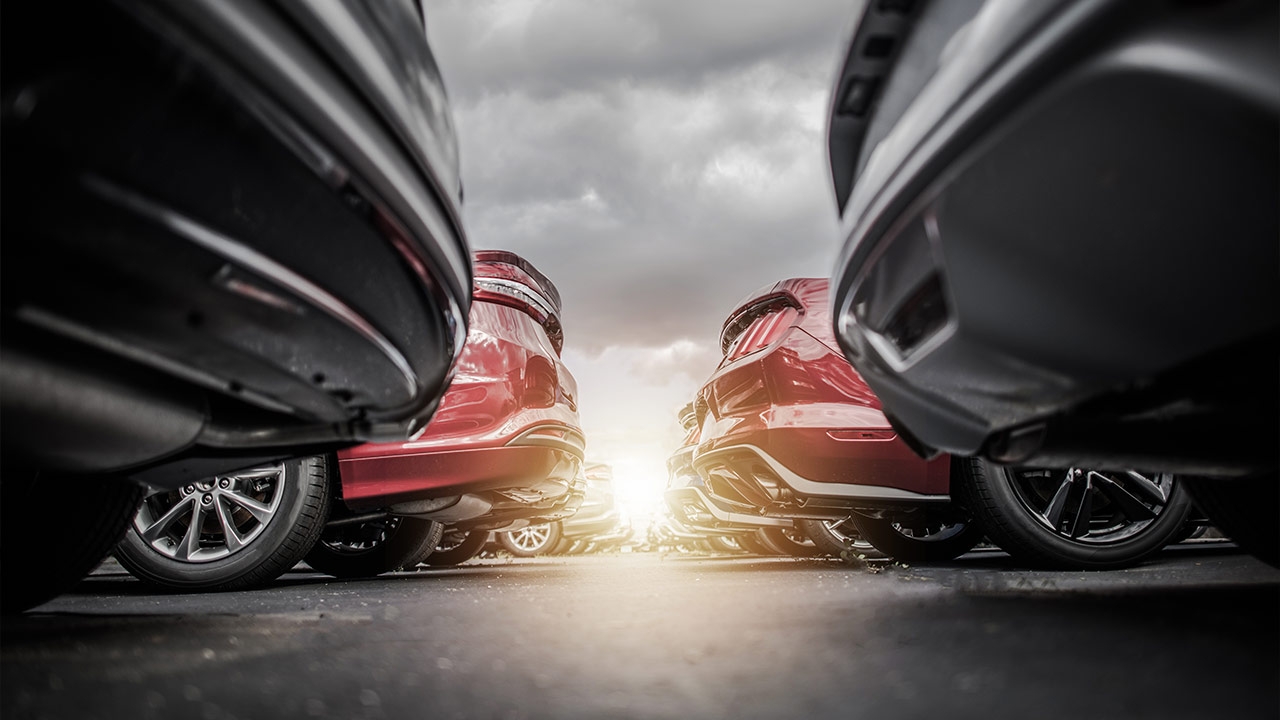
New Car Tax Understanding the "New Car Tax 2026," a revised version effective from 1 Jan 2026 that prioritizes carbon dioxide emissions, causing some combustion engine and hybrid vehicles to increase in price under the new tax structure.
The revised excise tax structure for new cars, or the New Car Tax, announced on 1 Jan 2026, has raised questions about what this increased tax entails. First, let’s clarify what the car tax means.
The New Car Tax 2026 involves the excise department collecting tax based on a principle: vehicles emitting the least carbon dioxide (CO₂) will benefit from the lowest tax rates. Simply put, the less CO₂ a new vehicle emits, the less tax it will pay. This applies to new vehicles or, in other words, brand-new registered cars that buyers purchase from 2026 onward.
Regarding annual car tax payments to the Department of Land Transport, also known as the circular disc tax, now changed to a square sticker, there has been no increase. The tax is still calculated based on engine displacement (CC) and vehicle age. For example, a 4-door sedan less than 5 years old with a 1,200 CC engine pays 1,200 baht in annual tax.

Now that we understand "car tax," let's look at how the new car tax is assessed based on carbon dioxide emissions, starting with
the internal combustion engine (ICE) group, or vehicles that run 100% on fuel.
With the conditions that the vehicle must be equipped with at least two Advanced Driver Assistance Systems (ADAS) and use batteries produced in Thailand starting from 2026.

Thairath Online news team summarizes: brand-new cars purchased from 1 Jan 2026, especially fuel-powered models, will see price increases starting from 5,000 baht upwards. Luxury cars and supercars with engines over 3.0 liters will face price hikes ranging from hundreds of thousands to millions of baht.
For hybrid (HEV) and mild hybrid (MHEV) vehicles, it depends on whether their CO₂ emissions exceed 100 grams per km. For example, a popular hybrid model previously taxed at 4% will be taxed at 6% under the new structure from 1 Jan 2026, a 2% increase.
Regarding battery electric vehicles (BEV), many see this group as benefiting the most from the 2026 tax structure, as they retain the 2% tax rate. However, electric pickups see their tax rise to 2%.
Nevertheless, the new car tax adjustment aligns with Thailand’s national strategy aiming for Carbon Neutrality by 2050 and Net Zero greenhouse gas emissions by 2065. Promoting electric vehicles (EVs) is one measure supporting these goals.
However, some question whether pushing EV adoption in Thailand is truly the right path. They wonder how this shift affects the local automotive industry and whether Thailand is prepared to handle the huge volume of end-of-life (EoL) batteries in the coming years, and if the government and related agencies are prioritizing this issue.

The Thailand Development Research Institute (TDRI) reports that battery demand has steadily increased over the past three years, especially in transportation. It found that over 1.7 million lithium-ion battery packs for electric vehicles have been imported, totaling more than 16.976 billion baht, along with over 100,000 nickel-metal hydride batteries valued at over 3.321 billion baht.
These batteries come mainly from China, Japan, Germany, Slovenia, and Finland, and will begin reaching end-of-life starting in 2032.
However, battery waste is classified as hazardous waste with multiple impacts. Environmentally, improper disposal can cause heavy metal leakage into soil and water.
Health-wise, direct or indirect exposure to toxic substances can lead to heavy metal accumulation in the body, affecting the nervous system, respiratory system, and vital organs.
Economically, the country loses valuable raw materials, faces high costs for disposal or export of waste, and must cope with volatile import raw material prices influenced by political and economic factors internationally.
Currently, Thailand lacks a comprehensive and efficient end-of-life battery management system. Without proper measures, the rapidly increasing battery waste could become a heavy burden on the economy, society, and environment over the long term.
Related article