

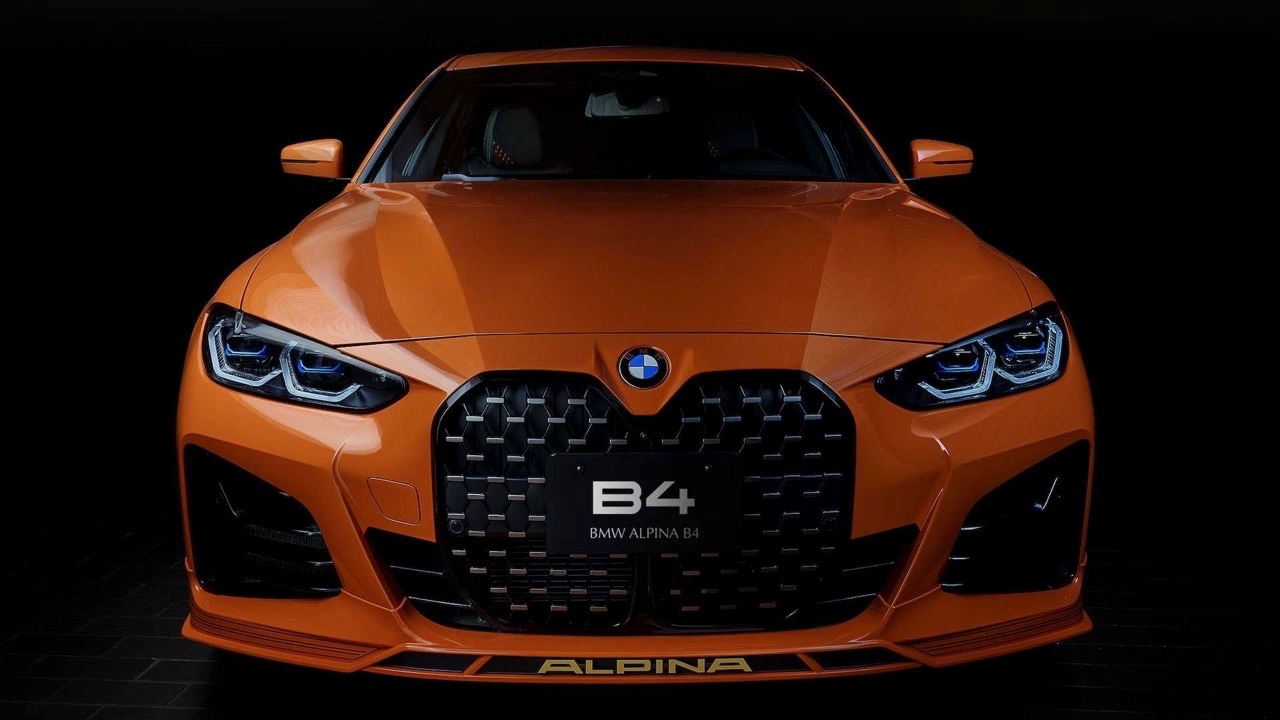
Today (4 January 2026) marks a significant turning point in automotive history. Since 1 January 2026, the ALPINA brand has been transferred under the management of BMW Group, ending 61 years of independent operation by the Bovensiepen family. ALPINA’s origins trace back to early 1965 when a typewriter manufacturer transformed into a small tuning workshop in Buchloe, Germany, seeking ways to enhance the performance of BMWs of that era, focusing on carburetor and cylinder head kits. ALPINA, recognized as one of the world’s most respected automakers, has been officially certified by the German Federal Motor Transport Authority as an independent car manufacturer since 1983.


BMW acquired ALPINA in March 2022 but honored a multi-year transition agreement allowing ALPINA to operate independently until the end of 2025. Most recently, ALPINA fully transitioned to BMW ALPINA, a high-performance luxury brand within BMW Group, which also includes M, MINI, and Rolls-Royce. This is an ideal moment to celebrate legendary machines born from the demands of drivers in the 1970s.


ALPINA is more than just modified BMWs; each vehicle carries its own Vehicle Identification Number (VIN), exclusive warranty, and a unique business philosophy: not just making BMWs faster, but making them different. In 2026, ALPINA offers even greater refinement and exclusivity suitable for everyday driving. Simply put, their cars are powerful yet more comfortable to drive than genuine BMW M cars from the M Division.

1. ALPINA B10 Bi-Turbo (E34): The World’s Fastest Sedan
In the past, if any BMW epitomized ALPINA’s engineering genius, it would be the E34 5 Series. The B10 Bi-Turbo debuted at the 1989 Geneva Motor Show, creating a sensation worldwide as the fastest factory-produced mid-size sedan.


The E34 B10 Bi-Turbo was based on the BMW 535i, with ALPINA investing heavily to make it the best 4-door sedan globally. Key modifications covered every aspect: ALPINA removed the original M30 inline-six engine components, installed forged Mahle pistons, added Garrett T25 turbochargers with water cooling, and equipped a Bosch variable boost pressure control system adjustable from the driver’s seat, allowing boost between 0.4 and 0.8 bar for an exciting drive.

The result was 360 horsepower at 6,000 rpm and 520 Newton-meters of torque. This enabled the E34 B10 Bi-Turbo to accelerate from 0 to 100 km/h in 5.6 seconds and reach a top speed exceeding 290 km/h. In straight-line acceleration tests by Germany’s Sport Auto magazine, the E34 B10 matched the Ferrari Testarossa, even beating the Italian V12 supercar by half a second in the 0-100 km/h sprint.

The B10 Bi-Turbo was not only fast but also a mid-size sedan with specially tuned suspension by Bilstein, featuring an automatic rear leveling system to prevent body roll at speeds over 260 km/h. It had a 5-speed manual Getrag gearbox with gear ratios optimized for torque and engine speed, a limited-slip differential, Recaro sport seats upholstered in ALPINA fabric, a leather-wrapped Momo steering wheel, and an interior trimmed with polished wood, delivering a level of luxury unmatched by any M5 model.

Priced nearly twice as much as the BMW E34 M5 at 146,800 Deutsche Marks, the E34 B10 Bi-Turbo became ALPINA’s best-selling model at the time. Production ended in August 1994 when BMW ceased M30 engine manufacturing; the last 50 M30 engine blocks were specially reserved for ALPINA to complete the production quota. Today, the B10 Bi-Turbo is regarded as ALPINA’s masterpiece, proving that a small independent manufacturer can outperform supercars while offering four-door comfort and BMW reliability.

2. ALPINA B7 Turbo Coupé (E24): The Autobahn Missile
The BMW 6 Series E24 is considered one of the most beautiful BMW designs ever, and the ALPINA B7 Turbo Coupé exemplifies that beauty. Based on the BMW 635CSi, ALPINA’s engineers showcased their expertise by combining turbocharged performance with timeless grand touring style.


ALPINA increased the 3.0-liter inline-six engine to 3.4 liters and added a carefully engineered turbocharger system with a sophisticated Bosch variable boost controller. Unlike many turbo cars of the time, the ALPINA Series-6 B7 featured a boost control adjustable between 0.6 and 0.9 bar via a rotary knob inside the cabin—a rare feature from the late 1970s to early 1980s.

The B7 Turbo Coupé produced 325-330 horsepower at 5,800 rpm and 524 Newton-meters (378 lb-ft) of torque at just 3,000 rpm. It accelerated from 0 to 100 km/h in 5.9 seconds with a top speed of 270 km/h, matching supercar-level performance of the era. The engine included Mahle pistons, a revised fuel injection system, high-performance camshafts, and a specially tuned exhaust.


To handle the power, ALPINA fitted Bilstein gas shocks, progressive springs, ventilated disc brakes on all four wheels, expensive 16-inch alloy wheels with staggered tires (205/55 R16 front, 225/50 R16 rear). The interior featured hand-stitched leather, special gauges with ALPINA branding, sport seats, and subtle wood trim, creating a grand tourer ambiance appreciated by customers then. Production numbers are unclear, but fewer than 300 B7 Turbo Coupés were made across all variants, making it one of the rarest ALPINAs. The elegant proportions of the E24 Series-6 combined with ALPINA’s advanced turbo technology created what many consider the ultimate 1980s Autobahn car. The B7 Turbo Coupé could cruise from Munich to Hamburg at speeds modern cars can only dream of. Its value has surged recently as collectors regard it as the pinnacle of analog-era turbo performance.

3. ALPINA Roadster V8 (Z8): Reimagining an Icon
The BMW Z8 production ended in 2002, and ALPINA saw an opportunity to create a convertible that was entirely different from the original. The standard Z8 was a beautiful but stiff sports car with a 400-horsepower V8 S62 engine and a 6-speed manual transmission; its run-flat tires transmitted road vibrations directly to the driver. ALPINA’s approach was more extreme: making the Z8 slower and smoother, offering comfort comparable to the Mercedes-Benz SL500. ALPINA replaced the S62 engine with their 4.8-liter V8 from the B10 V8 S, producing 375 horsepower and 520 Newton-meters (383 lb-ft) of torque—19 horsepower less than the standard Z8 but with over 20 Newton-meters more torque delivered at lower engine speeds, creating a smooth and continuous driving experience ideal for cruising along the Riviera or Patong Beach.

The 6-speed manual favored by enthusiasts was swapped for a 5-speed automatic with ALPINA’s Switch-Tronic paddle-shift buttons mounted on the steering wheel. The suspension was softened, run-flat tires replaced with slightly taller sport tires for added comfort, and 20-inch ALPINA multi-spoke wheels (9 inches front, 10 inches rear) were fitted. The ALPINA Roadster V8 suited wealthy buyers who prioritized a beautiful, comfortable car over raw performance.


Inside, seats were reupholstered in thick, soft Nappa leather, with custom gauges featuring a blue background—a distinctive ALPINA trademark—and subtly embedded badges. A numbered plaque between the seats reminded owners they possessed one of only 555 special convertibles produced. Notably, BMW sold the ALPINA Roadster V8 through U.S. dealerships, marking ALPINA’s first official presence in America. Of the 555 produced, 450 were imported into the U.S., with only 105 sold in Europe. It is believed only one made it into the hands of a wealthy Thai collector.


Priced at $140,000 (approximately 4,408,500 baht) at launch—$12,000 more than the standard Z8—the ALPINA Roadster V8 was BMW’s most expensive car at the time. ALPINA’s concept of being "slower" understood that not every sports car needs to be a track racer; sometimes, the smart choice is valuing calm and refinement over aggressiveness. Today, the ALPINA Roadster V8 commands auction prices between $150,000 and $250,000 (around 4,723,000 baht, excluding classic car import taxes), far exceeding the standard Z8. Collectors recognize ALPINA’s transformation of BMW’s performance roadster into a refined grand tourer that suits daily use better than the standard model.


4. ALPINA B12 6.0 (E38): The Pinnacle of Luxury
Produced from 1999 to 2001, with 94 units made.
In the late 1990s, if you wanted the ultimate luxury flagship, you had two choices: the Mercedes-Benz S-Class or the ALPINA B12 6.0. For loyal BMW fans, ALPINA was the only option. The B12 6.0 was developed from the BMW 7 Series E38, fitted with ALPINA’s largest naturally aspirated V12 engine—the M73 6.0-liter. ALPINA modifications included Mahle aluminum pistons, camshafts, intake, and exhaust systems, boosting output to 424 horsepower and 600 Newton-meters of torque. While these figures fall short of today’s supercar standards, in 1999, owning a B12 6.0 was remarkable. It accelerated from 0 to 100 km/h in six seconds, despite weighing as much as a small house, and had an electronically limited top speed of 291 km/h. Power was transmitted through a 5-speed ZF automatic with ALPINA’s innovative Switch-Tronic paddle-shift system—one of the first of its kind before paddle shifters became common.


As a flagship saloon, the B12 6.0 prioritized smooth, effortless cruising over aggressive acceleration. The V12 engine ran smoothly, delivering consistent torque from idle to redline. The suspension was tuned for a magic-carpet ride and excellent high-speed stability on highways. The interior featured Lavalina leather, polished wood trim, blue ALPINA gauges, and signature multi-spoke alloy wheels—expensive and difficult to clean—creating a luxury ambiance nearly rivaling Bentley.


Only 94 B12 6.0 units were built during its brief two-year production, making it one of ALPINA’s most special creations. It embodies ALPINA’s core values: understated elegance, exceptional performance, and meticulous attention to detail. While Mercedes dominated the executive luxury sedan market, the B12 6.0 proved ALPINA’s ability to craft something extraordinary with a commitment to surpassing the star-branded luxury cars.

5. ALPINA B6 3.5S (E30): The Ultimate 3 Series
Produced from 1987 to 1990, with 62 units made.
When BMW launched the E30 M3 in 1986, this high-performance coupe instantly became legendary. Designed to dominate touring car racing, it featured a 2.3-liter four-cylinder engine revving to 7,000 rpm. ALPINA, however, saw an opportunity to create a different machine for owners who valued torque over high revs, comfort over lap times, and unique interior craftsmanship.


The BMW M3 B6 3.5S used the lightweight M3 body with widened wheel arches and improved aerodynamics. Under the hood was ALPINA’s heavily modified 3.5-liter inline-six engine, based on larger BMW engines but extensively refined. It produced 254 horsepower and 345 Newton-meters of torque—19 horsepower and more torque than the most powerful M3 S14 engine, especially at higher revs.

Driving feel reflected ALPINA’s style: while the M3’s four-cylinder emphasized sharp engine response, the B6 3.5S offered smooth, continuous power from 2,000 rpm. The M3’s stiff suspension focused on track performance, but ALPINA used a shared platform with revised tuning to provide a softer ride without sacrificing grip or handling precision. The interior featured ALPINA’s signature wood trim, leather seats, and understated gauges, elevating the cabin beyond the simple race-car style of the M3.

Only 62 B6 3.5S units were produced, making it one of the rarest ALPINAs ever sold. Today, finding one for resale is nearly impossible, and when auctioned, prices approach 300,000 euros (around 11,096,000 baht), nearly triple the current price of an E30 M3.

The B6 3.5S exemplifies ALPINA’s philosophy: taking an already excellent BMW and making it more refined and special to attract drivers who desire comfort and distinctiveness. ALPINA never aimed to beat the M3 on the racetrack but instead offered an alternative for drivers wanting the M3’s look with superior comfort.

These five cars—B10 Bi-Turbo, B7 Turbo Coupé, Roadster V8, B12 6.0, and B6 3.5S—represent the pinnacle of ALPINA’s independent era. They prove that a small tuning company can create vehicles that compete with, and often surpass, those from larger competitors. This has always been ALPINA’s creed. As BMW ALPINA enters a new chapter under BMW Group’s umbrella, it is hoped the pure spirit of ALPINA will endure.