

On 3 January, American forces captured Venezuelan President Nicolás Maduro in a significant military operation. This mission was carried out by the U.S. Army's Delta Force, heavily supported by air power.
Air Force General Dan Keen, Chairman of the Joint Chiefs of Staff, stated that over 150 aircraft—including bombers, fighters, reconnaissance planes, patrol aircraft, and helicopters—supported "Operation Absolute Resolve," the name of this mission.
The combat aircraft involved in the operation to capture Venezuelan President Nicolás Maduro included:

B-1B Lancer bomber

F-22 Raptor fighter jet

F-35 Lightning II fighter jet

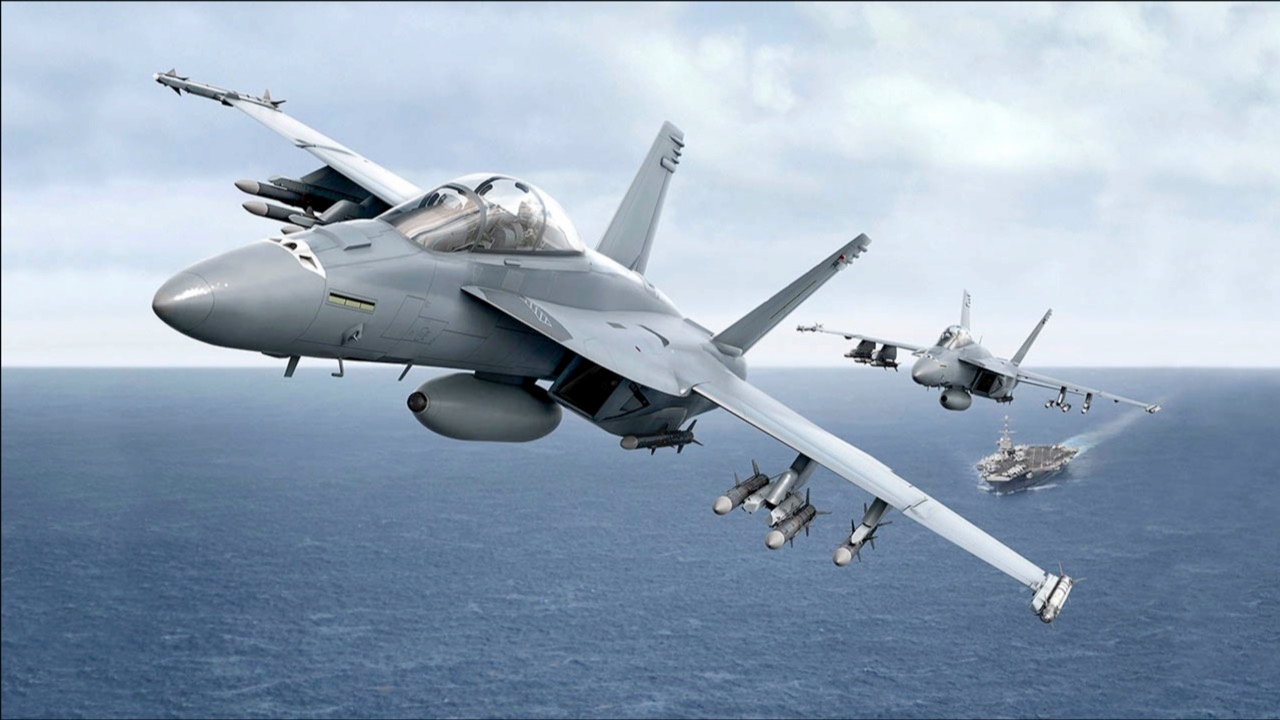
F/A-18 Super Hornet fighter/attack jet

EA-18 Growler electronic warfare aircraft

E-2 Hawkeye early warning aircraft
Various intelligence, reconnaissance, and patrol aircraft, as well as combat drones


Helicopters from the U.S. Army's 160th Special Operations Aviation Regiment landed near Maduro's location. "As U.S. troops advanced toward Caracas, joint air forces destroyed Venezuela's air defense systems using long-range air-to-ground guided weapons, striking the country's air defense units until they were disabled. Then, helicopters carrying special forces entered the target area to execute the capture," Keen said during a press conference alongside President Trump, Secretary of State Marco Rubio, and Defense Secretary Pete Hegseth at the president's Mar-a-Lago residence in Florida.
"The objective of the American air forces in attacking Venezuela was to destroy anti-helicopter weapons and ground forces opposing the U.S. entry into the target, enabling the operation to succeed and troops to return safely," Keen added.
The U.S. Space Command, Cyber Command, and various intelligence agencies—including the CIA, NSA, and National Geospatial-Intelligence Agency—participated in the operation, which included cutting power in Venezuela's capital.
Keen said that infiltrating forces by helicopter—including law enforcement officers—flew into Venezuela at an altitude of 100 feet above sea level, arriving at Maduro's residence at 1:01 a.m. Eastern Time.
U.S. forces came under heavy fire; one U.S. helicopter was damaged but completed its mission successfully. Some U.S. personnel sustained minor injuries, with no fatalities.
At 3:29 a.m. Eastern Time, Maduro and his wife were taken aboard the amphibious assault ship USS Iwo Jima for transport to the United States to face charges, U.S. officials said. Bad weather delayed the operation by several days, but conditions improved on the night of 3 January, allowing the mission to succeed, Keen noted.
Air power played a crucial role in the operation's success. Mark Montgomery, a retired U.S. Navy Rear Admiral and senior researcher at the Foundation for Defense of Democracies, said, "The air strikes against military targets served two purposes: to create space for special forces to carry out the capture and to send a message to the Venezuelan military that 'this is not a fight you want to join.'"
Maduro's capture on a dark night created a power vacuum in Venezuela. Trump stated that the U.S. would facilitate a proper transition to new leadership in Venezuela.


B-1B Lancer bomber
The B-1B Lancer, also known as "The Bone," is a supersonic strategic bomber of the U.S. Air Force designed to replace the B-52. It features variable-sweep wings for effective high-speed and low-altitude flight. Smaller than the B-52 but capable of carrying more weapons, it has been adapted from its original nuclear bombing role to focus on conventional precision strikes using guided and conventional munitions.
Key features:
Speed: Capable of speeds exceeding Mach 1 (supersonic).
Variable-sweep wings: Wings extend wide for takeoff and landing, and sweep back for high-speed flight.
Payload: Can carry over 34 tons of weapons including JDAM precision-guided bombs and cruise missiles.
Stealth: Possesses some stealth capabilities, significantly reducing radar cross-section.
Crew: Four members (pilot, co-pilot, and two combat systems officers).
History and usage:
Entered service in 1986.
Originally designed for nuclear warfare, later adapted for conventional missions.
Played key roles in conflicts such as Iraq and Afghanistan, delivering precise and effective bombing.
Current status:
Still active in the U.S. Air Force, with Boeing managing ongoing modernization.
Expected to remain in service until 2040, performing patrol and presence missions worldwide.


F-22 Raptor fighter jet (Lockheed Martin F-22 Raptor)
The F-22 Raptor is a fifth-generation stealth twin-engine supersonic fighter developed by the U.S. to achieve air superiority. It also has ground attack, electronic warfare, and intelligence capabilities. The U.S. does not export the F-22 to other countries (source: AF.mil).
Features
Stealth: Designed with special shapes and materials to minimize radar detection.
Supercruise: Can fly supersonically without afterburners, improving fuel efficiency and range.
High maneuverability: Equipped with thrust vectoring engines for exceptional agility.
Avionics and networking: Advanced electronics enhance situational awareness.
Roles and missions
Air superiority: Primary mission to destroy enemy aircraft in the air.
Ground attack: Equipped to carry weapons for striking ground targets.
Additional information:
Manufacturer: Lockheed Martin, partnered with Boeing.
Primary user: U.S. Air Force only.
Status: Entered service in 2005 and remains a highly advanced fighter despite emerging technologies.
Main armaments (internally mounted):
20mm M61A2 Vulcan cannon.
Air-to-air missiles: AIM-9 Sidewinder (infrared) and AIM-120 AMRAAM (radar-guided).
Ground-attack munitions: GBU-32 JDAM precision-guided bombs.


F-35 Lightning II fighter jet
The F-35 Lightning II is a fifth-generation stealth multirole fighter developed by Lockheed Martin, Northrop Grumman, and BAE Systems. It has three main variants: F-35A (conventional takeoff and landing), F-35B (short takeoff and vertical landing), and F-35C (carrier-based). Known for combining stealth technology, advanced sensors, and data networking, it performs diverse missions including air-to-air combat, suppression of enemy air defenses, and reconnaissance.
Key features
Stealth technology: Designed to evade radar detection, enabling penetration into hostile areas.
Multirole capability: Performs air-to-air, air-to-ground, and electronic warfare missions.
Advanced sensors: Helmet-mounted display and onboard sensors enhance situational awareness and targeting.
Data networking: Shares information with other aircraft and systems in the network.
Variants
F-35A (CTOL): Conventional takeoff and landing for the Air Force.
F-35B (STOVL): Short takeoff and vertical landing for Marines and Navy.
F-35C (CV): Carrier variant with larger wings and strengthened landing gear for Navy operations.
To maintain stealth, the F-35 has only two internal weapon bays, each with two weapon stations. External stations can carry weapons up to 2,500 pounds (1,100 kilograms) or 1,500 pounds (680 kilograms) for the F-35B. Internal stations typically carry air-to-air missiles, while external stations can carry air-to-ground weapons such as JDAM, Paveway bombs, JSOW, cluster munitions, and small diameter bombs like GBU-39, GBU-53/B StormBreaker, and SPEAR 3.
The F-35A was certified to carry the B61 Mod 12 nuclear bomb in October 2023, along with AIM-120 AMRAAM missiles, and is planned to be modified to carry the AIM-260 JATM missile in the future.


F/A-18 Super Hornet fighter/attack jet
The F/A-18 Super Hornet is an upgraded multirole fighter derived from the original F/A-18 Hornet, featuring larger size, increased payload, extended range, and advanced electronics. It is the U.S. Navy's primary carrier-based aircraft, capable of air combat, ground attack, and other missions. It comes in single-seat (E) and two-seat (F) versions with Block III upgrades for extended service life and improved capability.
Key features and roles
Multirole: Functions as both fighter and attack aircraft.
Carrier operations: Designed for carrier-based deployment, forming the backbone of Navy air wings.
Combat capabilities: Performs air interception, ground strikes, close air support, and suppression of enemy air defenses.
Durability and agility: Equipped with fly-by-wire controls and highly maneuverable even at high speeds.
Block III variant: Latest upgrade extends lifespan and enhances interoperability with newer aircraft for decades.
Main variants
F/A-18E: Single-seat model.
F/A-18F: Two-seat model.
EA-18G Growler: Electronic warfare variant developed from the Super Hornet.
Primary weapon types:
Air-to-air missiles:
AIM-9 Sidewinder
AIM-7 Sparrow
AIM-120 AMRAAM (radar-guided missile)
Air-to-ground/surface weapons:
Harpoon anti-ship missile
SLAM/SLAM-ER cruise missiles
Joint Air-to-Surface Standoff Missile (JASSM)
GPS/inertial guided bombs (JDAM)
Joint Stand-Off Weapon (JSOW)
Unguided bombs (e.g., Mk-82, Mk-84)
20mm Gatling M61A2 Vulcan cannon
Network-centric warfare weapons:
SM-6 missile: Can be integrated into the Navy's Naval Integrated Fire Control-Counter Air (NIFC-CA) system, receiving targeting data from platforms like the F-35 or E-2D to engage targets beyond radar detection range.
Weapon system highlights:
Versatility: Weapons can be rapidly configured for air combat or strike missions.
Weapon stations: 11 primary stations plus 2 underwing stations, totaling 13 for weapons and external fuel tanks.
Control and sensors: Equipped with Joint Helmet-Mounted Cueing System (JHMCS) and AN/ASQ-228 FLIR sensor for precise targeting.


EA-18 Growler electronic warfare aircraft
The EA-18G Growler is an electronic attack aircraft based on the F/A-18F Super Hornet, operating from U.S. Navy aircraft carriers. It plays a vital role in suppressing and destroying enemy air defense radar systems (SEAD) using advanced electronic warfare systems like ALQ-99 jamming pods (and the future AN/ALQ-249) and AGM-88 HARM missiles to blind and deafen enemy forces. Although its main mission is electronic warfare, it can also defend itself with air-to-air missiles such as the AIM-120.
Key features:
Role: Electronic attack (EA) and suppression of enemy air defenses (SEAD).
Basis: Developed from the F/A-18F Super Hornet fighter/attack jet.
Crew: Two (pilot and electronic warfare officer).
Capabilities: Equipped with AN/ALQ-218 receiver and AN/ALQ-99 jamming pods or newer versions, armed with AGM-88 (HARM/AARGM) and AIM-120 (AMRAAM) missiles.
Distinctive features: Lacks the Super Hornet's cannon but has extensive electronic warfare equipment.
Primary users: U.S. Navy and Royal Australian Air Force.
Mission and effectiveness:
Acts as the "eyes and ears" of strike forces by jamming and destroying enemy radar systems.
Has played key roles in conflicts such as the Libyan civil war and Red Sea confrontations.
Achieved its first confirmed air-to-air kill with an AGM-88E missile against a Houthi Mi-24 Hind helicopter.
Summary: The EA-18G Growler is an indispensable modern electronic warfare aircraft for the Navy, especially in carrier operations, combining superior jamming capabilities with high effectiveness.


E-2 Hawkeye early warning aircraft
The E-2 Hawkeye is a specialized U.S. Navy (and allied) aircraft equipped with a large radar dome atop its fuselage, serving as the "eyes" of naval fleets. It uses advanced radar systems to detect air and maritime threats at long range, providing critical information to fighter jets for battle planning and coordinating air operations. It has been central to protecting carrier strike groups for decades, particularly the newer E-2D Advanced Hawkeye variant, which offers improved stealth detection.
Primary roles:
Early warning (AEW&C): Detects aerial threats like enemy aircraft and missiles early, before friendly fighters can engage.
Command and control: Acts as an airborne command center, guiding and controlling air strikes precisely.
Situational awareness: Provides comprehensive battlefield information to commanders and other aircraft.
Mission support: Assists in patrol, search and rescue (SAR), and serves as a communication relay station.
Distinctive features:
Rotodome: Houses the powerful AN/APY-9 radar, enabling detection in all weather, day or night.
Carrier operations: Designed for deployment from aircraft carriers.
Advanced capabilities (E-2D): Improved stealth detection and seamless integration with new generation aircraft.
Usage:
In service with the U.S. Navy and air forces of countries like Japan, Egypt, and France.
Featured in films such as Top Gun: Maverick, increasing its public recognition.