

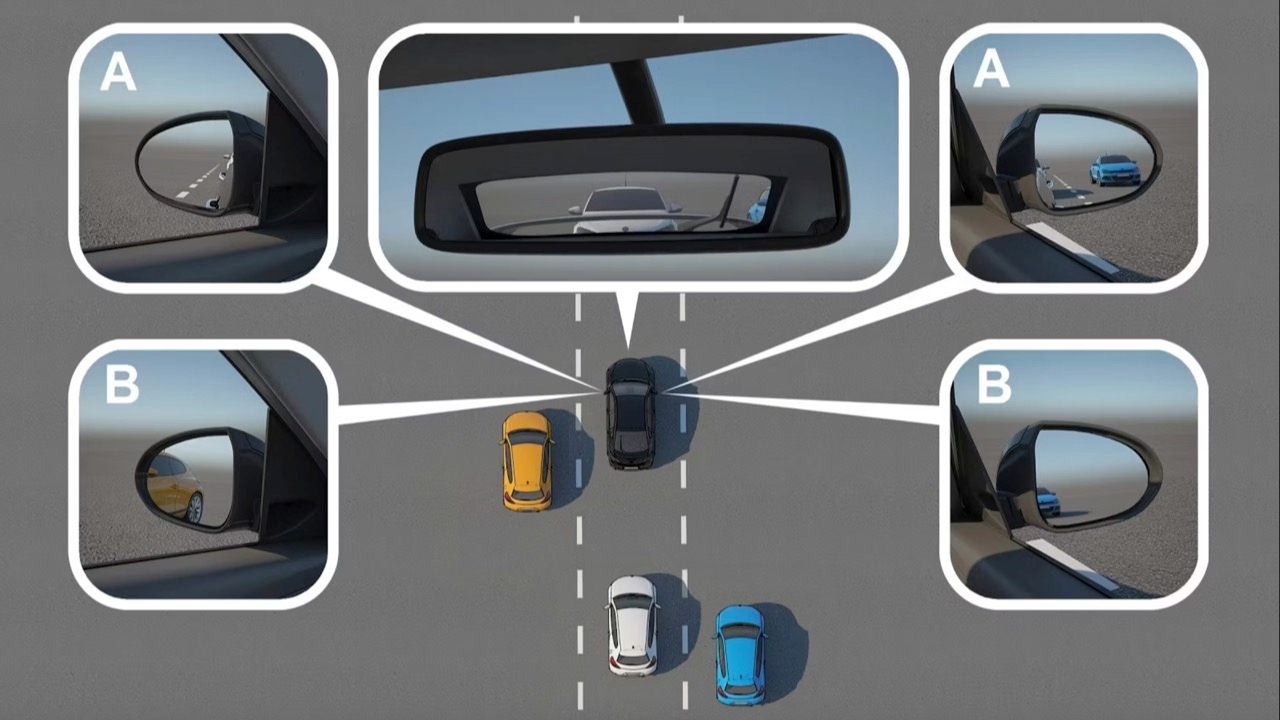
Side mirrors are essential equipment for inspecting the lanes around the vehicle on both the left and right sides before changing direction. They are crucial safety devices for lane changes, significantly contributing to accident reduction. Regular adjustment of side mirrors in daily driving ensures a comprehensive side view, enhancing safety when changing lanes.
Properly adjusting side mirrors is not difficult. The correct mirror angles provide a broad view, making your driving safer and helping to reduce road accidents. Turning your head in combination with checking through the side mirrors allows you to better detect motorcycles that often weave into lanes.


For adjusting the driver's side mirror, it should be angled outward and perpendicular to the vehicle, showing as little of the car’s side as possible. This setup helps the driver see a wider range of side and rear views. Combining this with turning your head to the right before changing lanes reduces collision risks. It also allows the driver to quickly spot vehicles approaching from behind, especially those overtaking rapidly on the right, providing time to react and avoid accidents.


Rearview mirror
When adjusting the rearview mirror, it should provide the widest possible view of the area behind. From the driver's seat, you should not see your own head reflected. The mirror should be slightly offset to the left to cover both the rear and part of the vehicle’s left side. The rearview mirror is used to monitor vehicles following too closely or when reversing without turning your head back. Even when mirrors are adjusted to fit your body, some blind spots remain. Adjusting the passenger side mirror follows the same principle as the driver's side. Care must be taken not to show too much of the car’s body in side mirrors to avoid blind spots that can delay detection of other vehicles at unsafe distances, which could lead to accidents during lane changes.

Additional advice for side mirror use: If your car has electrically folding side mirrors, avoid folding or unfolding them manually, as this can damage the mechanism and lead to costly repairs.

For large SUVs, folding the mirrors inward during long red lights protects the expensive side mirrors from motorcycles that often squeeze past and cause damage. It is common to see motorcycles hitting mirrors and then speeding away. Always check the cleanliness of your mirrors before driving, removing dirt that can obstruct your view. This simple step greatly enhances safety. Also, avoid using your phone or taking selfies while driving. Keep your focus on the road to reach your destination safely, preventing rear-end collisions or lane-change accidents involving other vehicles or motorcycles sharing the road.

No matter how well you adjust side mirrors, blind spots remain. Turning your head along with using side mirrors helps detect small motorcycles that often squeeze between lanes. Avoid tailgating closely, which risks rear-end collisions if the vehicle ahead brakes suddenly. Keeping a safe distance gives you more time to check mirrors and change lanes safely, reducing accident risks.
Finally, slow down before changing lanes. Make sure that when you move left or right, you do not scrape other vehicles or cause damage along the way. Always use your turn signals before changing lanes. Following these steps will prevent collisions with other vehicles when changing lanes.