

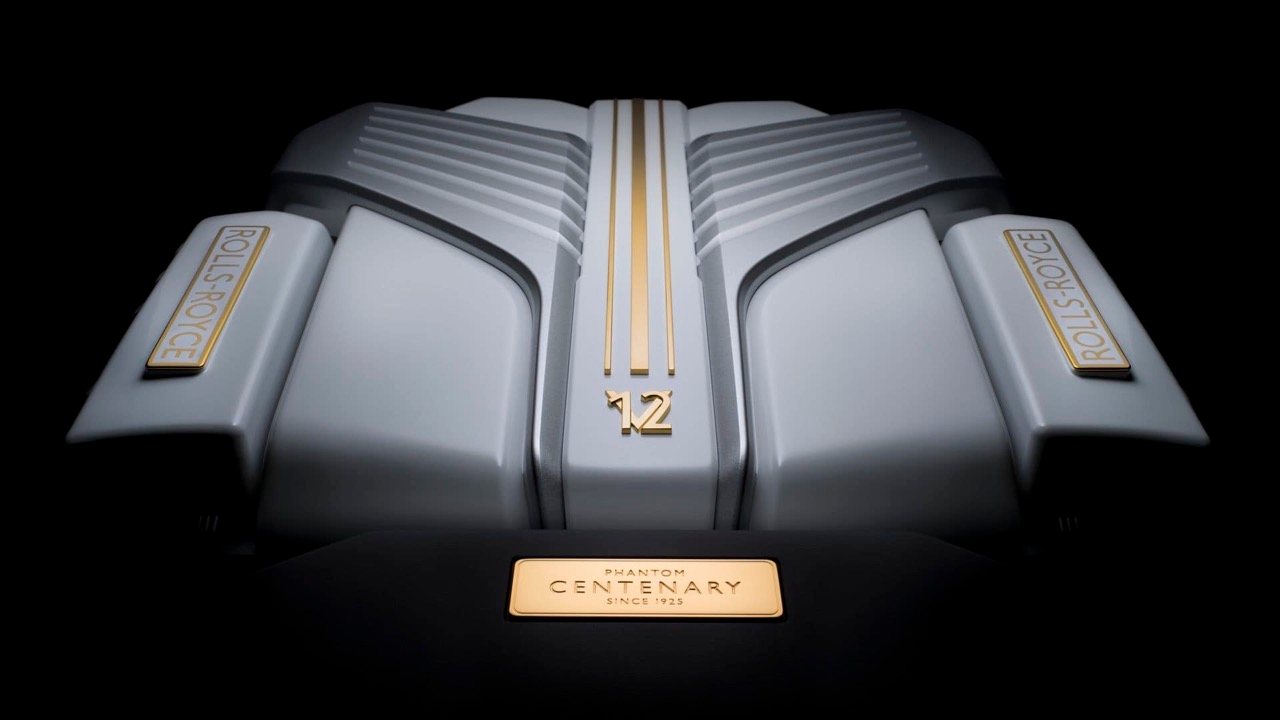
BMW has sent one of its clearest signals yet that the Euro 7 standard will not automatically phase out its internal combustion engine lineup, and similarly, Rolls-Royce’s V12 engine still has a future.

Joachim Post, head of vehicle development at BMW Group, told Autocar that the V12 engine can comply with Euro 7 standards through targeted exhaust system upgrades. Various components of the exhaust system that emit more pollutants than V8 or inline-6 engines have been upgraded and improved. Installing catalytic converters that burn more CO2 is a more cost-effective solution than designing an entirely new 12-cylinder engine from scratch, which would incur enormous development costs. This highlights that BMW has developed a diverse powertrain base almost to its limit, with modern engines designed to meet stricter Euro 7 emission limits through hardware improvements and pollution filter tuning rather than ground-up new engine designs, which would be far more expensive.

Additionally, Post confirmed that BMW's next-generation vehicles will offer engines with 4, 6, 8, and 12 cylinders. This is significant because BMW no longer sells V12-powered cars under its own brand—the V12 engine’s final chapter ended with the flagship Series 7 model. However, BMW still owns a premium brand that uses 12-cylinder engines: Rolls-Royce. Post’s remarks imply that the V12 engine will continue. The regulatory challenges of Euro 7 can be managed, so the V12 production line at Goodwood will not have to cease. Remember, the spirit of the Rolls-Royce “Spirit of Ecstasy” requires a V12 engine; forcing electric models might hurt sales since most Rolls-Royce customers remain attached to the V12.

In 2023, former Rolls-Royce CEO Törsten Müller-Ötvos told Car Magazine, “We decided that Rolls-Royce cannot have both electric and combustion engines; the Rolls-Royce Spectre will be 100% electric, and all future Rolls-Royce models will be fully electric.” This statement had to be reconsidered because Spectre’s sales have been weaker than other models, and electric vehicle growth in Europe remains limited. Buyers of such high-end cars dislike waiting to charge or electric drivetrains and remain open to large displacement engines, which seem more convenient.

By 2026, some global markets, especially in the high-end luxury segment, are shifting back toward combustion engine vehicles. The plan for the UK luxury car market (owned by Germans) to continue with V12 engines makes sense. Joachim Post’s comments reinforce the idea that Rolls-Royce can expand its electric vehicle lineup without abruptly ending V12 production, which is supported by the underwhelming sales of Rolls-Royce electric models.

Do not misunderstand this as a sign BMW will reintroduce V12 engines widely. For business reasons, 12-cylinder engines have nearly vanished from the automotive industry over the past 2–3 years. Demand is niche, and engineering investments are not cost-effective amid tightening emissions regulations and corporate carbon goals. Today, BMW has many new engines capable of delivering V12-level performance in flagship models easily, thanks to new 6-cylinder inline and V8 engines with plug-in hybrid systems that reduce emissions and increase torque. Electric cars sell reasonably well but not as strongly as internal combustion vehicles, which are gaining renewed prominence through advancing technology.