

On 9 Feb 2016 GMT+7, the Airbus A321neo fitted with the new CFM International LEAP-1A engine successfully completed its maiden flight from the Airbus factory in Hamburg, Germany. The aircraft, registered D-AVXB, was piloted by test pilots Martin Scheuermann and Bernardo Saes Benito Hernandez together in the cockpit, while flight test engineer Gerard Leskerpit monitored various details during the flight alongside team engineers Sandra Baur Schefer and Emiliano Riquena Esteban.


This test flight lasted approximately 5 hours and 29 minutes. During the test, the team operated the engine under demanding conditions, flying at both high and low speeds to assess all systems. The data collected was used to evaluate the aircraft’s performance. The A321neo joins the NEO fleet for performance testing in the flight test program to assess control and system operations. Deliveries of the first A321neo began in late 2016.
The A321neo is the largest narrow-body aircraft in the A320neo family, incorporating innovations such as new engines, sharklet wing tips, and cabin improvements, enabling up to 20% better fuel efficiency compared to previous models.


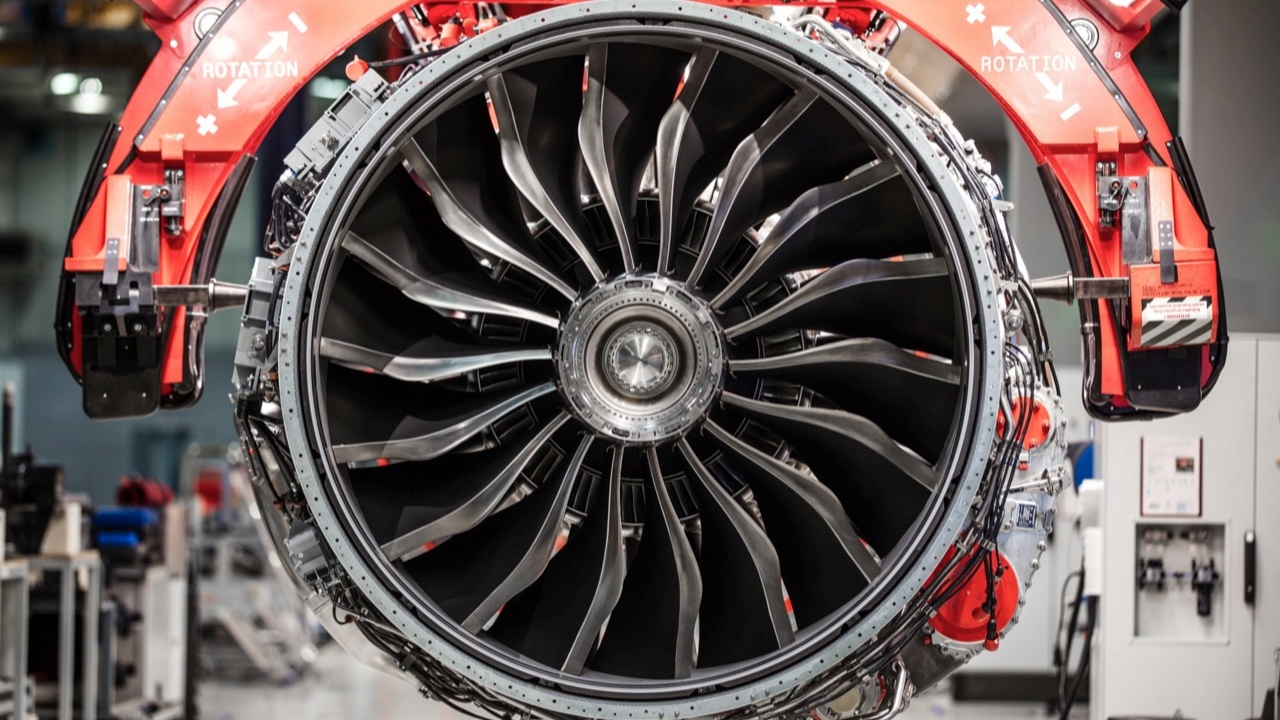
On 16 Jan 2025 GMT+7, Thai Airways unveiled its first Airbus A321neo at its hangar at Suvarnabhumi Airport. The aircraft is equipped with new engines from CFM International.To achieve outstanding performance, the LEAP-1A turbofan engine incorporates advanced technology, using 3D-woven composite materials with RTM (Resin Transfer Molding) processes patented by Safran Aircraft Engines. This enables production of lightweight, strong, and durable fan blades. The low-pressure turbine blades are made from titanium-aluminum alloy, offering lighter weight and better high-temperature resistance. The low-pressure turbine ring and blades use Ceramic Matrix Composite (CMC) materials, and the fuel nozzles are produced using 3D printing technology.

The LEAP engine family from CFM International—a joint venture between GE Aerospace and Safran Aircraft Engines—includes three variants covering thrust ranges from 23,000 to 35,000 pounds. These engines power the Airbus A320neo/A321neo and Boeing 737 MAX. To date, about 7,000 LEAP-1A and LEAP-1B engines have been delivered, with orders and commitments for an additional 20,000 units.

After comprehensive flight testing, the A321neo with the CFM International LEAP-1A engine received joint Type Certification from the European Aviation Safety Agency (EASA) and the U.S. Federal Aviation Administration (FAA). The EASA certificate was signed by Director of Certification Trevor Woods, and the FAA certificate by Acting Manager Michael J. Kaszycki of the Transport Airplane Directorate. Both certificates were presented to Klaus Roewe, Airbus's Senior Vice President of the A320 program, and Pierre-Henri Brousse, Chief Engineer of the A320 program.

The A321neo equipped with the CFM LEAP-1A engine completed over 400 flight hours in more than 160 flights during its FAA safety certification program. Testing examined the aircraft’s structure and systems beyond operational limits, ensuring compliance with all airworthiness criteria. The A321neo with the CFM engine is the fourth certified member of the NEO family, leading some airlines, including Thai Airways, to select the CFM LEAP-1A turbofan engine for their A321neo aircraft.

The LEAP-1A engine, used on Airbus A319neo, A320neo, and A321neo aircraft, incorporates the most advanced technologies in aviation. These include 3D-woven carbon fiber composite fan blades and casing, fourth-generation three-dimensional aerodynamic design, a Twin-Annular Pre-Swirl (TAPS) combustor, 3D-printed fuel nozzles, ceramic matrix composite turbine shrouds, and titanium-aluminum low-pressure turbine blades.

Specifications and Features
Manufacturer: CFM International (a joint venture between GE Aerospace and Safran Aircraft Engines)
Applications: Used on Airbus A321neo family (A319neo, A320neo) and Boeing 737 MAX aircraft
Engine Type: High-bypass ratio two-spool turbofan
Technology:
Fan Blades: Made from 3D-woven carbon fiber composite materials
Performance: High bypass ratio (~11:1) resulting in improved fuel efficiency and reduced emissions
Control: Fully digital engine control system (FADEC)
Capabilities: Successor to the CFM56, offering significant improvements in fuel efficiency and noise reduction
Commercial Service Entry: Began service in July 2016
Competitors: Competes with Pratt & Whitney PW1000G in the single-aisle commercial aircraft engine market
Support Services: CFM Services provides comprehensive support, including "Power by the Hour" (PBH) fleet management contracts
CFM International LEAP-1A Engine
Fuel Efficiency: Saves at least 20% fuel and reduces CO2 emissions per seat compared to its predecessor (A320ceo)
Cabin: Features a modern cabin design with LED lighting, increased overhead storage (XL bins), and enhanced air conditioning and pressurization with HEPA filters
Noise Reduction: Approximately 50% quieter during takeoff compared to earlier models
Sharklets: Large wingtip devices standard on the model, reducing drag and increasing range
Specifications (A321neo model) Seating Capacity: Typically 180–194 seats in two-class layout, up to 244 seats in high-density configuration
Range: Approximately 3,400–3,500 nautical miles (6,300–6,482 kilometers)
Length: 37.57 meters (123 feet 3 inches)
Wingspan (with Sharklets): 35.80 meters (117 feet 5 inches)
Cabin Width: 3.70 meters (12 feet 1 inch)
Maximum Takeoff Weight (MTOW): 79 metric tons; Maximum Fuel Capacity: 26,730 liters
Variants of the Airbus A320neo Family
The "neo" family includes three sizes developed from the previous generation models:
A319neo: Seats up to 160 passengers; longest range in the family (3,750 nautical miles)
A320neo: Seats up to 194 passengers; the standard model
A321neo: Seats up to 244 passengers; largest in the series, designed for high-density, longer routes
The Airbus A321neo is part of Thai Airways' fleet renewal and upgrade plan to serve short- and medium-haul routes. It features continuous aviation technology advancements with a focus on fuel efficiency, reduced CO2 emissions, and lower noise levels compared to previous aircraft models, aligning with the company’s sustainability goals.
The first Airbus A321neo aircraft received the name “Bowornrangsee,” derived from Bowornrangsee community, a historic area in Bangkok linked with Wat Bowonniwet Vihara. The term “Boworn” originates from Boworn Sathan Sutthawat (Front Palace), a former power center, while “Rangsee” means light and prosperity. The name symbolizes a place under the influence and radiance of an important institution, representing auspiciousness and historical significance.