

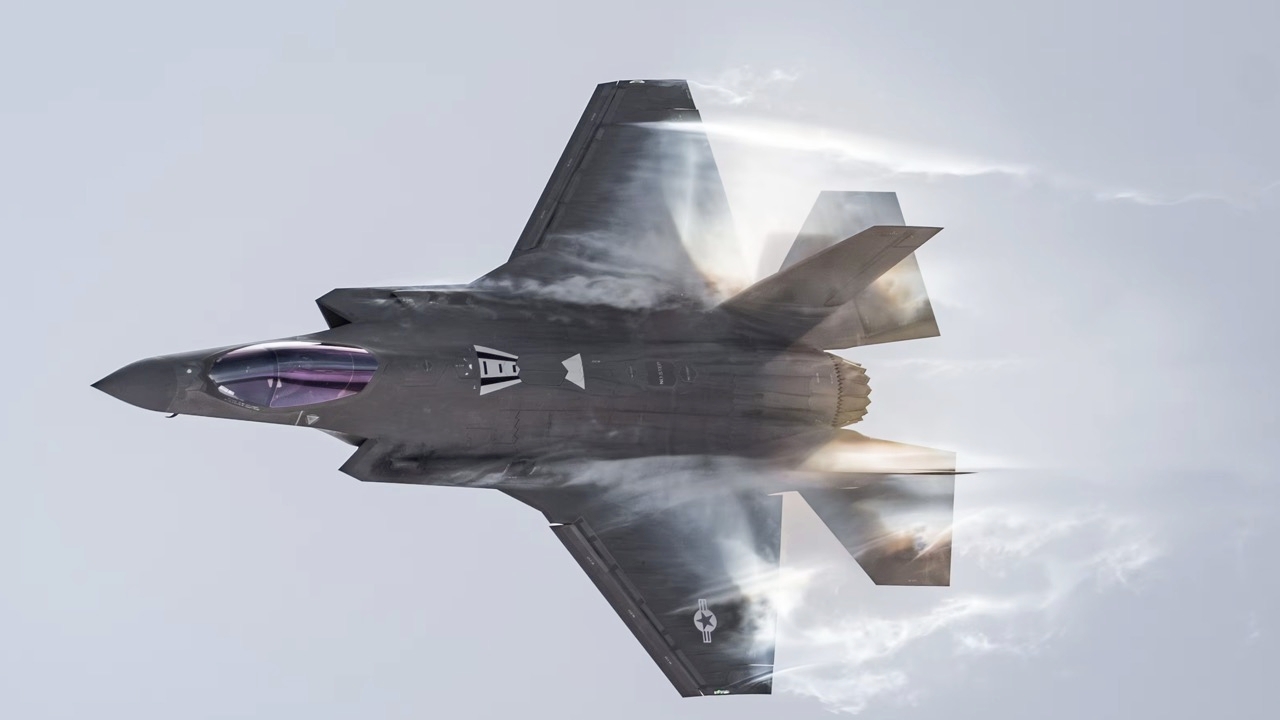
Lockheed Martin confirmed that 2025 marked the highest production year in the history of the F-35 Lightning II fighter jet program, underscoring the aircraft's crucial role in allied air forces. This announcement followed the delivery of 191 jets before the year's end, with final assembly carried out at Fort Worth (DFW), the program's main manufacturing facility, maintaining a consistently high production rate.

The F-35 Lightning II is a single-seat, single-engine supersonic stealth fighter. In 2022, the Royal Thai Air Force considered the F-35 as a multirole fighter to replace aging fleets (F-5/F-16) being phased out due to airworthiness issues. The Lightning II F-35 is designed for air superiority and strike missions, with capabilities in electronic warfare, surveillance, and reconnaissance. Lockheed Martin is the prime contractor for the F-35, partnered with Northrop Grumman and BAE Systems. However, Thai Air Force interest stalled because the U.S. perceived Thailand as having closer ties to China than other F-35 purchasers, leading to no sales agreement. Consequently, the Thai Air Force shifted to the Gripen E, which appears more suitable in terms of performance, cost, and ease of upgrading from the initial Gripen C/D aircraft acquired and deployed with Squadron 701, Wing 7, Surat Thani since 2011.

Lockheed Martin's F-35 Lightning II is a fifth-generation stealth fighter developed to replace third- and fourth-generation aircraft such as the A-10, F-16, Harrier, Jaguar, and Hornet, which serve in NATO and allied forces that have approved orders. The F-35 evolved from the X-35, winner of the Joint Strike Fighter competition, beating Boeing's X-32. The F-35 fighter jet comes in three basic variants:
Conventional land-based model (F-35A)
Short takeoff and vertical landing model (F-35B)
Carrier-based model with catapult launch and arrestor hook (F-35C)


Technical comparison commentary
Boyko Nikolov, a military and security expert writing on BulgarianMilitary, said, "Although the F-35A is the first choice, comparing the F-35 and Gripen E/F reveals clear advantages for each model. While the fifth-generation F-35 has greater combat potential, choosing the Gripen might strengthen Thailand's overall fighter fleet."


The fifth-generation fighter refers to the most advanced military aircraft currently, characterized by stealth capabilities that evade radar detection, supercruise ability for sustained supersonic flight, and networked data fusion for battlefield awareness. Examples include the U.S. F-35A/B/C Lightning II, China's Chengdu J-20B, and Russia's Sukhoi Su-57.


Nikolov also noted major differences in maintenance and operational costs between the F-35A and Gripen E/F. The F-35A is known for high maintenance expenses, the highest among currently produced Western fighter jets, whereas the Gripen E/F has lower costs and maintenance demands. "Over its lifetime, the Gripen E/F is expected to cost only about one-third of the F-35A," he stated.

Regarding armaments, the Swedish Gripen offers the Meteor missile, highly acclaimed and comparable to China's PL-15, ranking among the world's most effective air-to-air weapons. This missile's performance falls between the AIM-120D and AIM-260, narrowing some of the F-35's air-to-air advantages," Nikolov explained.


Overall, however, the F-35 remains a more capable fighter, especially with stealth technology enhancing survivability against threats beyond visual range. "Additionally, the F-35's AN/APG-81 radar is more advanced than Gripen's Raven ES-05, and one-third larger, giving the F-35 a significant edge in situational awareness," he added.
But Nikolov remarked, "The F-35's complexity is often its weakness." Its real-world combat performance has frequently been questioned due to technical issues. He pointed out that "persistent software flaws remain a major problem, occurring less often in the Gripen E/F."
.
Politics behind the Thai Air Force's rejection of American fighters and whether the Gripen can match the F-35

The F-35® Lightning II project is an ambitious U.S. military program aimed at delivering aircraft tailored to the distinct needs of the Air Force, Marine Corps, and Navy, all based on a common design: the F-35A (Air Force), F-35B (Marines), and F-35C (Navy). Perhaps the most remarkable of the three is the advanced F-35B, a short takeoff and vertical landing (STOVL) aircraft designed to replace the AV-8B Harrier II. It features a lift fan between the cockpit and engine and a three-bearing swivel module, combining stealth characteristics with battlefield situational awareness from multiple sensors across the aircraft. The F-35B primarily serves on aircraft carriers and amphibious assault ships. As of 2023, the British and Italian navies have deployed F-35Bs, and Japan's Self-Defense Forces began operating F-35Bs in various squadrons starting in 2024.
All variants share the same internal structure and core software.

The Electro-Optical Targeting System (EOTS) on the F-35 Lightning II is a versatile, high-performance, lightweight system capable of precise air-to-air and air-to-ground targeting. It has low drag and stealth characteristics, integrated into the F-35's fuselage. The durable sapphire canopy connects to a central computer via a high-speed fiber optic interface. The sensor combines forward infrared detection and infrared search and track functions. EOTS enhances the pilot's situational awareness, enabling identification of critical areas or coordinates, conducting reconnaissance, and accurately deploying laser- and GPS-guided munitions.

The advanced EOTS in the F-35 Block 4 upgrades the original system with improvements like short-wave infrared, high-resolution displays, infrared devices, and better detector resolution. These enhancements extend pilot perception and detection ranges, improving overall targeting performance.

The F-35 features the most advanced electronic sensor suite ever in a fifth-generation fighter, providing 360-degree situational awareness for improved threat detection and alerts, as well as day and night pilot vision. This is achieved through the Distributed Aperture System (DAS), comprising six infrared cameras placed around the aircraft.

The F-35 can carry weapons on external wing pylons and in internal weapon bays, enhancing stealth. It also has a sophisticated 360-degree optical system capable of detecting incoming missiles or stealth aircraft that might otherwise go unnoticed. The system's imagery is relayed to the advanced pilot helmet, allowing the pilot to see the ground beneath rather than the cockpit floor when looking down.

Currently, the U.S. Air Force plans to acquire over 1,700 F-35A jets to replace F-16s and eventually the A-10 Warthog. The Air Force declared initial operational capability in 2016 and has since deployed the F-35 worldwide for training. In Europe and Africa, the first F-35s arrived in December 2021, assigned to the 48th Fighter Wing at Luke Air Force Base. This marked the first permanent overseas deployment of U.S. Air Force F-35s. Currently, two F-35 squadrons operate at Luke AFB: the 495th Fighter Squadron, known as "Valkyrie," and the 493rd Fighter Squadron, known as "Grim Reaper." The 493rd previously flew F-15Cs from the same base.


In April 2023, some fighter pilots reviewed the F-35 and Eurofighter Typhoon, which has comparable performance. Although the Eurofighter Typhoon and Dassault Rafale are not stealth aircraft—a significant disadvantage compared to primary American fighters—the Eurofighter Typhoon exhibits excellent capabilities, sometimes surpassing the F-35 in aspects like weapons payload and thrust-to-weight ratio. However, the F-35's ability to strike targets with minimal radar detection and its advanced technology have made it commercially successful, pushing out major European competitors.

Over 1,080 F-35 Lightning II jets have been delivered to 10 U.S. allied air forces that ordered them, accumulating 957,000 flight hours at the time of purchase. The F-35 program has confirmed orders from 20 countries, double the number for the Eurofighter program, highlighting its extensive reach.

On 31 December 2025, Airbus released documents showing the Eurofighter had 761 cumulative orders, with 617 delivered to 10 countries—the same number of customers as December 2024. Orders increased by 81 jets, but only 10 were delivered that year, reflecting slower production compared to American fighter jets.

A week later, foreign military media reported that on 7 January, the F-35 program revealed updated figures: over 1,290 jets delivered, with 191 delivered in one year. The customer count remains at 20. On the same day, Lockheed Martin stated this delivery number set a new record, surpassing the previous annual record of 142 jets. The F-35 fleet has surpassed one million flight hours. Lockheed Martin touted that annual F-35 production is five times faster than allied fighter programs, emphasizing the program's scale and readiness.

These figures mean more F-35s have been delivered than Eurofighters by a factor of two. This reflects the massive production capacity of aerospace giant Lockheed Martin and the F-35's sales success despite its high cost. Additionally, Northrop Grumman recently announced delivery of 1,500 F-35 center fuselage parts, suggesting stealth fighter orders are set to double those of the Eurofighter.
Accidents over the past five years

19 May 2020: A U.S. Air Force F-35A from the 58th Fighter Squadron crashed while landing at Eglin Air Force Base, Florida. The pilot ejected and was rescued in stable condition. Reports cite multiple causes, including pilot fatigue, oxygen system design flaws, the aircraft's complex and distracting nature, faulty helmet display, and unresponsive flight controls.

29 September 2020: A U.S. Marine Corps F-35B collided with a KC-130 tanker during mid-air refueling over Imperial County, California. The F-35B pilot was injured during ejection, and the KC-130 made an emergency landing in a field without landing gear deployed.

12 March 2021: During a night flight near Marine Corps Air Station Yuma, Arizona, a 25mm cannon round fired from an F-35B exploded shortly after leaving the barrel. The pilot was uninjured, but the aircraft was grounded for over three months for repairs.

17 November 2021: A British Royal Air Force F-35B crashed during routine operations over the Mediterranean Sea. The pilot was safely rescued aboard HMS Queen Elizabeth. The crash was caused by an engine intake blockage plug remaining inside.

4 January 2022: A South Korean Air Force F-35A made an emergency belly landing after all systems failed except flight controls and engine. The pilot landed without landing gear and exited unharmed.

24 January 2022: A U.S. Navy F-35C crashed while landing on the USS Carl Vinson aircraft carrier in the South China Sea. Seven crew members were injured. The pilot safely ejected and was rescued from the water. The aircraft was recovered from about 12,400 feet depth using a remotely operated underwater vehicle.

19 October 2022: An F-35A crashed at the northern end of the runway at Hill Air Force Base, Utah. The pilot ejected safely without injury. The crash resulted from flawed weather data caused by turbulence from the preceding aircraft.

15 December 2022: An F-35B crashed during a failed vertical landing attempt at Marine Corps Reserve Base Fort Worth, Texas. A government test pilot ejected on the ground without serious injuries.

17 September 2023: An F-35B crashed after the pilot ejected over North Charleston, South Carolina, following a training accident. The pilot was unharmed, and wreckage was found the next day.

28 May 2024: A developmental F-35B crashed shortly after takeoff from Kirtland Air Force Base, New Mexico. The pilot ejected and was reported injured.

28 January 2025: An F-35A crashed at Eielson Air Force Base, Alaska due to landing system failure. The pilot attempted two landing approaches unsuccessfully before the crash and ejected safely.

The F-35 program has gained valuable lessons from accidents and incidents. Comprehensive accident data has been collected to improve pilot training, maintenance procedures, and operational flight considerations. Key lessons include:
Enhanced pilot training and situational awareness: The F-35's complexity demands advanced training to ensure pilots can effectively control the aircraft during emergencies.
Improvements in mechanical design and systems: The advanced technology of the F-35 offers unprecedented capabilities but also poses integration and reliability challenges, requiring ongoing hardware and software fixes.

Aircraft maintenance and logistics support: Proper maintenance is critical to aircraft safety and reliability. Maintenance issues have contributed to some accidents.
Design flexibility and rapid failure response: Quickly addressing design flaws and technical failures is vital to maintaining operational capability.

Evolutionary process: Accidents as part of development
From an aviation development perspective, accidents are not unusual. History is full of examples of fighter aircraft programs experiencing early problems.
In this context, F-35 accidents can be seen as part of the normal process of developing new weapons systems to full operational capability.

Concerning causes: systemic problems and risks
However, the ongoing incidents with the F-35 cannot be entirely dismissed as normal evolution for a fifth-generation fighter. As the aircraft enters full service in multiple countries, the number of accidents and technical issues points to deeper systemic problems. Safety concerns could have strategic impacts, as persistent accidents might undermine operational effectiveness in combat, endangering pilots and missions. Losing aircraft, especially in combat zones, could severely affect military capabilities.

Balancing optimism with reality
The F-35's complexity is both its strength and weakness. The aircraft features cutting-edge capabilities and advanced flight control systems but depends heavily on maintenance teams, spare parts, and software. Failure in any element can cause operational delays or accidents. Continuous readiness shortfalls or recurring technical problems strain a nation's military resources and reduce confidence in the aircraft's long-term usability. While some accidents may stem from pilots adapting to the F-35's complex systems, ongoing issues cannot be ignored.
Technical problems and accidents are expected during early operation phases of new aircraft, especially with highly advanced models like the F-35.
The F-35's sophisticated systems resemble those of new, cutting-edge technology. Early challenges are inevitable. The difficulties encountered during the F-35's initial years may be necessary to perfect this revolutionary design.