

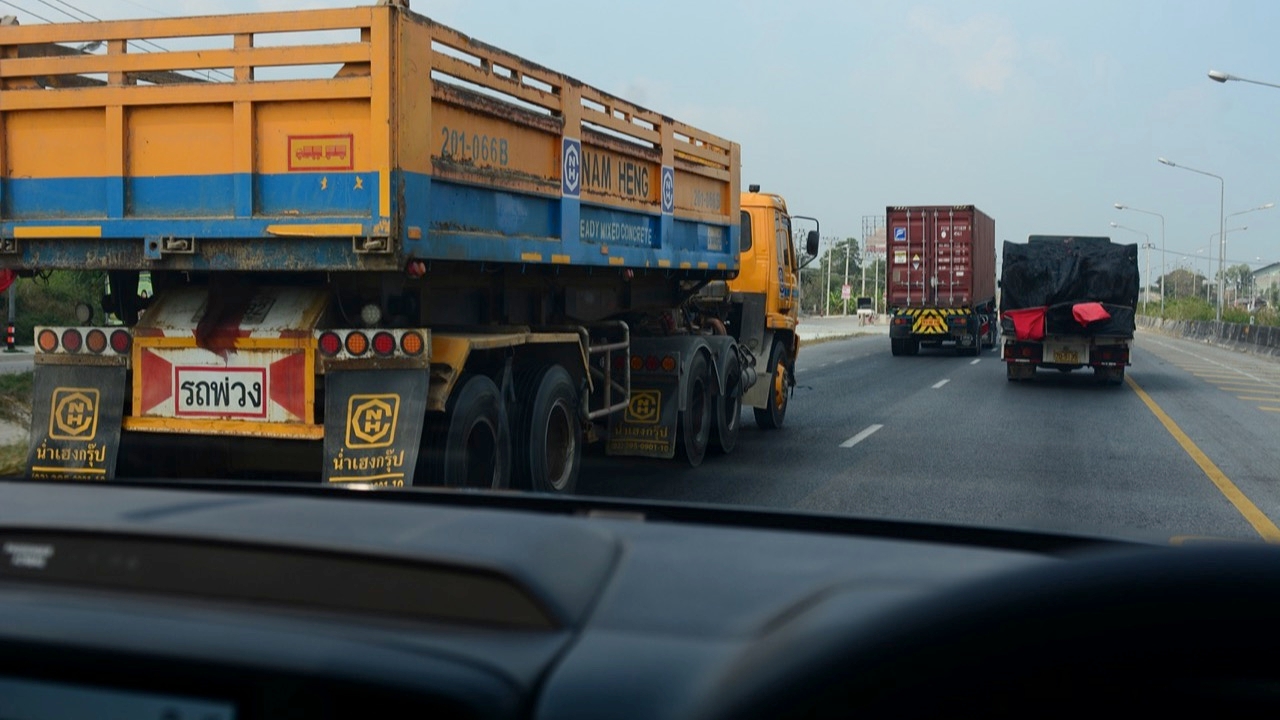
Accidents from overtaking mostly result from inexperienced distance judgment or insufficient use of the accelerator, with mistakes potentially costing lives. Many long-distance drivers have more experience than those who mainly drive in cities and often consider overtaking to be a simple task.

In reality, many drivers in this country drive without fully considering their surroundings, especially when driving alongside large 20-wheel trailers or using the accelerator hesitantly while overtaking. This leads to risky close overtaking. Half-hearted accelerator use in cars with less than 120 horsepower doesn’t make overtaking large vehicles easy. When following a truck and wanting to overtake, you should maintain enough distance to maximize forward visibility. Looking as far ahead as possible ensures safer overtaking and proper distance judgment, relieving worries about whether you can overtake safely. First, keep a sufficient gap from the truck to allow immediate overtaking once the opposite lane is clear.

Concentration is key. Many drivers become distracted, thinking about unrelated matters instead of focusing on whether the truck ahead is heavily loaded or empty, a standard 10-wheel or a long 20-wheel trailer. Environmental conditions during overtaking, such as uphill or downhill slopes or overtaking on bridges—which should generally be avoided—can easily cause accidents.

Truck speeds differ when climbing hills versus descending. This difference poses danger that may cause accidents. Heavily loaded trucks climb hills at low speeds with loud engine noise from accelerating. When following trucks descending hills, exercise extra caution and never cut into their lane abruptly, as heavy trucks going downhill cannot brake effectively.

The many variables involved in overtaking trucks demand heightened caution and precise anticipation, as there is little room for error. Once you decide to overtake a large vehicle and the road ahead is clear with a safe overtaking distance and no oncoming traffic, overtake immediately by fully pressing the accelerator. If your car lacks 600–700 horsepower and is a small-engine eco car, you should complete the overtaking maneuver decisively rather than slowly accelerating alongside the truck. Large trailers can sway dangerously if the driver steers sharply or avoids obstacles, risking collision with nearby vehicles. Worse, a sudden tire blowout on the big vehicle beside you can cause accidents. Accelerate quickly to pass safely rather than overtaking gradually. For powerful cars capable of quick overtaking, be mindful of speed; after overtaking, reduce speed to the legal limit to avoid fatigue and maintain alertness, since driving fast demands continuous and repeated mental focus to prevent accidents.

Hilly roads where visibility of oncoming traffic is limited require patience; follow behind until you can clearly see no vehicles are coming, then overtake quickly. In areas with frequent hills, remain calm and keep a safe following distance. Proper spacing also prevents gravel from hitting your windshield. Some drivers dangerously tailgate trucks, nearly driving under them. Such driving is very hazardous. Only overtake after cresting hills and confirming no oncoming vehicles. Pressing the accelerator fully releases maximum torque, especially crucial for small-engine cars with limited power. Assessing distance and visibility is the highest priority when overtaking large vehicles with small, less powerful cars.

Do not overtake simply because the car ahead is overtaking a truck. Let them complete their maneuver in their own time. You should reassess the situation and only overtake when you are certain it is safe. Impatiently overtaking by following another vehicle often leads to accidents due to poor visibility. Make your own decision based on what you see; never tailgate closely behind a car that is overtaking.

Precautions When Overtaking
Position your vehicle correctly.
Use appropriate speed and keep a reasonable distance from the vehicle ahead to observe the situation.
Check that the road ahead is clear and also look in the right side mirror before overtaking; you may encounter aggressive drivers overtaking simultaneously.
If another vehicle attempts to overtake simultaneously due to your delayed decision, restart the overtaking process immediately.
There are strict prohibitions when overtaking trucks or other vehicles:
Do not overtake in blind spots or areas with poor visibility, such as exits from curves.
Do not overtake where other drivers cannot see your vehicle, like areas with alternating high and low hills.
Do not overtake on curves.
Do not overtake on narrow roads lacking space for error.
Do not overtake at intersections or junctions.
Do not overtake on bridges, except when trucks keep left in four-lane roads.
Do not overtake near pedestrian crossings.
Do not overtake near railway crossings.
Do not overtake where solid lane lines divide lanes.
Do not overtake on blind hilltops where you cannot see oncoming traffic.
Arkom Ruamsuwan
E-Mailchang.arcom@thairath.co.th
Facebookhttps://www.facebook.com/chang.arcom
https://www.facebook.com/ARCOM-CHANG-Thairath-Online-525369247505358