

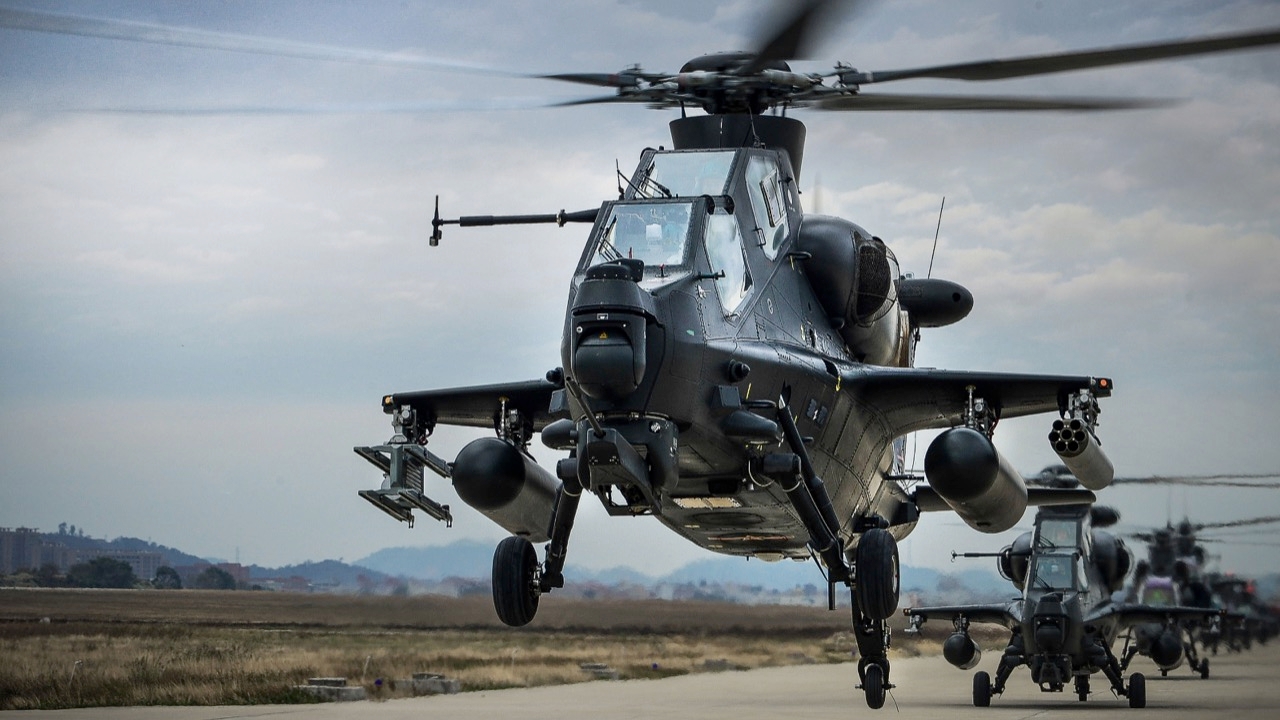
The CAIC (Changhe Aircraft Industries Corporation) Z-10 armed helicopter is a vertical takeoff and landing attack aircraft with performance comparable to Western attack helicopters. It is currently the most advanced assault helicopter of the Chinese Air Force. Since its first flight in 2003, the model has received little attention from Western media. The People's Liberation Army deployed the Z-10 in 2012, but in 2019, photos of a new pilot helmet sparked interest among military experts. They noted that the new helmet likely integrates operational systems with the helicopter's weapons and navigation systems, renewing Western interest in the Z-10.


The Z-10 is a modern armed air-to-ground attack helicopter co-designed with the Russian Kamov helicopter manufacturer. It is a highly capable, low-cost, technologically advanced attack helicopter comparable to US military models. The Z-10 is priced at just over half the cost of the US AH-64 Apache gunship. Military sources report that 120 units of the Z-10 “Fierce Thunderbolt” have been produced, likely for export to purchasing countries' armed forces.

Designed primarily for anti-tank warfare, the Z-10 also has air combat capabilities. Chief designer Wu Ximing collaborated with Kamov engineers and the Russian Aircraft Design Bureau under a cooperation treaty with China’s government. However, this partnership abruptly ended due to fundamental design philosophy conflicts. Chinese aviation engineers and senior weapons officers preferred a lighter, more agile helicopter frame with less armor. Subsequently, the Z-10 was further developed by CAIC domestically, reducing costs and allowing structural modifications to meet specific requirements.


Wu Ximing, an aviation engineer from Research Institute 602 and a leading Chinese scientist, is recognized for his technological expertise and was one of the chief designers of the Z-10 helicopter. Previously involved in designing the Z-8A transport helicopter and the armed WZ-9, Wu contributed to completing the Z-10 project. Research Institute 602 and CAIC jointly established an engineering design center, flight simulators, ground engine test facilities, durability test labs, and a rotating test platform known as the Iron Bird Platform. By late 2001, final tests on the Z-10 platform were completed, paving the way for the first flight test and the successful deployment of the new attack and anti-armor helicopter in the Chinese military.


One of the two main flight control systems (FCS) is the electro-optical (optronics) radar dome, developed using experience from French and Israeli export attack helicopter producers. It combines the best hardware elements from both, while the software was entirely developed by Chinese engineers and programmers. The optronics FCS equipment is produced by China North Industries Group Corp, later renamed China North Industries Group Corporation Electro-Opticals Science & Technology Ltd. The design team leader is Dr. Li Baoping, project manager of the Airborne Stabilized Aiming System. Additionally, the Z-10's primary weapon, the HJ-10 anti-tank missile, was developed alongside.


The optronics FCS includes similar components mainly consisting of a daytime telescope, night vision camera, infrared imaging for target acquisition and locking. For anti-tank missiles, it features laser target rangefinding and locking systems. All these developments were completed in 2003 and tested on the Z-9 helicopter. The optronics FCS is fully compatible and can be adapted to pilot helmet-mounted systems (HMS/HMD).


Intriguing photos of a new pilot helmet for Z-10 helicopter crews appeared on the Facebook page Modern Chinese Weapons, managed by military content expert and author Andreas Rupprecht. Rupprecht, who publishes credible references on Chinese military aircraft via Harpia Publishing, shared images originating from the weapons team of the Z-10 Fierce Thunderbolt. While detailed specifications of the latest helmet are not yet clear, its bulky appearance features advanced technology including aiming systems, daytime and nighttime vision navigation cameras, and infrared tactical equipment.


Stefano D'Urso, a military analyst and writer for TheAviationist.com, attempted to explain how the sensors and lenses on the Chinese Air Force attack helicopter pilot helmet operate.
Under a green transparent polymer, there appear to be two lenses similar to those on the AH-64 Apache helicopter’s IHADSS (Integrated Helmet and Display Sighting System). The difference is that the tube is mounted on top of the helmet, whereas the IHADSS tube is mounted on the lower right side. The two external lenses might be NVGs (Night Vision Goggles). The helmet shown is likely developed for the latest Z-10 attack helicopter model “Z-10ME,” where "ME" is presumed to mean "Military Export," intended for overseas markets such as Africa and the Middle East.

Song Zhongping, a Chinese military expert and critic, stated on ChinaMil.com.cn that “Many countries in the Middle East, Southeast Asia, and South America seek medium-sized attack helicopters cheaper than the US AH-64 Apache but with sufficient destructive power. The new Z-10ME model meets these needs.” Western media express concern about the numerous sensors and lenses on the Chinese attack helicopter pilot helmet, particularly regarding the weight, which is critical under high G-forces experienced during high-speed maneuvers.

China is renowned for producing lightweight materials such as carbon fiber. Currently, much of the global carbon fiber production originates in China, serving both consumer markets—for example, bicycles, tennis rackets, and leisure products—and military industries, including fighter jets and attack helicopters.


Since the Z-10 pilot helmet is gray, it is difficult to determine the material from photos. However, lightweight carbon fiber is a strong possibility, as it has been used previously in the Z-10 Fierce Thunderbolt attack helicopter. Photographs suggest that the new Chinese Air Force pilot helmet may enhance capabilities such as precise targeting, night vision, flying in adverse weather, and providing critical information alerts during attack missions. Reports indicate the new helmet costs less than Western-designed helmets made specifically for the latest attack helicopters.