

Despite suffering heavy losses recently from B2 bomber airstrikes in the latest conflict with Israel, which is well known to have strong U.S. backing, Iran's missile arsenal remains one of the largest and most diverse in the Middle East. In 2022, U.S. Central Command General Kenneth McKenzie stated that Iran possessed over 3,000 ballistic missiles, not including a rapidly growing number of ground-launched cruise missiles. Iran used hundreds of missiles in a short war with Israel in June 2025, including two clashes in 2024 (April and October). While Israel targeted Iranian missile stockpiles, launchers, and weapons production capabilities in retaliation, Israeli officials assessed that at the war's end, Iran retained about 1,500 missiles and 200 launchers. However, signs emerged in late 2025 that Iran was replenishing its arsenal to prepare for threats from the West.


Iran's urgency to rebuild its missile stockpile reflects heavy investment by its rulers in missile capabilities over the past two decades, focusing on improving readiness, precision, and destructive power to serve as a credible traditional deterrent. Emphasizing precision has been prioritized over extending missile range, a policy officially set in 2015 limiting missile range to 2,000 kilometers. However, Iran can revoke this limit at any time, and in fact, the Khorramshahr system is capable of longer ranges if fitted with lighter warheads. The focus on readiness has driven Iran to develop solid-fuel missiles, moving away from reliance on liquid-fueled missiles. After some Iranian missiles proved ineffective against U.S. and Israeli air defense systems during 2024-2025, Iran has worked to improve the maneuverability of its warheads and missile guidance systems to make them harder to destroy.

Khorramshahr-Khyber
The Khyber missile is the latest in the Khorramshahr family, with a range up to 2,000 kilometers. It is designed to strike strategic long-range targets without requiring complex launch systems, making it a key asset for preemptive or rapid retaliatory strikes against opponents.

Fattah 2
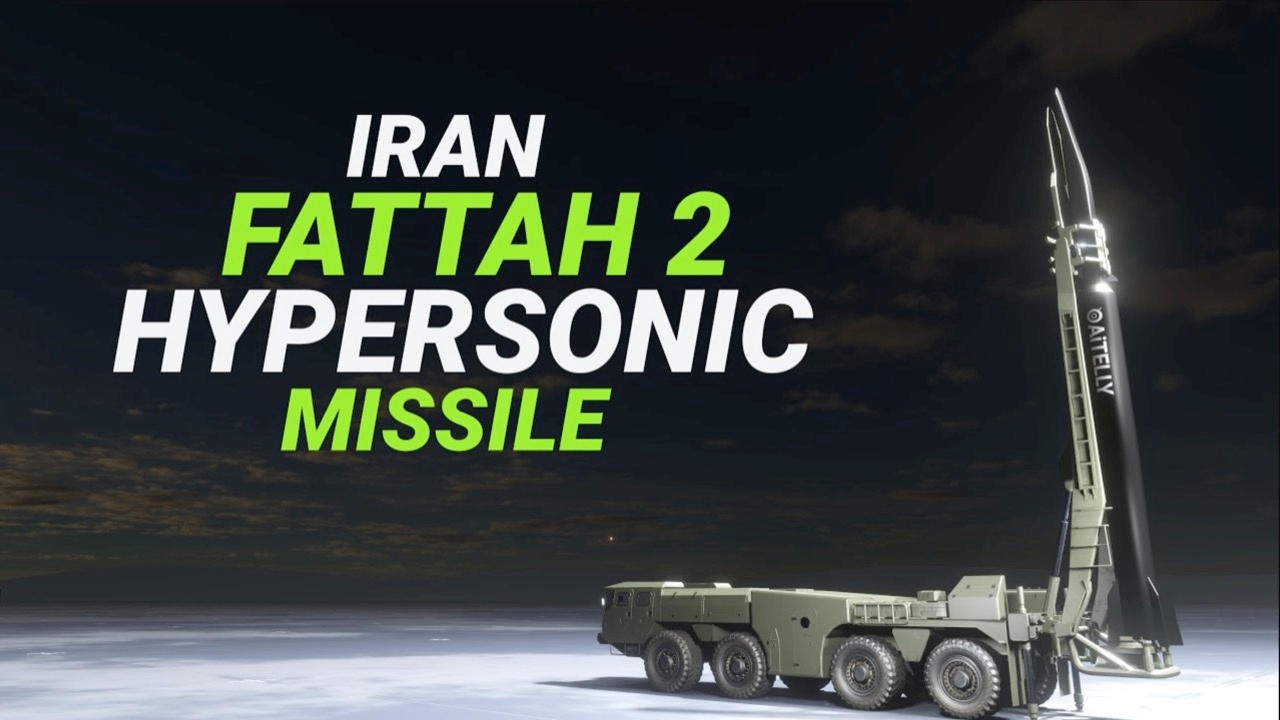
Iran claims its advanced hypersonic missile named Fattah 2 is now fully operational, capable of evading modern air defense systems and penetrating the atmosphere at high speeds. It has a maximum range of 1,400 kilometers and hypersonic speeds between 6,180 km/h and 18,540 km/h. While Western nations remain skeptical of this missile's capabilities, Fattah 2 remains a significant deterrent, especially against large floating targets like U.S. aircraft carriers. A single hit could sink such a ship along with over 5,000 crew members. The U.S. cannot afford to underestimate this threat and has so far refrained from preemptive strikes, instead signaling that Iran may be open to nuclear weapons talks.

Qassem
The Qassem missile is renowned for its precision. It is a solid-fueled rocket-powered missile designed for rapid firing, enhancing the readiness of Iranian forces to strike targets immediately without lengthy preparation, especially in naval operations.

Zulfaqar Naval
The Zulfaqar Naval missile stands out with a range of 700 to 1,000 kilometers and the ability to strike warships and commercial vessels at extremely high impact speeds. It is a key weapon in Iran's efforts to counter U.S. attempts to blockade maritime transport routes.

Soumar
The Soumar missile has a maximum range of 2,500 kilometers and features the ability to fly at altitudes that avoid detection, increasing its chances to penetrate air defense lines and accurately strike distant targets.

Ra'ad
The Ra'ad missile is lightweight and can be quickly deployed on launch platforms, making it suitable for lightning-fast and surprise attacks, especially in tactical ground warfare scenarios.
An analysis of why Iran's hypersonic Fattah missile stands out in operation shows that defense against Western aggression has driven rapid development, modernizing Iran's missile arsenal significantly. This represents a major advancement in its self-defense capabilities.

Fattah-1, introduced by Iran's Islamic Revolutionary Guard Corps (IRGC) in June 2023, was Iran's first hypersonic missile and entered service as a long-range weapon. It demonstrated high speed, accuracy, launcher agility, and the ability to evade Israel's most advanced missile defenses such as Iron Dome and Arrow. During a barrage against Israel, one of the missiles fired was the hypersonic Fattah-1, which struck Israeli targets severely. Images of large building damage in Tel Aviv showed the missile's effectiveness. Reports indicated several missiles penetrated Israeli defenses traveling at Mach 13 (15,926 km/h), bypassing multiple layers of Israel's air defenses at hypersonic speeds.

Fattah-2 is a hypersonic missile (traveling 5 to 15 times the speed of sound) representing a significant enhancement of Iran's military power. It combines speed, maneuverability, and long-range strike capability to challenge missile defense systems. Developed by the IRGC, it travels between Mach 5 and Mach 15 (approximately 6,180 km/h to 18,540 km/h) with a range around 1,400 kilometers. Unlike traditional ballistic missiles that follow predictable trajectories, the Fattah-1 can rapidly change its flight path and glide within the atmosphere, making interception by aircraft carrier missile defenses very difficult.

The Fattah-2's propulsion uses solid-fuel technology, enabling rapid acceleration and high speeds from launch. Its solid rocket motor enhances hypersonic speed and in-flight agility, effectively evading defensive interceptions. Indications suggest Fattah-2 employs a two-stage motor to achieve bursts of speed during its flight into enemy territory or when targeting surface targets like U.S. aircraft carriers. Its ability to alter both flight path and speed complicates interception. Combined with hypersonic speed exceeding 18,000 km/h, this presents a serious challenge to U.S. defense. While Fattah-1 posed a grave threat to Israel, Fattah-2 is even more capable of penetrating advanced air defenses to strike large protected targets.

Iran has not disclosed the maximum warhead capacity of the Fattah-2, but its design shows versatility, allowing for various payload weights including conventional or nuclear warheads if Iran chooses to demonstrate this capability. Informal estimates suggest nuclear warheads could weigh between 350 and 450 kilograms. This flexibility enhances the missile's strategic utility, suitable for attacking both military and critical infrastructure targets. Although unconfirmed, the potential for nuclear warheads on Fattah-2 indicates Iran's focus on bolstering its strategic deterrence against Western threats in the region. This is believed to be a key reason why former U.S. President Trump hesitated to strike Tehran, fearing retaliation from Fattah-2.