

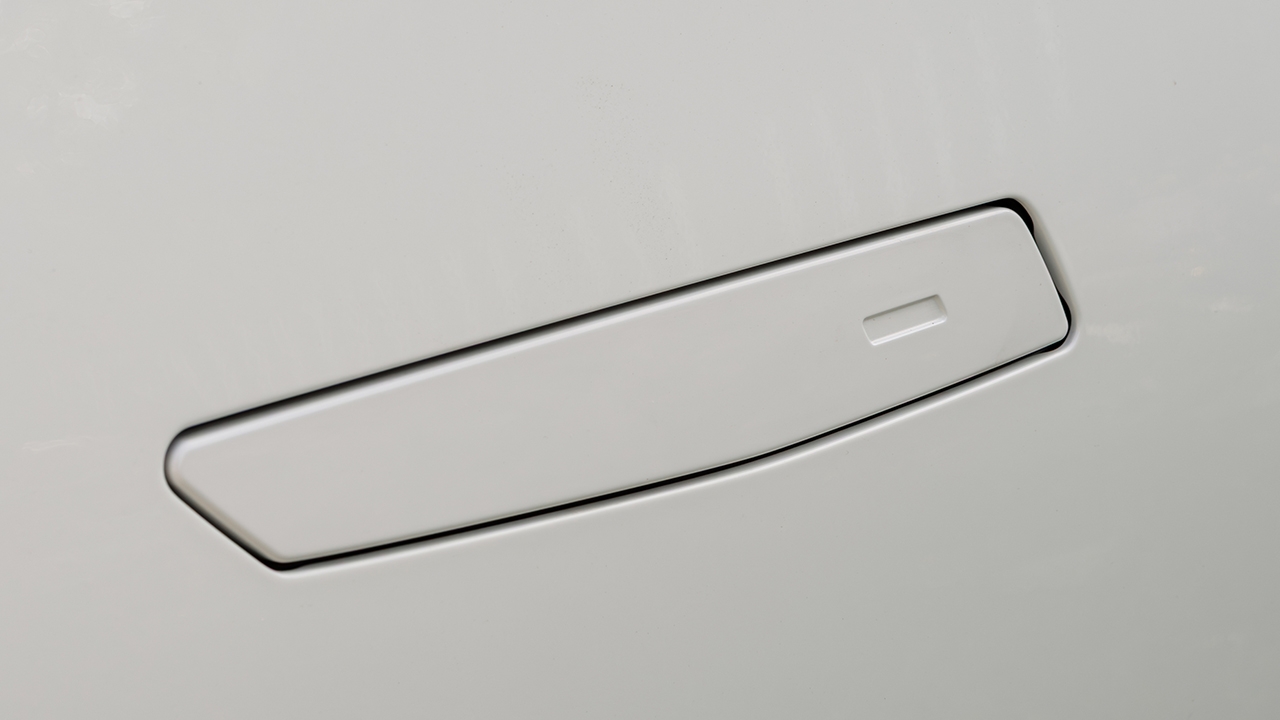
China revealed the reason for banning "hidden door handles in EVs," citing problems with doors failing to open due to electrical system failures after accidents that trapped people inside the vehicles.
This has become a hot topic in China's automotive industry after the Chinese government introduced new regulations banning the use of hidden door handles in electric vehicles (EVs). China is the first country in the world to take such action and suspend this popular design, which was initially pioneered by Elon Musk's Tesla.
This measure comes amid intensified scrutiny from global safety regulators following several serious accidents, including an incident involving a Xiaomi brand EV in China where an accident caused the electrical system to fail, preventing the doors from opening from both inside and outside.
China's Ministry of Industry and Information Technology (MIIT) stated that vehicles sold in China must have mechanical release systems for door unlocking accessible from both inside and outside. This new rule will officially take effect on 1 January 2027.

The technical details specified for electric vehicles are as follows:
- On the exterior, every passenger door except the trunk must have a recessed slot at least 6 cm by 2 cm in size and at least 2.5 cm deep to allow easy access to the door handle in emergencies.
- Inside the vehicle, there must be a sign or symbol clearly indicating how to open the door, measuring no less than 1 cm by 0.7 cm.
Electric vehicle models already approved and in the final stages before market release will be granted a two-year grace period to redesign and comply with the new standards.
However, this announcement impacts the EV market where hidden door handles are currently very popular. According to China Daily, more than 60% of the top 100 best-selling EV models in China use this design for aesthetics and aerodynamic efficiency.