

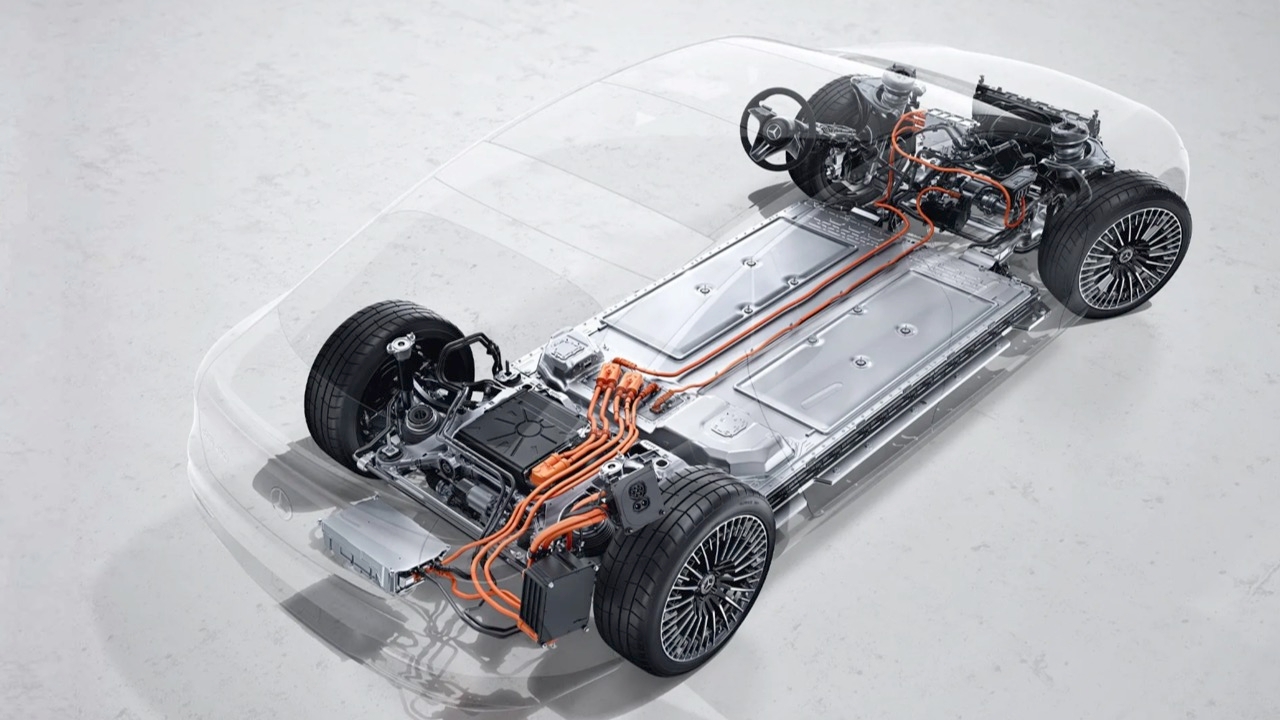
Today, when choosing an electric car, EVs priced around 600,000 to 800,000 baht generally offer a driving range of about 400-550 kilometers or slightly more. It is well known that large batteries provide a significant advantage in driving range for electric vehicles. Larger batteries reduce charging frequency considerably if not driven long distances daily, especially when mainly used in cities. While opting for an EV with extended range increases driving distance, large batteries have hidden drawbacks. Remember, the added weight from a battery roughly the size of a ping-pong table raises production costs and increases charging time, especially when using AC home charging. This slow charging method benefits battery health by gradually passing current without causing heat buildup like fast DC charging. For EVs with about 100 kWh batteries charged at home without a Wallbox, it may take up to two days to fully charge.


Advantages of Large Batteries
Longer range: Greater capacity allows for more energy storage, enabling round trips of 700-800 kilometers at average speeds of 90-100 km/h without needing to stop for charging.
Reduced charging frequency: Large batteries, when not driven close to 1,000 kilometers that deplete the charge, allow daily use over 100-200 kilometers without frequent recharging, enhancing convenience and saving charging time.
Improved performance: High-capacity batteries deliver power more consistently, ideal for demanding conditions like steep hills or mountainous routes that consume more battery power.
Longer lifespan: Large batteries undergo fewer charge-discharge cycles than smaller ones, extending overall life, especially if regularly charged using AC power, which is slower but better for battery health.
Cautions
Weight and efficiency: Larger batteries significantly increase vehicle weight, reducing energy efficiency and affecting handling, braking distance, and tire wear due to the combined impact of mass and speed.


Cost and environmental impact: Large batteries are more expensive to produce and have a greater environmental footprint, consuming more raw materials than smaller batteries.
Charging time: Large batteries take longer to fully charge, particularly with standard AC charging rather than fast charging. For city drivers, smaller batteries offering about 400 kilometers range may suffice, while frequent long-distance drivers benefit from the extended range of large batteries.


Currently, the longest-range EV batteries are found in Chinese electric vehicle brands using high-capacity battery technology (120-150 kWh), achieving 800 to 1,000 kilometers or close (CLTC standard), including:
Rank 1: Mercedes-Benz EQS 450+ AMG Dynamic achieves a maximum range of 783 kilometers (WLTP standard). Rank 2: Volvo EX90 achieves a maximum range of 745 kilometers (NEDC standard).
Rank 3: Zeekr 7X Long Range RWD achieves a maximum range of 730 kilometers (NEDC standard).


EVs capable of 1,000 kilometers range, not yet available in Thailand, include:
Denza Z9 EV (1,068 km)
Denza Z9 GT (1,036 km)
Yangwang U7 (1,006 km)
All belong to BYD, currently the leader in range and battery technology.
Top EV models and brands with the longest range (latest data early 2026)
BYD (Denza Z9 EV / Z9 GT EV): ranks 1-2 with ranges of 1,036-1,068 kilometers.
Yangwang U7 EV: BYD's premium brand with a large battery, reaching 1,006 kilometers.


The EVs with the shortest ranges in Thailand are usually small City EVs or city cars focused on urban use, with the lowest range models including Pocco MM (about 116 km), Pocco DD (small version 128 km), and Wuling Air EV (standard model 300 km per CLTC, which may be less under NEDC or real usage).
Ranking of short-range EVs in Thailand (focused on urban/short-distance use):
Wuling Binguo EV (main model in Thailand) features a 31.9 kWh battery, with a maximum range of about 333 kilometers per full charge (NEDC standard), suitable for city and mid-range travel. It has a top speed of 120 km/h and supports DC fast charging (30-80% in 30 minutes).
Range details for Wuling models in Thailand: