

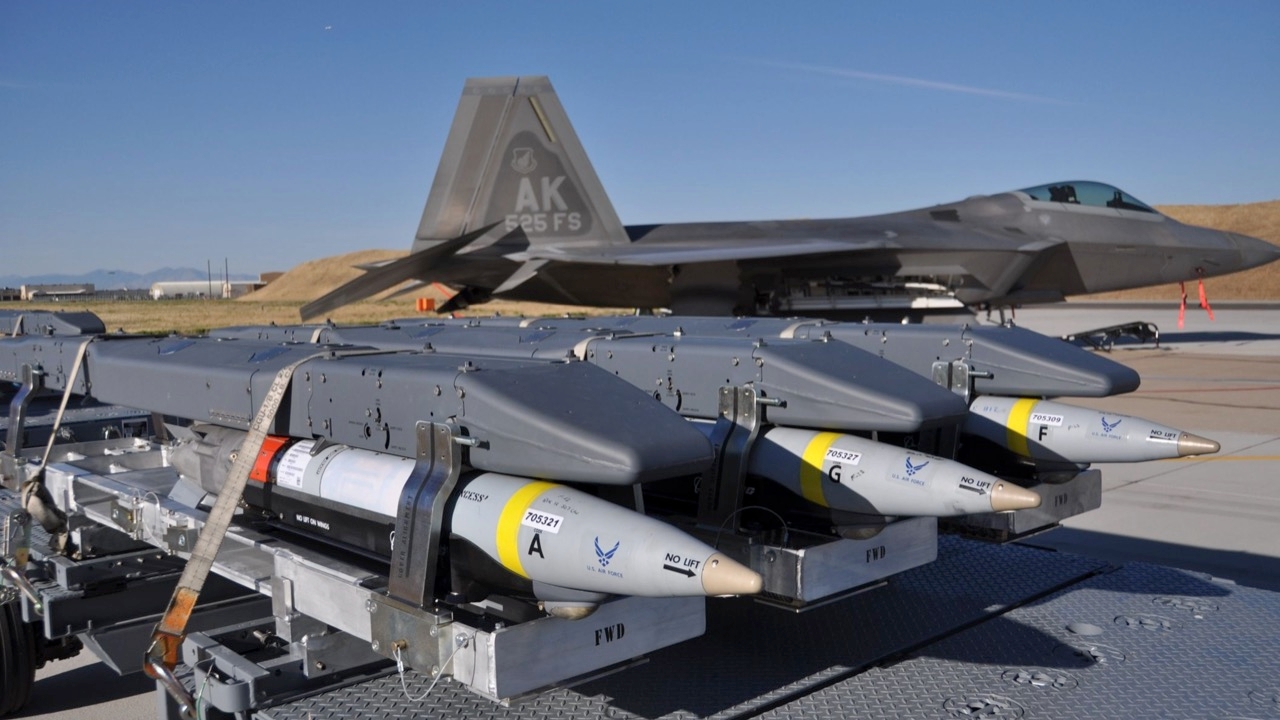
Israel and the U.S. took preemptive military action against Iran while negotiations had yet to reach an agreement. This was related to pressure to restrict what Iran was developing, which the West considered a serious threat (though past accusations, such as those against Iraq for possessing weapons of mass destruction leading to the Gulf War invasion, ultimately proved unfounded). The latest information indicates that in the major Iranian strike operation from 28 February to 1 March 2026, which resulted in the death of Iran's Supreme Leader Ayatollah Ali Khamenei, Israel and the U.S. used several advanced types of military equipment in coordination.
Naturally, Iran, as the party attacked first, has the legitimate right to retaliate. Iran's response is expected to intensify over time. The ease with which Iran penetrated Israel’s air defense system and caused severe damage to Tel Aviv and U.S. bases across the Middle East—targets Iran sees as key to its retaliation—was reported. Latest reports from Iran's Revolutionary Guard Forces at 01:31 on 2 March 2026 state that 560 American soldiers were killed or wounded from Iranian missile strikes on U.S. bases throughout the Middle East.
Regarding the major strike on 28 February 2026, under the code names "Roaring Lion" (Israel) and "Operation Epic Fury" (U.S.), which led to the death of Iran's Supreme Leader Ayatollah Ali Khamenei, the latest data details the weapons used by Israel and the U.S. as follows.


Weapons Used in the Attack
Israel and the U.S. employed a combined attack using cruise missiles and fifth-generation fighter jets such as the F-22, F-35, and F-18 to penetrate Iran’s air defense systems.
Missile Type: Reports indicate the use of cruise missiles (exact model not yet specified but long-range, likely Tomahawk cruise missiles) to pave the way for F-35 Stealth Fighters and F/A-18 jets.
Range: The Tomahawk cruise missiles used can strike targets over 1,600 kilometers away, allowing launches from beyond Iran's heavily defended airspace.
Warhead: These precision-guided munitions are equipped with high-explosive warheads designed specifically to destroy buildings or command centers.


The Tomahawk cruise missile is a subsonic weapon, flying at an average speed of about 880–890 km/h, approximately Mach 0.74.
Important Technical Data (Updated 2026)
Cruising Speed: Approximately 885 km/h.
Flight Altitude: Very low at just 30–50 meters above ground to avoid radar detection.
Range: Between 1,600 and 2,500 kilometers, depending on the variant (e.g., Block IV or Block V).
Propulsion: Uses a small turbofan engine for cruising and a solid-fuel rocket motor.


Though the Tomahawk is not a supersonic missile, its strengths lie in high accuracy and terrain-contour matching (TERCOM) capabilities that allow it to fly low and evade interception. The U.S. military continues to develop it, with the latest Block V variant designed to target moving naval vessels.


The Tomahawk is a long-range, high-precision cruise missile that can be launched from surface ships and submarines. Key details include:
Technical Specifications
Type: Subsonic cruise missile.
Speed: Approximately 880–900 km/h (Mach 0.7–0.8).
Range: 1,250 to 2,500 kilometers depending on variant.
Weight: About 1,300–1,600 kilograms.
Manufacturer: Raytheon (RTX).
Current Variant: Block V Series.
The U.S. military is upgrading all Block IV missiles to the Block V standard, which includes the following sub-variants:
Block V (Baseline): Standard model with updated navigation and communication systems.
Block Va (Maritime Strike Tomahawk - MST): Designed specifically to attack moving naval targets.
Block Vb: Equipped with a Joint Multi-Effects Warhead (JMEWS) for destroying diverse and fortified ground or underground targets.
Navigation and Technology

The Tomahawk is renowned for accuracy through the integration of multiple systems.
GPS & INS: Satellite navigation and inertial navigation systems.
TERCOM: Terrain Contour Matching system enabling very low flight to evade radar.
DSMAC: Digital imaging system comparing the target's image with stored maps before impact.
Two-way Data Link: (in Block IV and V) allows target updates mid-flight or commands to loiter.
Current Status (2026)
Usage: Recently employed in Operation Epic Fury (Feb–Mar 2026) to strike military targets in Iran.
Innovations: Images have surfaced of a "Black Tomahawk," believed to be a stealth-enhanced variant with reduced radar signature.
The U.S. plans to increase production to over 1,000 units annually to meet rising demand.


Weapons Used in the Operation (Feb–Mar 2026)
Bombs and Precision-Guided Missiles: The Israeli Defense Forces reported dropping more than 1,200 bombs at the start of the operation to destroy Iran’s air defense and command centers.
Aircraft: Over 200 fighter jets were used in the first wave, targeting more than 500 sites across Iran.

Israel Air Force's Precision-Guided Munitions (PGMs)
Bullseye Missile: A new long-range guided missile developed jointly with the U.S., featuring Autonomous Target Recognition and effective operation even without GPS signals.


The U.S. government approved arms sales worth over $6.8 billion, including more than 2,100 GBU-39/B Small Diameter Bombs and 13,000 JDAM guidance kits.
Israel ordered $260 million worth of air weapons, such as GATR laser-guided rockets, MPR500 precision bombs, and Rampage missiles for long-range ground targets.
Targeting for Assassination: This operation is described as a "Decapitation Strike," aimed at the leadership complex and the Revolutionary Guard Corps (IRGC) command center in Tehran.
Historical Data on Weapons Israel Has Used to Kill Various Leaders
In 2024, Israel used different technologies based on mission requirements:
The killing of Ismail Haniyeh (Tehran, July 2024) reportedly involved highly precise guided missiles.
The killing of Hassan Nasrallah (Lebanon, September 2024): Israel used about 80 bunker-buster bombs dropped from F-15I jets to destroy an underground command center.
Iranian Retaliatory Strike (October 2024): Israel employed air-to-surface missiles launched from outside Iranian airspace to destroy S-300 air defense systems and missile factories.
The death of Iran’s Supreme Leader is under close scrutiny for its regional repercussions.
Why Iran Retaliated So Fiercely
Iran understands that conflict with Israel and the U.S. is inevitable; there is no chance these enemies will ever view Iran amicably. Preparations have been ongoing throughout 46 years of U.S. and Western sanctions.
Experts warn that although the air strikes severely damaged Tehran and Iranian bases, they cannot fully subdue Iran and may lead to a prolonged war lasting weeks or months, severely impacting the global economy and oil prices.
International intervention to enforce a ceasefire: The United Nations and European Union are urgently calling for an immediate ceasefire to prevent uncontrollable escalation.
Significant negotiations are expected on 3 March 2026, seen as a turning point that could determine whether the war expands or moves toward peace talks.
Current Status: Israel maintains a nationwide emergency status while the U.S. says operations are "ahead of schedule." For Iran, the rage over losing a spiritual leader deeply revered by many Shiite followers could lead to unpredictable revenge. If Iran unleashes previously undisclosed weapons, the current war is at its most critical point and could permanently alter the Middle East's landscape.