

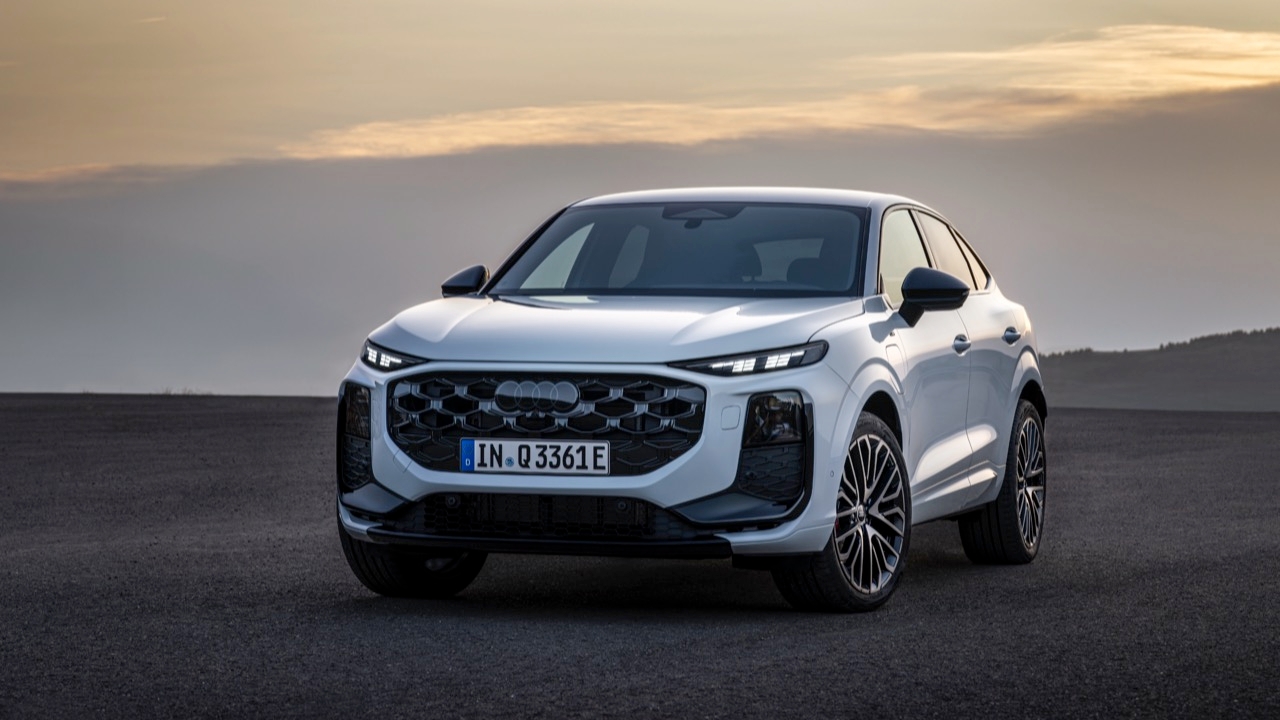
The 2026 Audi Q3 is a compact crossover, third generation (All-new), featuring significant design and technology updates, notably moving the gear lever to the steering column to free up central console space. The 2026 Audi Q3 (All-new Generation 3) is slightly larger than its predecessor to enhance cabin space and driving comfort.


The Q3 is Audi Thailand’s best-selling model. Several years ago, during the development of the new generation, Audi AG revamped and advanced the third-generation Q3 to be more progressive. The Q3’s popularity in Thailand stems not just from its luxury and price but from its performance, which in some areas rivals and even surpasses BMW X1 and Mercedes-Benz GLA today.The premium compact crossover market priced between 2.0-2.4 million baht faces heavy competition from Chinese brands releasing new models continuously. This price war has impacted German luxury brands significantly. Audi should occupy a premium position above fierce competition in the core market, yet the Q3 cannot match prices with traditional rivals like BMW X1, Mercedes-Benz GLA, Range Rover Evoque, and Volvo EX30. New taxes have noticeably increased Audi’s prices across all models.The New Q3 Mk3 stands out sharply in appearance, making the previous Q3 Mk2 look like a car from a different era. The new Q3 has many design details, including a large Singleframe grille, new LED headlights, segmented taillights, and a compact body length of 4.5 meters but with design cues reminiscent of the Q5.


The exterior design features a large, aggressive Singleframe grille up front, sleek LED headlights (top trims get Digital Matrix LED). The new headlights use Micro LED technology with 25,600 tiny light sources to shape the beam, working with steering to warn of blind spots at night or keep the car centered on winding rural roads. The lower air intake is wider for aerodynamics. The sides have muscular shoulder lines and pronounced wheel arch flares reminiscent of RS models. Acoustic glass is used on the windows to reduce outside noise. The rear highlights an LED light bar connecting both sides and the first-ever illuminated Audi rings logo on this model, along with a diffuser seamlessly integrated into the bumper.


Dimensions and weight
The 2026 Audi Q3’s dimensions are balanced for urban and long-distance use: length 4,500–4,531 mm; width 1,840–1,859 mm (excluding mirrors), approximately 2,088 mm (with mirrors); height 1,567–1,628 mm (depending on model and suspension). Wheelbase is 2,680 mm. Curb weight ranges 1,675–1,750 kg (depending on engine and drivetrain). Ground clearance is 183 mm. Fuel tank capacity is about 60–62 liters for standard gasoline/diesel engines. Cargo space is 488–530 liters, expandable up to 1,386–1,400 liters with rear seats folded (40/20/40 split). Wheel and tire sizes vary by trim: standard (Progressiv) 18-inch alloys with 235/55 R18 tires; mid trims (Technik/S line) 19-inch alloys with 235/50 R19 tires; top/Launch Edition 20-inch Audi Sport alloys with 255/40 R20 performance tires.


Engine and performance (Powertrain)
The 2026 Audi Q3 offers a wider range of powertrains to meet both performance and efficiency needs:
Top gasoline engine: a revamped 2.0 TFSI delivering 255–265 horsepower and 370–400 Nm torque (market-dependent tuning), accelerating from 0-100 km/h in just 5.5–5.7 seconds.
Plug-in Hybrid (PHEV) engine: a 1.5 TFSI paired with an electric motor producing a combined 268 horsepower, equipped with a 25.7 kWh battery enabling pure electric driving (EV mode) for 90–118 kilometers.
Base engine: 1.5 TFSI with a 48V Mild Hybrid system, offering about 148–150 horsepower, focused on urban use and fuel efficiency.
Transmission and drivetrain
Transmission: 7-speed dual-clutch S tronic automatic, with software tweaks for quicker and smoother shifts.
Drivetrain: quattro all-wheel drive standard on 2.0-liter engines for balanced traction and torque distribution; base models come with front-wheel drive (FWD).


Suspension and steering
Suspension: front McPherson strut and rear multi-link setup, with an optional adaptive suspension featuring 2-valve dampers that distinctly separate comfort and sporty responses.
Steering: electric power steering (Progressive Steering) adjusts weight according to speed and driving mode, delivering agility in city driving and stability at high speeds.


Infotainment: The interior features the advanced "Digital Stage" concept with a large curved panoramic display combining an 11.9-inch instrument cluster and a 12.8-inch central touchscreen running on Android OS with integrated AI. Behind the steering wheel, traditional stalk controls for turn signals, wipers, and gear shifting are replaced by shorter buttons. While the layout may initially feel plain, the use of premium materials and a focus on understated luxury rather than flashiness offers a pleasing user experience. Understanding Audi’s minimalist design language may take time, but the high-quality materials set Audi apart from German rivals.


The large curved panoramic display integrates an 11.9-inch digital instrument cluster and a 12.8-inch central touchscreen operating on Android with AI integration. Behind the steering wheel, a new approach to controls replaces traditional stalks with shorter buttons for turn signals, wipers, and gear selection. Although the design may appear blunt or bulky, it enhances driving satisfaction, albeit requiring time to fully grasp.

The dual curved screens include an 11.9-inch Virtual Cockpit digital gauge cluster and a 12.8-inch MMI Touch Display central screen. The system runs on Android Automotive OS, supports third-party apps like YouTube, and features AI-enhanced voice recognition. Premium sound options include a Sonos system with 12 speakers delivering 420 watts.


Safety and ADAS (Advanced Driver Assistance Systems)
Equipped as standard with advanced driver assistance systems:
Adaptive Cruise Assist: adaptive cruise control with lane-keeping assistance.
Proactive Safety: pre-collision prevention including Swerve Assist and Turn Assist (braking support when oncoming vehicles appear during turns).
Parking Assistant Pro: automated parking system capable of "remembering" up to five regular parking routes.
Driver Monitor: an interior camera system monitoring driver fatigue or unpreparedness.
In Thailand, early 2026 will see the new four-ring models begin launching globally, including the Q5 and Q3. The new Q3 is expected to be imported and marketed in Thailand following the Q5, around mid-2026, and will be showcased at the Bangkok International Motor Show later this month at IMPACT Muang Thong Thani.