

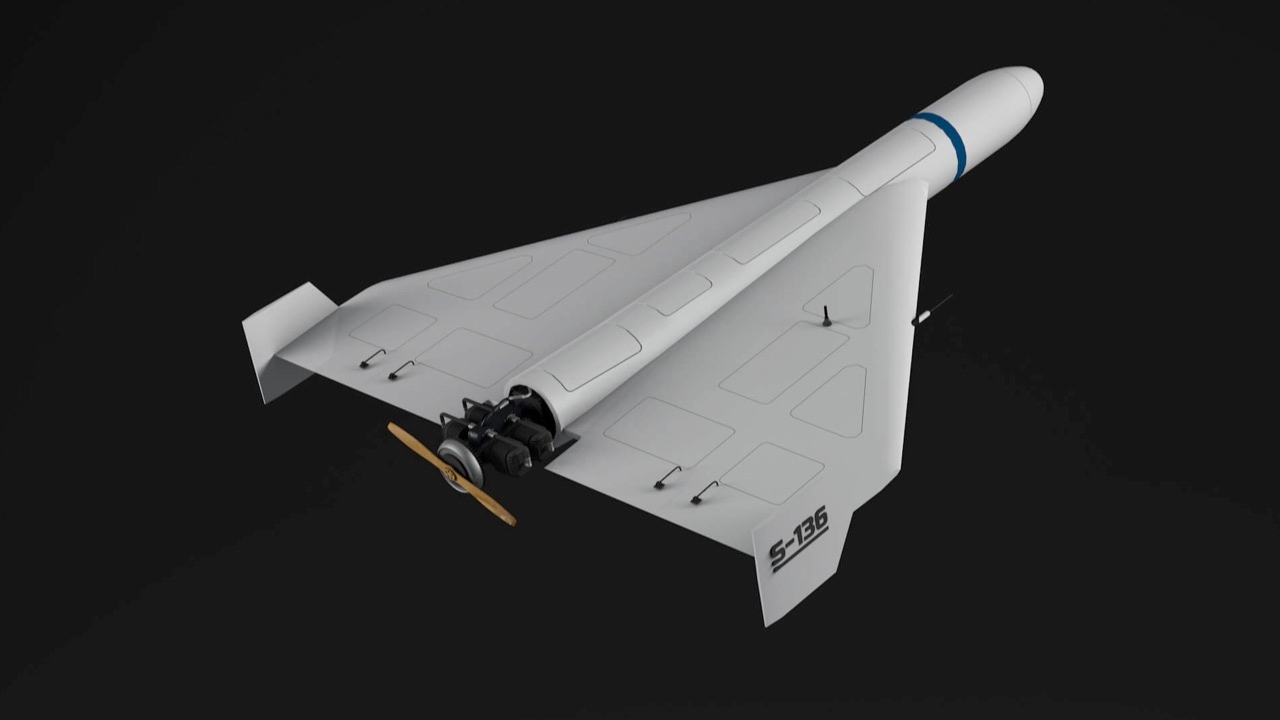
Thailand can technically and practically build a killer drone with features similar to Iran's Shahed drone family. However, multiple factors must be considered. Starting with technical capability, Iran's Shahed drones—especially the 136 model—used in asymmetric warfare are not complex or expensive technologies beyond the reach of technical students at leading Thai institutions. In terms of airframe engineering, the use of composite or fiberglass materials to reduce radar reflection is an area where Thailand's aviation industry and research institutes (such as DTI) already have expertise.

According to recent reports, the Royal Thai Air Force has partnered with the private sector to develop a drone resembling Iran's Shahed 136 suicide drone, with an operational range of approximately 500 to 1,000 kilometers.This development is a collaborative project between a state institution (the Royal Thai Air Force) and domestic private companies.The aim is to develop an indigenously produced attack drone weapon system for use by the Thai military. Tests include precise bomb delivery and target ramming. The developed drone has features similar to the cost-effective, easy-to-use Shahed-136, which is effective for long-range attacks. Many countries, including the U.S. and Russia, have shown interest in developing or replicating similar technologies.


The Shahed drone uses a small two-stroke piston engine, which is commonly available on the civilian market. Its navigation system can be further developed using widely available navigation technologies. Employing GPS/GNSS combined with a low-cost Inertial Navigation System (INS) is an off-the-shelf technology. Although vulnerable to signal jamming, it is sufficient for suicide missions.

Thailand's Current Strengths
Research and development of new weapons is essential due to ongoing threats around the country, especially from Cambodia. Lessons from the Iran-Israel-U.S. conflicts show that large forces, big ships, or bases—even with triple-layered defenses—cannot avoid attacks from Iranian missiles and killer drones using basic technology. Organizations like DTI (Defense Technology Institute) and the armed forces continuously develop UAV projects such as D-Eyes and collaborate with the private sector on surveillance drones. Thailand's engineering soft power includes startups and maker groups skilled in flight control programming and AI image processing, key to modern combat drone development.

Challenges and Obstacles
Even if the "drone body" is built, achieving battlefield effectiveness faces tough challenges, such as anti-jamming systems to ensure drones reach targets despite GPS interference. This requires highly precise navigation software. Mass production is another challenge; the strength of Iran's Shahed drones lies in their low cost and large quantities to overwhelm air defenses via swarm tactics. Establishing factories to produce drones at 600,000 to 1.6 million baht each (or less) demands comprehensive budget support and supply chains.


Warhead (Warhead)
Integrating high explosives into the drone body to meet military standards for safety and destructive power requires close collaboration with the Ordnance Department. Warhead integration with UAV or missile airframes is complex, balancing "maximum destructive power" and "safe transport/installation" per military standards. Cooperation with the Ordnance Department is crucial in three main areas:


High Explosive Integration
Safety Interlocks involve designing mechanical and electronic systems to prevent accidental detonation (Safe and Arm Device - SAD), keeping the firing circuit separated from the warhead until specified conditions are met (e.g., certain speed or distance).
Insensitive Munitions (IM) use explosives less sensitive to external stimuli like heat or impact to reduce the risk of severe explosions in storage or transport.


Airframe Structural Integrity Engineering
Mass Property & CG: Because the warhead is heavy and dense, precise center of gravity calculations are necessary to avoid impairing flight performance and control.
Structural Hardening: The airframe area housing the warhead must withstand vibrations and high G-forces during flight and maneuvers to prevent structural fatigue or internal short circuits within the warhead.
Lethality Design
To achieve military-grade destructive power, the Ordnance Department assists in selecting warhead types appropriate for targets:
Blast/Fragmentation focuses on dispersing shrapnel to destroy personnel or unarmored vehicles.
Shaped Charge (HEAT) uses focused blast force to penetrate armor, effective against tanks or bunkers.
Thermobaric is designed to destroy targets in confined spaces or structures.


Current Laws and Policies: Thailand currently emphasizes drone development for surveillance and rescue missions. Transitioning to armed or killer drones requires clear security policies and unlocking some legal restrictions to facilitate private sector participation. Engineering-wise, Thailand is certainly capable and may even produce more refined designs in some aspects. The major challenge is producing drones cheaply and reliably enough for mass production to defend the nation against invaders.