

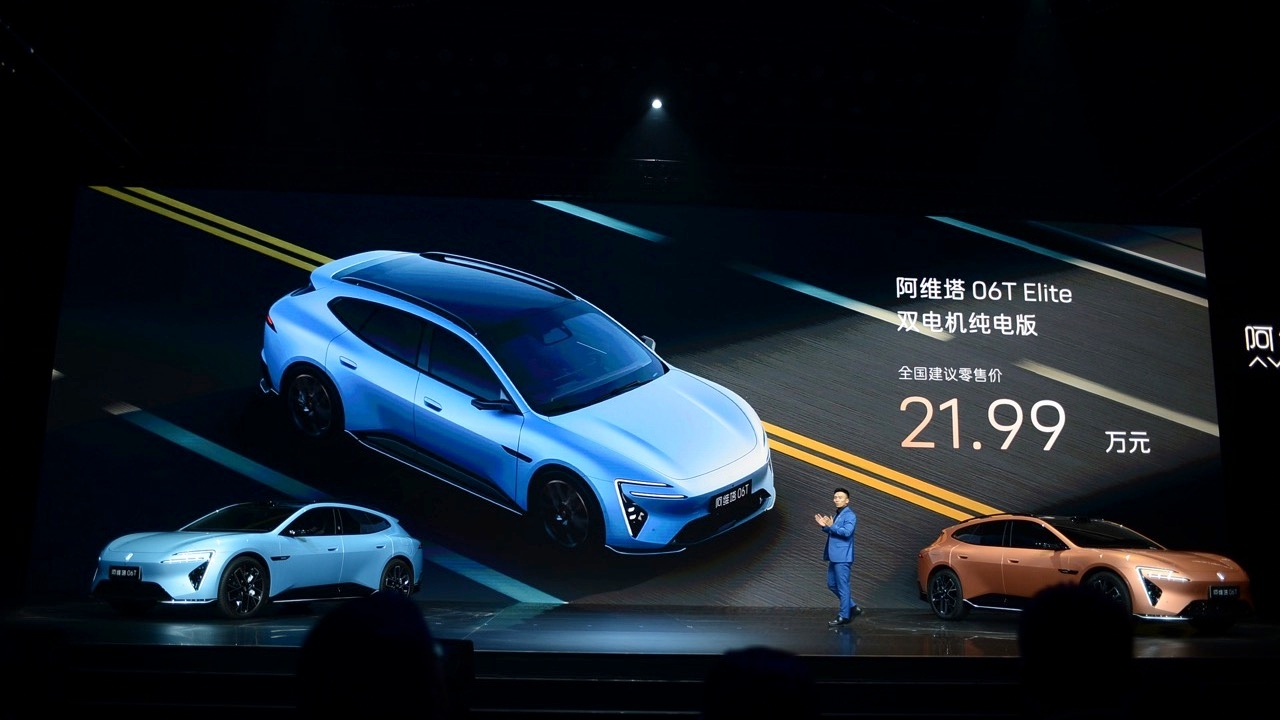
China's electric vehicle (EV/REEV) industry will enter a full-fledged quality era in 2026. After the initial market surge, the Chinese government learned from brands that failed to continue, which damaged trust in the automotive industry in some countries, especially Thailand. China's new plan focuses on raising technical standards to screen out inefficient manufacturers by promoting only a select few innovative brands capable of competing globally like never before.

Starting 1 January 2026, China will strictly enforce national energy efficiency standards for battery electric vehicles (BEV) for the first time worldwide. EVs must reduce electricity consumption per 100 km by about 11% from previous levels. For example, a vehicle weighing around 2 tons must not exceed 6.67 km/kWh (approximately 15 kWh/100 km). Failure to meet this will disqualify vehicles from purchase tax exemptions or reductions, pressuring manufacturers to end low-spec models. This is followed by plans to manage old batteries that may cause future problems.

China is intensifying export quality control to protect the image and reputation of Chinese car brands globally. The government requires manufacturers to have official export licenses and screens out low-quality vehicles to prevent outdated technology or poor after-sales service vehicles from flooding foreign markets, as happened before, for example with the NETA brand.

After-sales service is crucial. Chinese brands must prove they have quality spare parts and service systems in destination countries. Policy support is shifting from sales subsidies to continuous innovation support to improve EV efficiency. There is also a trend toward setting minimum prices to end destructive price wars that lowered quality. The new focus is on mid-to-high-end vehicles and advanced technologies such as Level 4 autonomous driving and high energy density batteries (300–400 Wh/kg).

In 2026, China's EV industry aims to create value through tangible technology. Every brand will include Super Fast Charge systems with new CATL batteries that charge from 10% to 80% in 15 minutes, entering mass production. AI-integrated intelligent cockpits will become standard, with AI agents proactively assisting drivers as knowledgeable and attentive companions, not just passive voice command receivers.

This transformation makes 2026 a year of "Survival of the Fittest" for automakers focused on sales without technology, marking the start of Chinese brands leading global industry standards instead of just manufacturing. China's automotive changes are not mere trends but a full restructuring to redefine its role in the global economy—from OEM production to industry leadership through four key pillars.


Semiconductors are the core of technological sovereignty. China understands that without its own chips, other tech ambitions are limited. It is building not only chip design (Fabless) but also an ecosystem for lithography machinery and upstream materials to reduce dependence on Western technology. China is also creating new standards for chips used in EVs and IoT devices, markets where it already holds a large share.

In green energy, China leads global supply chains with decisive vertical integration. Its automotive industry spans rare earth mining, lithium processing, battery cell production, and EV assembly. As Chinese battery and charging technologies dominate the world market, China's standards naturally become global benchmarks, creating significant cost advantages.


China boasts numerous thinkers and computer engineers trained at MIT, enhancing AI and the digital economy from user to standard-setter levels. In recent years, China has leveraged vast domestic big data to train AI long-term, while rapidly advancing 5G/6G and cloud computing infrastructure. Its digital economy extends beyond apps to smart city management and intelligent automotive factories, where AI boosts production efficiency beyond what low-cost labor once achieved.

The shift to a deep value chain means moving up the pyramid from "Made in China" to "Created by China," with most profits and IP ownership staying with Chinese firms. China is among the world's top patent holders in emerging technologies. Chinese tech and EV brands are increasingly recognized for innovation and quality, not just low prices.
China controlling standards implies that other countries using these technologies may need to pay intellectual property fees or adapt to the ecosystem China creates. This represents powerful soft and hard power in the 21st century. China is no longer focused on rapid growth but on higher-quality growth, even setting a GDP target of about 4.5–5% annually, the lowest in decades, to upgrade economic quality.

China's new normal vision is reflected in accepting lower GDP growth (4.5–5%)—a signal of transitioning from quantity (mass production) to quality, or what President Xi Jinping calls the New Quality Productive Forces.

Key to 2026 growth is an economic engine swap. China is reducing reliance on real estate and infrastructure—which previously drove rapid but debt-heavy GDP growth—and shifting to "High-Tech Manufacturing." The goal is an innovation-driven economy rather than one based on labor and capital. Although future production volume may decline, debt structures will stabilize, and product value-added will increase significantly.

Overcoming the middle-income trap, China's lower GDP target shows understanding that past growth models cannot reach high-income status. By focusing on domestic consumption and self-reliant technology amid Western trade barriers, China is developing highly skilled labor in AI and quantum engineering to support Industry 4.0, building a strong foundation for the future.

The green transition emphasizes environmentally friendly growth. China is the world's top investor in clean energy. Growing smarter means leading in every area, including reducing carbon intensity. China is willing to slow high-pollution projects that could boost GDP quickly to achieve future carbon neutrality. For the "Three New" industries (batteries, EVs, solar power), China sets quality growth targets.

A 5% growth in the world's second-largest economy still represents a massive real value. If that 5% comes from advanced chips or green technology, it is more powerful and sustainable than 10% from a real estate bubble. In 2026, expect wider use of Digital Yuan (e-CNY) and nationwide Smart Grid systems as foundations of the digital economy, enabling unprecedented micro-management of economic efficiency.


China's quality-focused shift impacts ASEAN supply chains, especially Thailand's automotive parts industry. The 2026 transition to New Quality Productive Forces significantly affects ASEAN and Thai supply chains—not just by relocating production to tax-favored countries but by exporting a new technology ecosystem that fundamentally changes existing rules.


The impact on Thailand's automotive parts industry has three dimensions. First, supplier structure changes: under ICE engines, Japanese brands built strong local supplier networks. Chinese brands entering in 2026 differ; most (e.g., BYD, GWM, Changan) control core technologies like batteries, motors, and software, putting Thai suppliers of traditional engine and drivetrain parts at high risk. Chinese automakers often bring their Chinese supplier partners, like CATL and Gotion battery factories, to Thailand, limiting opportunities for Thai suppliers unless they quickly adapt. Slow adaptation threatens Thai automotive parts producers.
/


Higher and faster technology: As China prioritizes quality over quantity, parts demanded from ASEAN suppliers must support vehicle intelligence and smart features—from hardware to software-defined components. China's 2026 EVs emphasize autonomous driving and smart cockpits. Thai suppliers must move from low-grade metal/plastic parts to advanced electronic components, premium-grade plastics comparable to German standards, or sensor module assembly. China uses sustainability standards to select Thai suppliers suitable for production. Thai factories supplying Chinese brands must have clean energy management systems meeting new standards.


Thailand as a "Bridgehead" for technology: Despite challenges, China's smarter growth creates new opportunities for Thailand to become a regional production and export hub. However, improvements are necessary to meet Chinese brand standards. The EV 3.5 policy mandates local production ratios of 1:2 or 1:3 by 2026-2027, accelerating Chinese automakers to find local partners for some components. Thailand is being upgraded from the "Detroit of Asia" to the "EV Hub of ASEAN," with China using Thailand as a base for right-hand drive conversions to export to Australia, the UK, and Southeast Asia.