

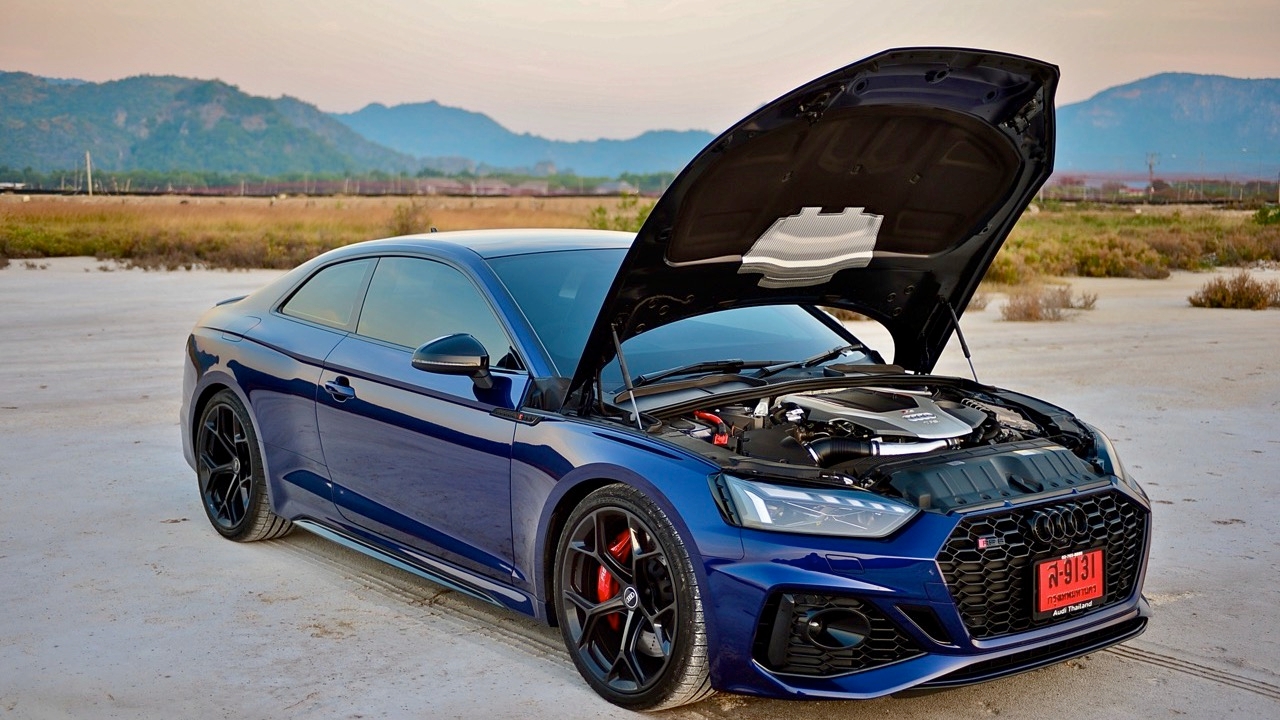
Preparing for long-distance travel during Songkran 2026 amid continuing fuel price volatility, checking vehicle condition and adjusting driving behavior can significantly save money. Here is a comprehensive preparation guide.
Check your vehicle's condition to enhance fuel efficiency. An engine that is overworked or has high friction causes higher than normal fuel consumption.


First, the easiest thing to check is tire pressure. Air is the heart of the tire—if it’s too low, the tire heats up quickly, leading to wear or even damage that could leave you stranded. Check tire pressure according to the specification on the door sticker (or add 1-2 PSI if fully loaded with passengers and luggage). Underinflated tires increase road contact area, raising friction and fuel consumption by about 3-5%.

Air filter: if dirty or clogged, the engine draws in less air, resulting in incomplete combustion and wasted fuel. A clogged filter reduces engine power because less air entering causes the fuel-air mixture to become "rich" (more fuel than air). This leads to sluggish acceleration, incomplete combustion, carbon buildup in the combustion chamber and spark plugs, and abnormal black smoke from the exhaust. The ECU compensates for lost power by injecting more fuel, causing higher fuel consumption.
Check the air filter by removing and cleaning it every 5,000 kilometers or replacing it every 10,000 kilometers—especially if driving in dusty areas like Bangkok or construction zones. Hold the filter up to sunlight; if light cannot pass through the filter paper's pores, it’s time to replace it.

Engine oil: check level and quality, and replace before a trip if nearing service interval. Fresh engine oil lubricates better, reducing piston load. Engine oil is crucial for lubrication and cooling; new oil before a long trip ensures optimal engine performance and lowers the risk of engine failure. For long trips with sustained speeds or heavy traffic, changing oil slightly earlier than scheduled is better than pushing it too far. New oil reduces friction, has proper viscosity and a strong oil film, allowing pistons and parts to move smoothly, reducing engine strain.
Fresh engine oil also dissipates heat better than old, thickened oil. New oil contains additives that trap soot and prevent sludge formation. A smoother-running engine loses less power, improving acceleration and fuel economy over time.
How to check engine oil level yourself (Dipstick method).
Park on a level surface, turn off the engine, and wait 5-10 minutes to let oil drain back into the pan.
Pull out the dipstick, clean it with a cloth or tissue.
Reinsert the dipstick fully, then pull it out to check the oil level.
Normal oil level should be between the lower (L/Min) and upper (F/Max) marks.
Oil color: clear brown is normal. If it becomes dark, thick, or smells burnt, change the oil immediately.
Do not let oil drop below the L mark, as this reduces oil pressure. Also, avoid overfilling above the F mark, which can cause excessive internal pressure and lead to seal leaks.

Cooling system: check coolant reservoir level and look for leaks at joints. Traffic jams during Songkran cause engines to overheat. Poor cooling makes the engine work harder and consume more fuel. The cooling system is critical during hot weather and heavy traffic, as the engine lacks airflow for cooling and relies entirely on coolant and electric fans. If the cooling system fails, it not only increases fuel consumption due to overheating but risks engine overheating that can warp the cylinder head and incur costly repairs.
Key points to check before departure.
Coolant level in the expansion tank should always be between Min and Max marks. Do not fill completely to allow room for expansion under heat.
Coolant condition: if it changes to rusty or cloudy color, replace it with quality coolant to raise boiling point and prevent engine corrosion.
Check for leaks at joints and hose clamps; look for white or green deposits on radiator seams and hose connections. If hoses are swollen or too soft, replace immediately as they may burst under pressure.

Cooling fan: ensure it operates properly at both low and high speeds (especially with air conditioning on). Slow or noisy fans are dangerous when idling in traffic.
Precautions and maintenance tips.
Never open the radiator cap when the engine is hot; hot steam and pressure can cause burns. Check only when the engine is completely cool.
Use pre-mixed coolant rather than plain tap water to prevent scale buildup inside the radiator.
Monitor the temperature gauge while driving. If the needle rises above normal or the warning light comes on, stop at a safe place immediately.

An engine running at the proper temperature (about 85-95°C) burns fuel most efficiently. Poor cooling causing overheating can make the ECU inject extra fuel to reduce combustion chamber temperature, increasing fuel consumption.

Fuel-saving driving techniques (Eco-Driving).
In stop-and-go traffic typical of festival periods, these techniques really help:
Maintain steady speed. On open roads, driving at 80-90 km/h is the most fuel-efficient speed range for most vehicles.
Avoid frequent braking and sudden acceleration. Hard starts and stops in traffic waste fuel quickly. Keep a safe distance and try to maintain a smooth flow.
Remove unnecessary items from the vehicle. Every extra 50 kilograms increases fuel consumption by about 1-2%.
Air conditioning: during midday heat, set the AC temperature to a moderate level (e.g., 24-25°C) to reduce compressor load.


Which fuel type offers the longest distance?
Measured by distance per liter (efficiency), regardless of price.
Diesel fuel has higher heat energy per liter than gasoline, and diesel engines have higher thermal efficiency, so they typically travel farther per liter.
Pure gasoline 95 has the highest energy content among gasoline types, offering the longest distance per liter.
Gasohol 95/91 yields slightly reduced distance proportional to ethanol content.
E20/E85 provide the shortest distance per liter because ethanol has lower energy than gasoline, so the engine injects more fuel to maintain power.
For maximum distance per tank, pure gasoline 95 or premium diesel are best. However, for overall cost efficiency (Baht per km), Gasohol 95 or E20 usually save more money.
4. Plan rest stops and refueling.
Fuel price-checking apps are essential to download now to monitor daily prices. Though discouraging, knowing price trends helps; if prices will rise tomorrow, fill up today.
Avoid major stations at strategic locations. Gas stations on Asian Highway or Mittraphap Road often have long queues during Songkran. Plan to refuel 20-30 km before main rest stops or use alternative brand stations to save time.
Rest every 200-300 km for safety and basic vehicle checks (e.g., engine temperature or tire pressure). Wish you a safe journey both ways.