

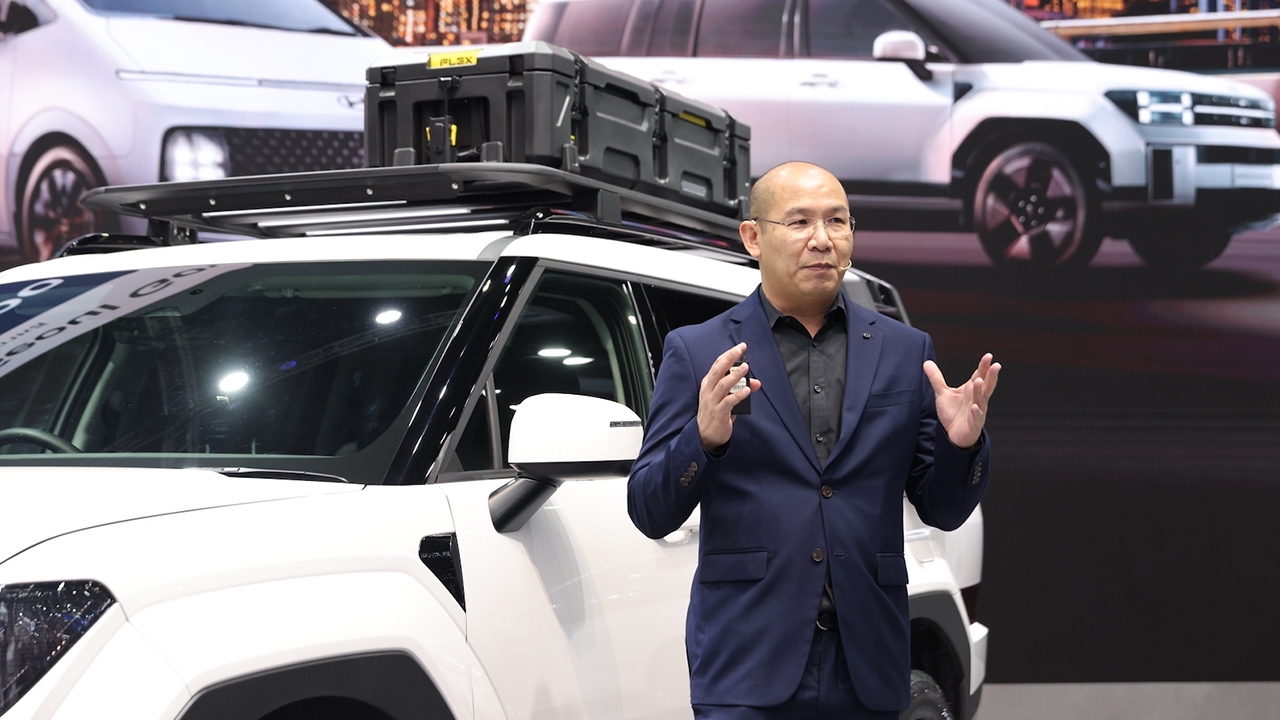
Hyundai announced that its factory in Thailand has been completed as planned and reaffirmed its vehicle sales target of 3,000 units for 2026. The company also revealed plans to expand its new vehicle lineup, providing consumers with comprehensive choices including ICE, Hybrid, and EV models.
Mr. Wallop Charoemwongsewech, Managing Director of Hyundai Mobility (Thailand), stated that the company places great importance on continuously developing new vehicles to create products that comprehensively meet the needs of customers in Thailand.
In terms of design, technology, performance, and cost-effectiveness, we aim to offer a diverse vehicle lineup covering internal combustion engine vehicles, hybrid vehicles, and electric vehicles, so customers can truly select the vehicle that suits their lifestyle and usage.

Regarding progress on establishing the vehicle assembly and manufacturing plant in Thailand, construction has now been completed, with only the documentation and Free Zone permit application processes remaining.
Mr. Wallop said that Hyundai targets sales of 3,000 units in 2026. The company plans to expand its new vehicle lineup to provide consumers with full options including ICE, Hybrid, and EV models, aiming to grow the clean energy vehicle customer base while maintaining demand for internal combustion engines, with a sales ratio of 40% ICE, 44% HEV, and 16% EV.
The EV models to be introduced to the market this year will be assembled at the Thailand plant, reinforcing Hyundai's commitment to continuously drive business in the Thai market. This aligns with Hyundai Motor's strategy of placing greater concrete emphasis on the Asia-Pacific and ASEAN regions.

However, Hyundai recommends that the government consider adjusting taxes for EREV (Extended Range Electric Vehicle) models to be closer to those for EVs, to provide more options and stimulate the industry. Furthermore, in promoting the automotive industry, development should not focus solely on EVs but should advance all aspects of automotive technology without excessively distorting market mechanisms.
"Hydrogen energy, as it is an inexhaustible resource, requires significant government support because hydrogen charging stations cost 10 to 20 times more to invest in than electric charging stations. Therefore, the government should take a holistic view and begin supporting any initiatives that help move progress forward," he said.