

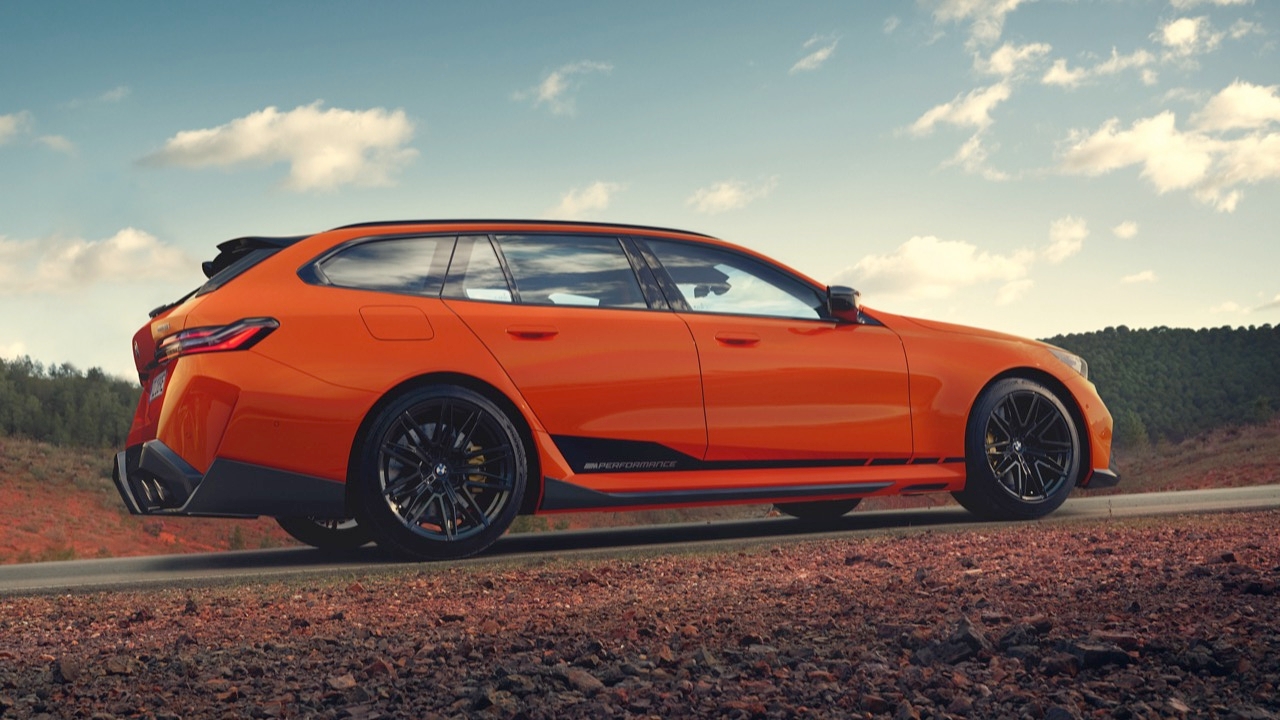
The first three months of the year were not favorable for the German luxury car brand BMW. Its sales in this period dropped by 4.6% to 496,050 units, including 47,544 M Performance or full M models. Sales in the M segment declined 5.9% compared to the same period last year.
The newcomer brand MINI performed much better in Q1 2025, with sales rising 5.9% to 68,427 units. In contrast, Rolls-Royce, BMW Group's flagship brand, saw weaker results in the first quarter, with deliveries down 8% to 1,271 units. Overall, BMW Group's sales decreased by 3.5% in Q1 2026, totaling 565,748 units delivered.

Demand for BMW and MINI vehicles in the U.S. fell 4.3% to 90,492 units, while the Americas region overall declined 4% to 109,639 units. The situation worsened in the Asia-Pacific, Eastern Europe, Middle East, and Africa regions, where sales dropped 8.3% to 74,415 units.
As expected, sales in China continued to decline steadily, with deliveries down 10% to 143,958 units. Nonetheless, China remains the company's largest market. Not all regions performed poorly, as BMW and MINI sales in Germany rose 10.7% to 68,022 units, and demand across Europe increased 3% to 236,422 units.
Despite the unimpressive numbers from January to March, BMW Group executives remain cautiously optimistic. Expanding shifts at the Debrecen plant means more iX3 vehicles will be delivered to customers across Europe. Production of the i3 sedan will begin in August, with deliveries scheduled for Q4 of this year.

Regarding internal combustion engines, the refreshed 7 Series and the fully electric i7 will debut in about a week. This summer, BMW plans to launch the new X5 alongside the first electric iX5. Additionally, the new 3 Series, available with petrol and diesel engines, is also slated for release this year. However, deliveries of the “G50” may be delayed until late 2026 or early 2027.

Although the BMW 7 Series LCI may not significantly boost sales due to its high price, the BMW 3 Series (G50) will be critically important for sales volume. The iX3, i3, and X5/iX5 models are also expected to have a strong impact on sales. However, the full effects of these launches might only become evident in 2027.BMW Motorrad reported a 4.2% decline in sales in the first quarter of 2026, totaling 42,735 units.
The main reason BMW's global sales performed poorly in early 2026 (Q1) is the significant declines in major markets such as China and the United States.

A key cause is weakness in the Chinese market, where BMW's sales fell by 10%. China, BMW's largest market, faces multiple challenges: intense competition from local premium brands like BYD, Xiaomi, and Zeekr, which have gained market share from European cars; reduced purchasing power among Chinese and U.S. consumers; increased consumer caution regarding luxury spending in China; and a prolonged weak U.S. economy leading to continuous drops in luxury car sales. Aggressive price cuts in China have made it harder for European brands to maintain their premium image.

A sharp global decline in electric vehicle sales is another factor, preceding the Iran-U.S.-Israel conflict crisis that caused fuel prices to spike rapidly. Although BMW performed well in EVs last year, worldwide deliveries of battery electric vehicles (BEVs) dropped 20.1% in Q1 2026. This is partly due to the U.S. ending some EV subsidies and tax benefits, immediately slowing demand (U.S. overall sales fell about 4%). Additionally, some consumers worldwide have shifted back to hybrids or internal combustion engines, worried about charging infrastructure and resale value.

BMW is in a critical transition phase, launching the new "Neue Klasse" platform (such as the new iX3 and next-generation 3 Series), causing some customers to "delay purchase decisions" pending new models in 2026-2027. External and geopolitical factors also impact confidence and costs: ongoing unrest in the Middle East affects logistics and transport expenses, while U.S. tariff uncertainties complicate sales planning.
In Thailand, despite the global downturn, BMW has managed to hold steady, benefiting from the launch of locally assembled BMW models (CKD) and diesel internal combustion vehicles that boost confidence. However, it still faces challenges from aggressive Chinese electric vehicle brands penetrating the Thai market.