

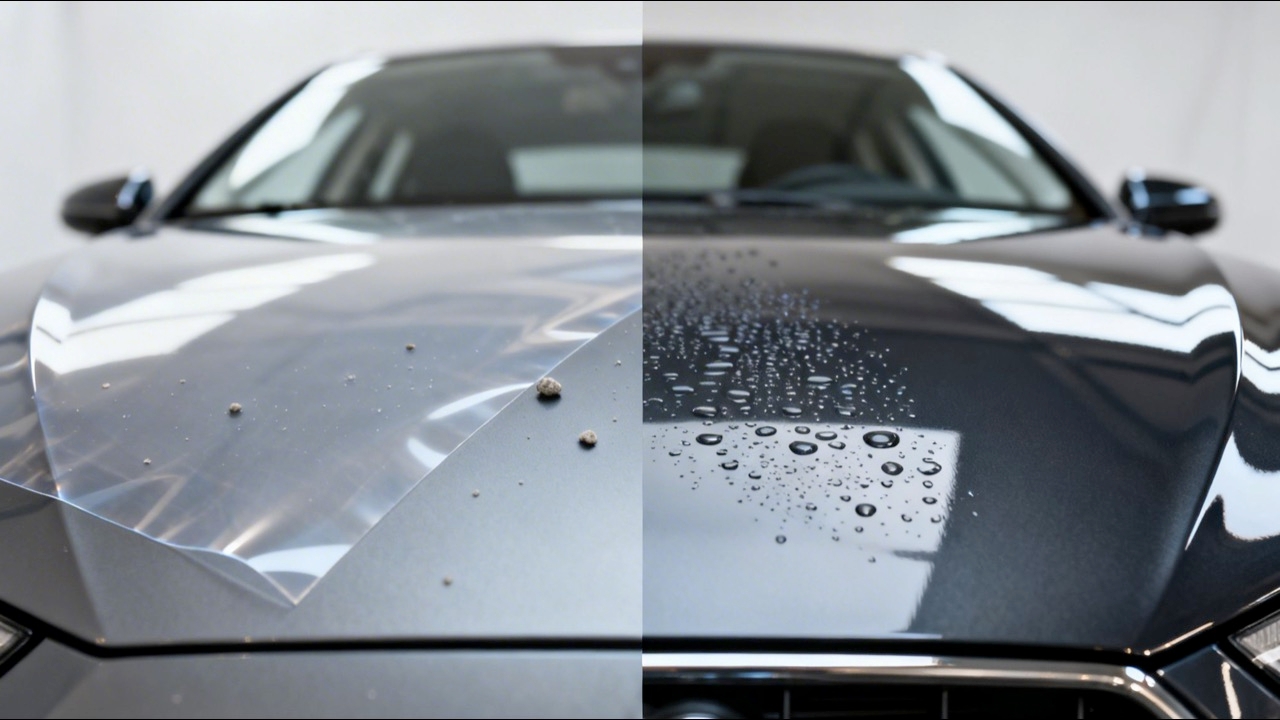
How can you keep your car's surface looking like it just rolled out of the showroom forever? Amid unpredictable weather, intense UV rays, and increasing road pollution, today's surface protection technology has advanced to the molecular level. This is why clear paint protection film (PPF) has become a must-have for car lovers, especially those with expensive, custom-colored, rare, or vintage cars with carefully done paintwork. Installing PPF creates a gloss far beyond ordinary waxing, providing a level of body paint protection that chemicals cannot achieve. This is why PPF has become the ultimate solution for caring for your beloved car's paint. When you love something deeply, special care is essential. So, how much does paint protection film cost and how effective is it?

It acts as a physical shield that truly blocks rock chips.
This is the strongest advantage that glass or ceramic coatings cannot provide. PPF is thick (typically 150-200 microns) and highly durable. When rock chips hit the car while driving, the film absorbs and disperses the impact, preventing the underlying paint from cracking or chipping.

Self-Healing property that repairs itself.
Most premium films have a smart top coat layer. When minor swirl marks from washing or light scratches occur, simply parking the car in sunlight or applying warm water allows the film's surface to realign and restore itself, making scratches disappear. This keeps the car looking new without frequent polishing.

Protects against corrosive pollutants.
Car paint faces tough enemies that are hard to wash off and directly damage the lacquer layer, such as tar splattered near doors, insect remains, and bird droppings, which are acidic. If not cleaned promptly, they cause lacquer discoloration. Tree sap is hard to remove and leaves deep stains. The film acts as a frontline barrier, preventing these substances from contacting the paint directly.
Preserves the car's long-term resale value.
For those planning to sell their car in the future, installing PPF preserves the original factory paint perfectly. When the film is eventually removed, the paint underneath remains glossy as on the day it left the showroom. Cars with pristine original paint and no repainting usually fetch better resale prices.

Reduces maintenance frequency.
Although initial installation costs more than regular waxing, it saves time in the long run. Frequent polishing, which wears down the lacquer, is unnecessary. Washing becomes easier as dirt adheres less to the film than to bare lacquer. You also need not worry about scratches during quick washes.

1. PPF (Paint Protection Film)
If waxing is like applying sunscreen, PPF is like putting on a bulletproof vest for your car. Today’s clear protective films are not only thick but also feature advanced Top Coat technology with Self-Healing properties. Modern PPF can repair minor scratches simply by exposure to heat from sunlight or warm water, restoring a smooth surface without polishing. Hydrophobic and stain-resistant coatings solve past problems of yellowing and stubborn stains by repelling dirt and making cleaning easier. Available finishes include high gloss, enhancing the car's color depth, or matte for those wanting a more aggressive look without altering the original paint.

Ceramic & Graphene Coating
For enthusiasts seeking a mirror-like shine, ceramic coating remains a popular choice. However, in 2026, graphene coatings are becoming more common. Graphene is molecularly stronger than steel yet highly flexible. When combined with ceramic coatings, it better reduces water spots and improves heat dissipation on the car's surface. Hardness ratings of 9H or 10H have become the new standard, effectively minimizing scratches from washing and providing long-lasting protection when properly maintained.

3. Undercarriage Protection
This unseen but crucial protection is gaining importance, especially among electric vehicle (EV) owners who focus more on the car's underside, where the battery pack is located. Rubberized and polymer coatings go beyond traditional rustproofing by reducing noise (sound deadening) and absorbing impacts from stones that might hit the battery casing. Anti-corrosion chemicals used must be non-conductive and not degrade rubber seals or essential wiring. Choosing products that meet these specifications is vital for modern car owners.

Regarding price and installation time for clear paint protection film (PPF) in 2026, there are more flexible options depending on your budget. The main factors include your financial capacity, the film brand, and the coverage area.
Installation budget (by protection level)
Current market prices fall into three main grades:
Entry level (targeted risk spots) costs 10,000 – 25,000 baht.
Focuses on areas directly exposed to rock chips, such as the front bumper, hood, side mirrors, and door handle recesses.
Suitable for those wanting to protect key areas within an affordable budget.
Standard level (full body - general grade TPH/TPU film) costs 45,000 – 70,000 baht.
Applies film around the entire vehicle with emphasis on glossiness and scratch resistance.
The film generally lasts about 3-5 years.
Premium level (full body - top-grade TPU film) costs 80,000 – 150,000+ baht.
Uses world-renowned brands like XPEL, 3M, Magnus Pro.
The film is extra thick, crystal clear, and features fast Self-Healing properties.
Some installers offer long warranties of 7-10 years against yellowing and cracking.

How long does it last? Because the price is steep.
To be realistic and set aside advertising claims of 7-10 years, in real use under Thailand’s hot, dusty conditions, PPF lifespan depends mainly on materials and can be categorized as follows:
1. TPU (Thermoplastic Polyurethane) Grade – the best top grade used by reputable shops. In Thailand, it lasts about 3-5 years. Why not 10 years as advertised? Although the film itself doesn’t crack, harsh Thai conditions cause the top coat to degrade gradually. Self-healing slows over time, and dullness may appear after 3 years.

2. TPH / PVC Grade – economical grade.
Often marketed as cheap or free films from sales promotions. In reality, they last only 1-2 years in Thailand. These plastic-based films yellow under prolonged sun exposure and, worst of all, become brittle. If left too long, the brittle film can adhere to the paint and cause damage when removed.

Installation duration.
Installing film is not just sticking a sticker; it requires careful craftsmanship. Partial coverage takes about one day (drop off in the morning, pick up in the evening). Full-body installation takes about 3-5 days.
Day 1: Surface preparation including deep cleaning and polishing to smooth the paint before applying film.
Days 2-3: Film cutting using software templates and precise application (installation).
Days 4-5: Finishing touches on edges, curing time for the film to set, and checking for air bubbles before delivery.
Tips for choosing: Look for edge depth. Skilled shops tuck edges inward (wrapped edges) making the film nearly invisible and reducing dust accumulation at edges over time.
The installation room should be sealed, dust-free, and temperature-controlled because even tiny dust particles trapped under the film become very visible on the car surface.
After-sales service: Choose shops that schedule follow-up inspections 1-2 weeks after installation to check edges.
If you want to start, a mid-20,000 baht budget to protect the front of the car from rock chips is a good start. Full-body installation is a long-term investment for peace of mind for your beloved vehicle. For those who drive long distances or at motorway speeds where rock chip risk is higher, protecting only the most exposed areas (front bumper, hood, side mirrors) is the most cost-effective and reassuring choice.